Our last full day of holiday saw us back in Avignon for the third time in 2 weeks.
We were both keen to exercise and decided on separate plans.
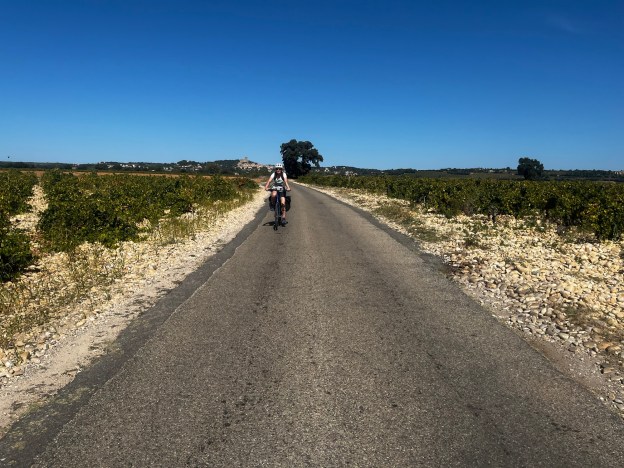
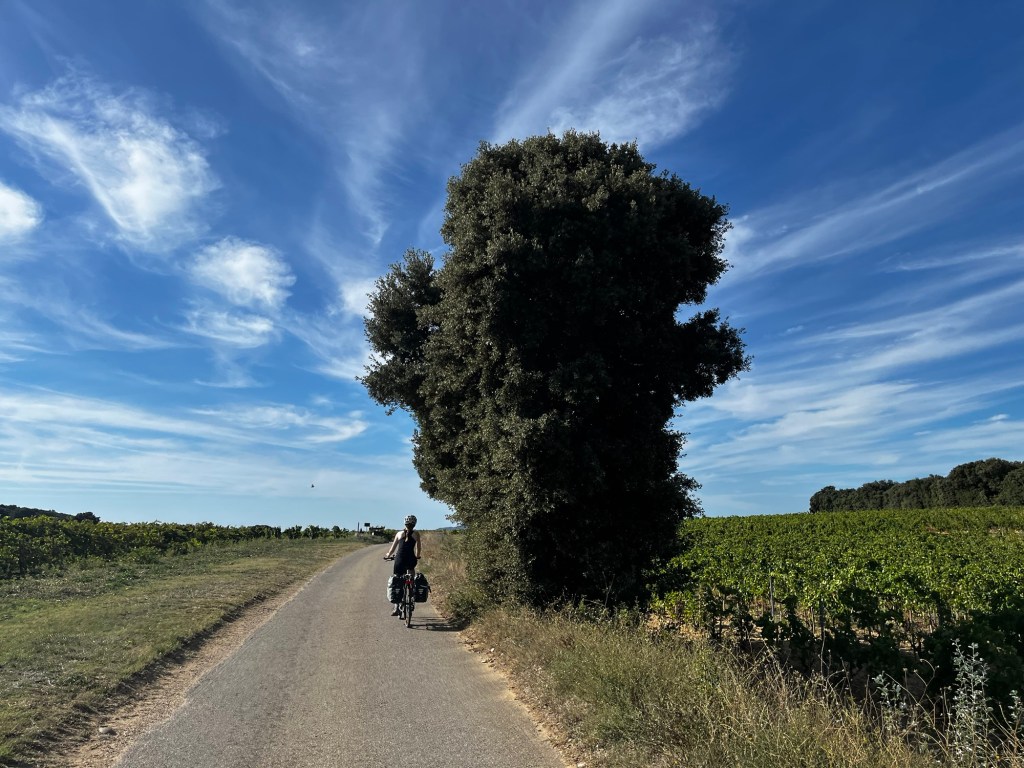
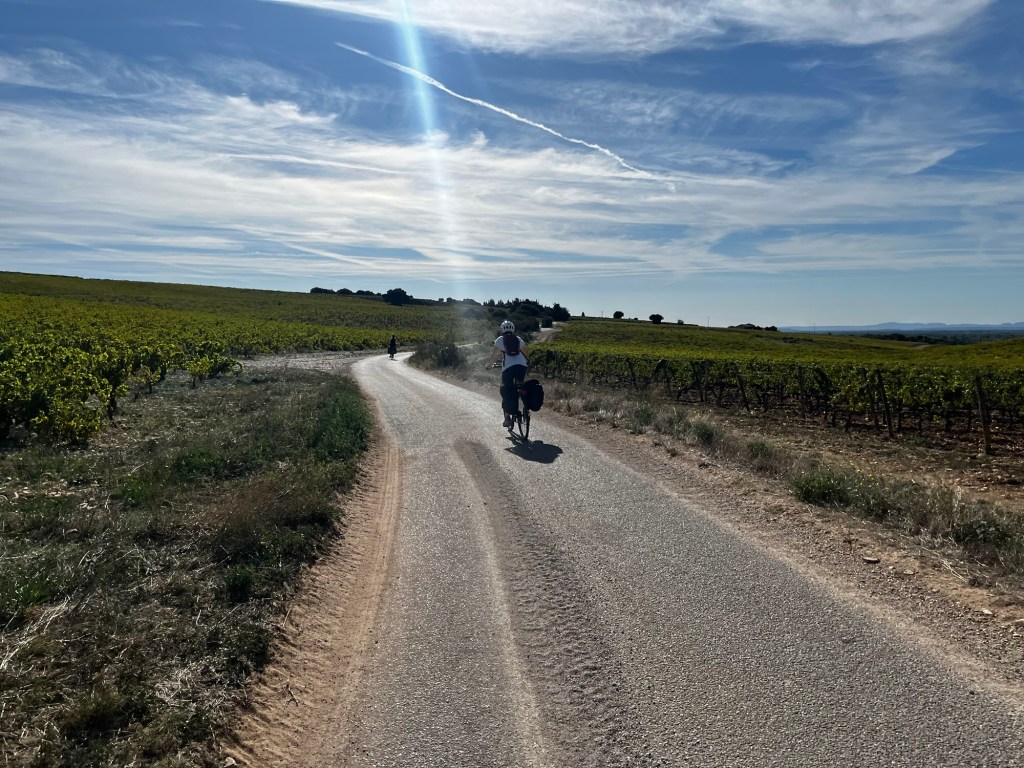
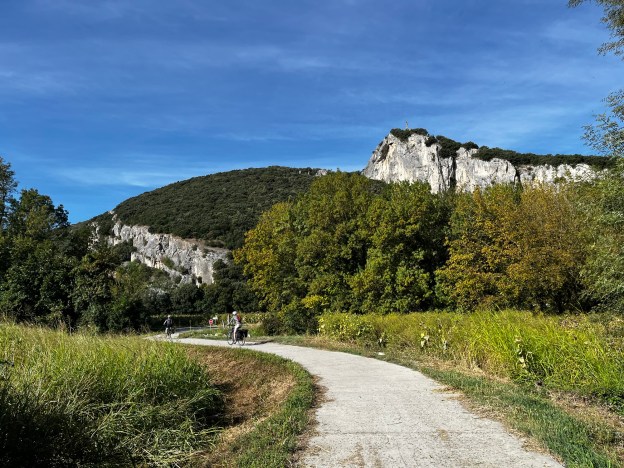
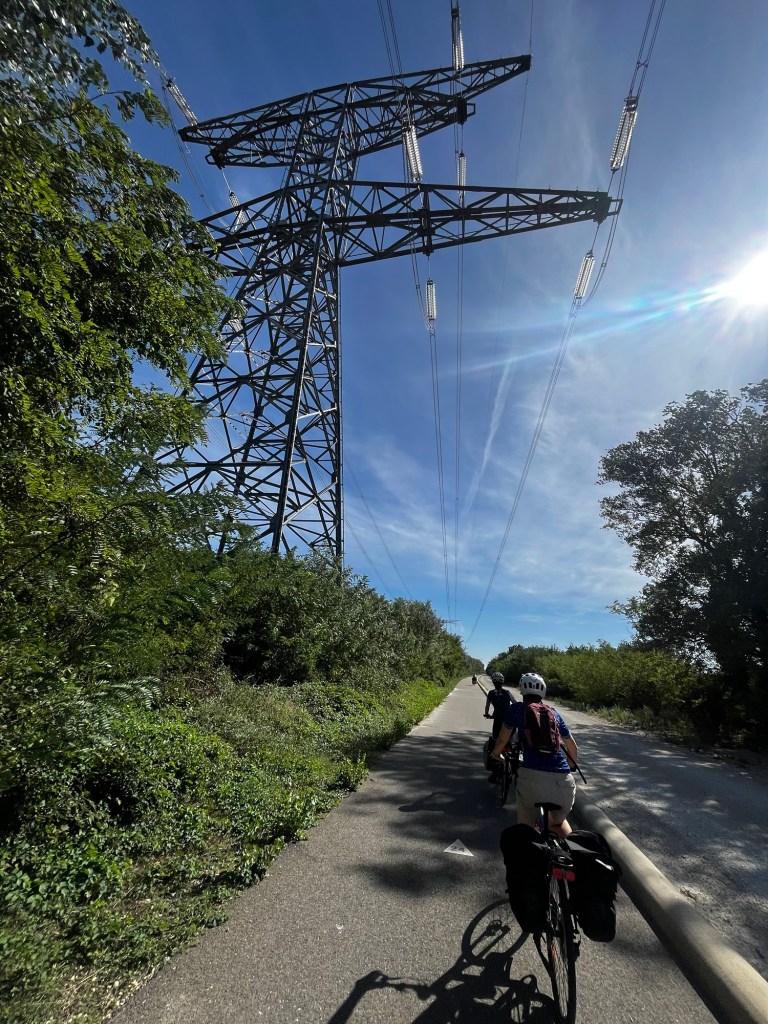
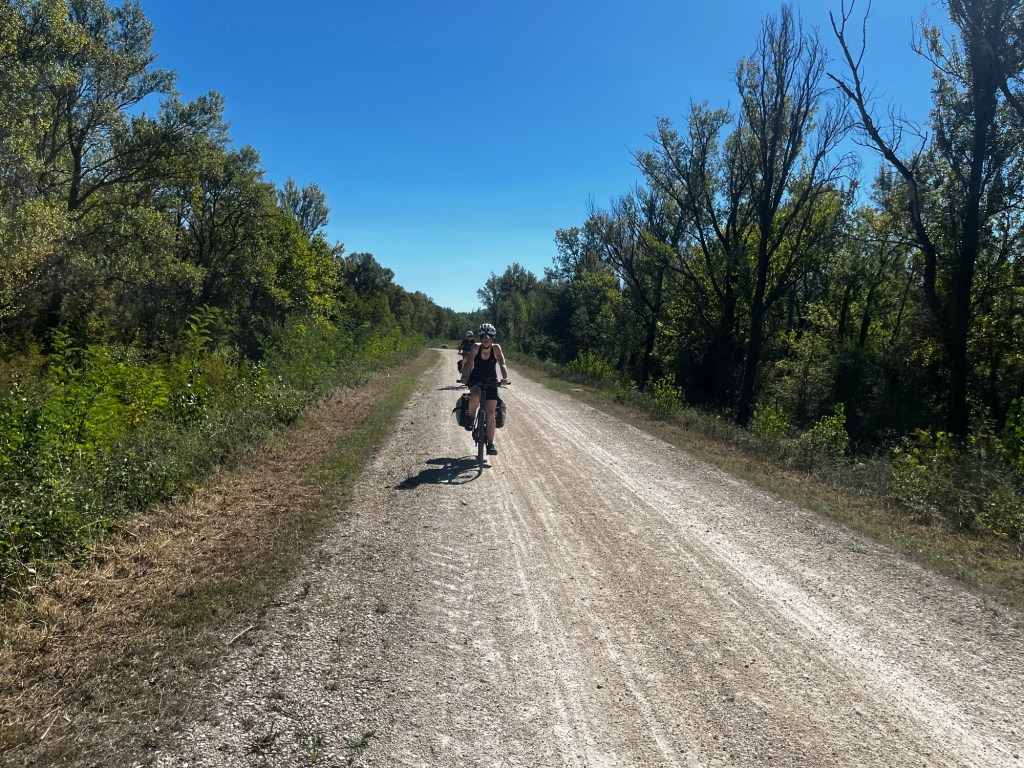
Phil booked himself a gravel bike (€30 for 4 hours) and set off down the Via Rhone.
A word or two here about Komoot, the navigation app. We’ve used it for most of the two-wheeled navigation on the holiday and found it to be an easy to use and flexible tool. As long as you stick to national cycle routes and tarmac roads.
It allows you to fine tune routes, picking quieter or more direct options to suit you. You can combine recognised routes with detours to towns etc along the way. It’s also very good at quickly coming up with a me route if your plans change.
However, if you venture off road, it’s less reliable. Phil’s planned exploration of some limestone hills, just off the Via Rhone was not especially successful.
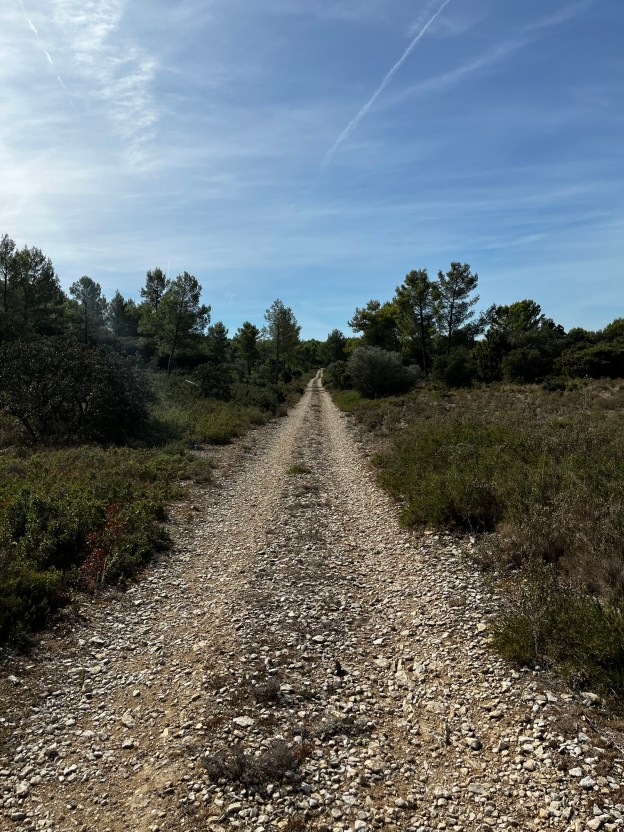
Having requested “gravel” options in the target area, Komoot came with plenty. But, the reality on the ground was that they took him into impossible terrain. Sometimes extra rocky, sometimes completely overgrown and sometimes precipitously steep and narrow.
After a frustrating half hour, Phil shut down Komoot and referred to satellite imagery to choose wide “fire-road” style paths. This proved much more successful and the ride was rescued.
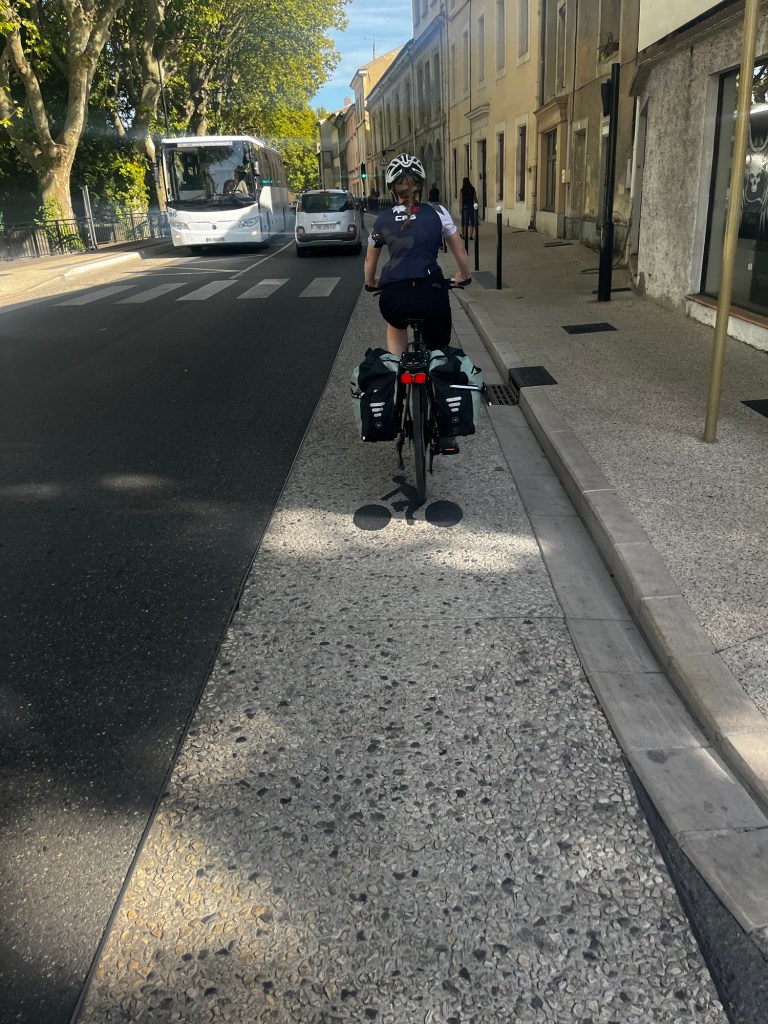
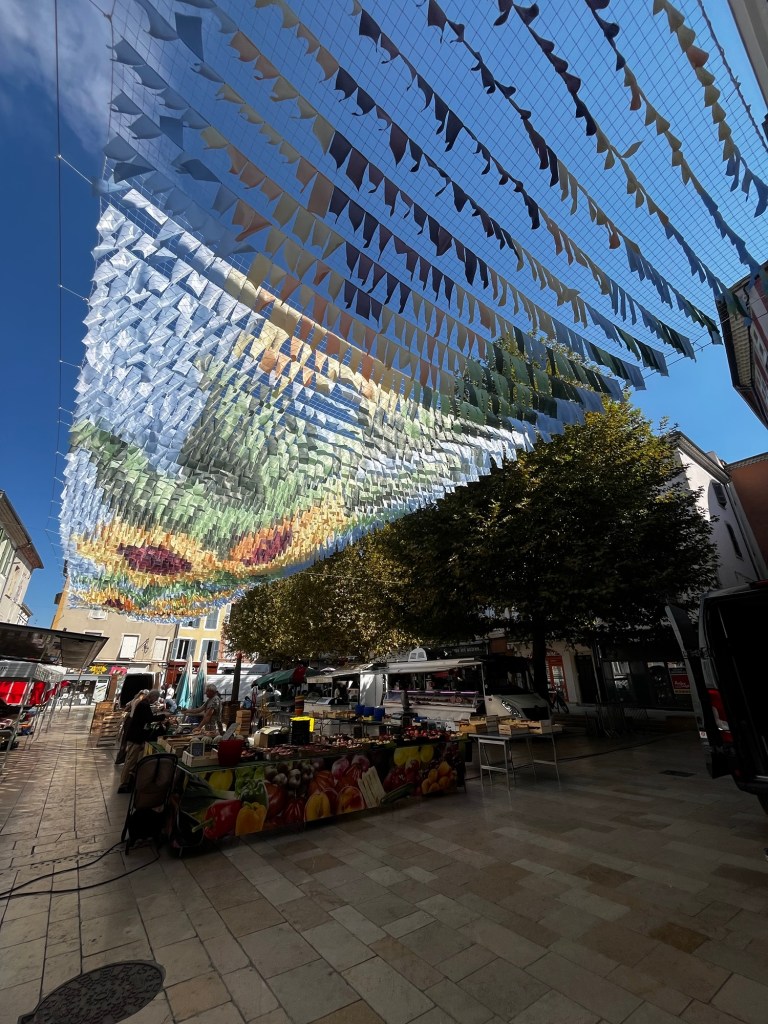
Julie’s attempts to go swimming didn’t come off as the Avignon “lido” had recently been drained for the winter and she had to be content with a riverside walk plus a return visit to the brilliant indoor market.
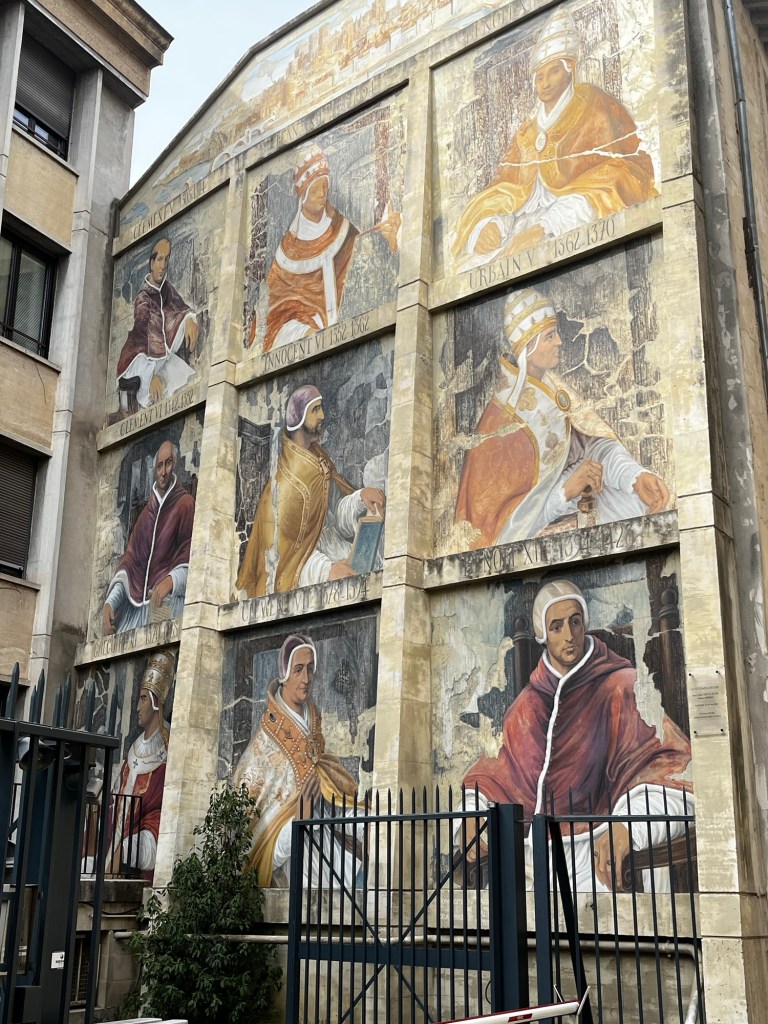
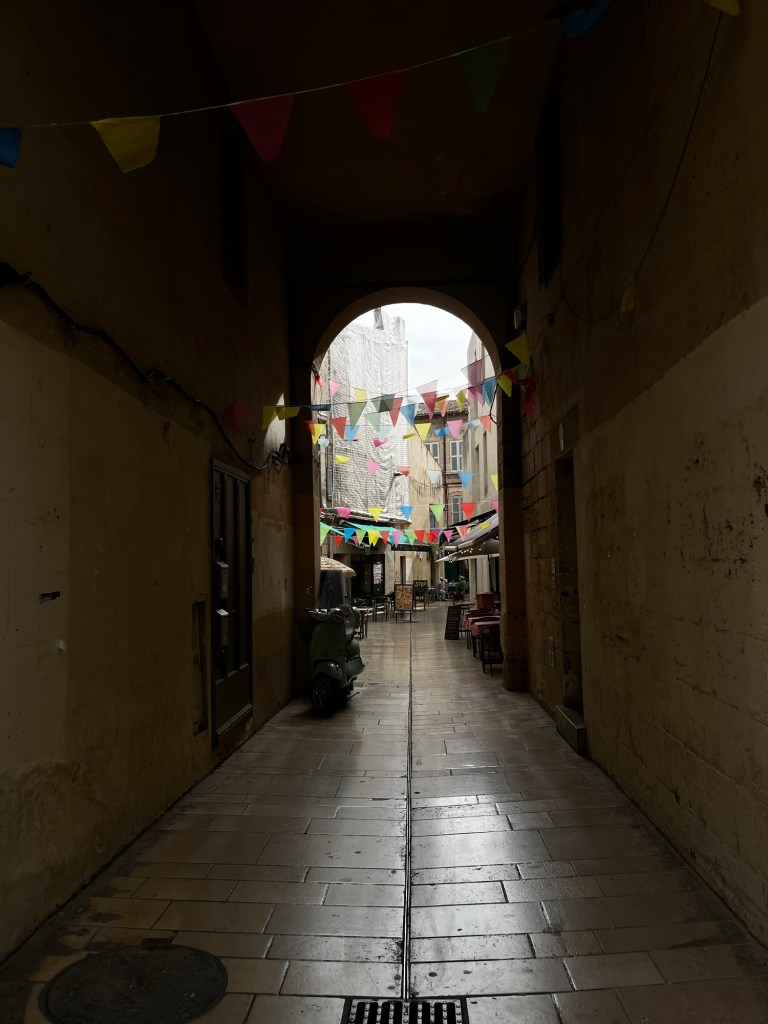
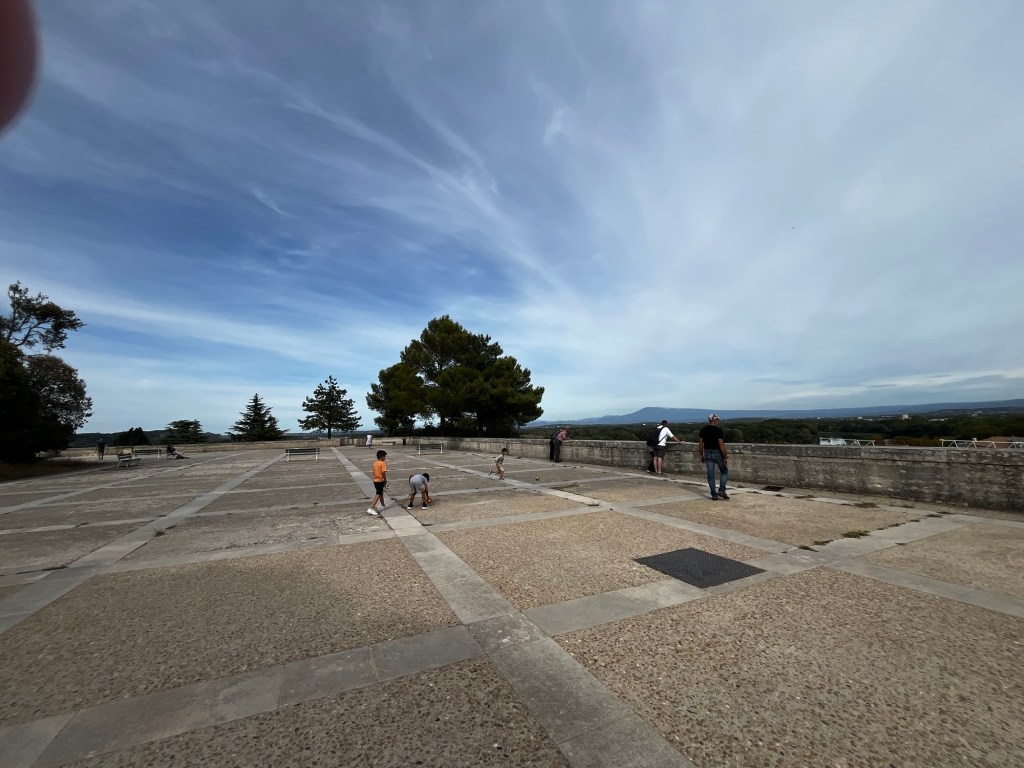
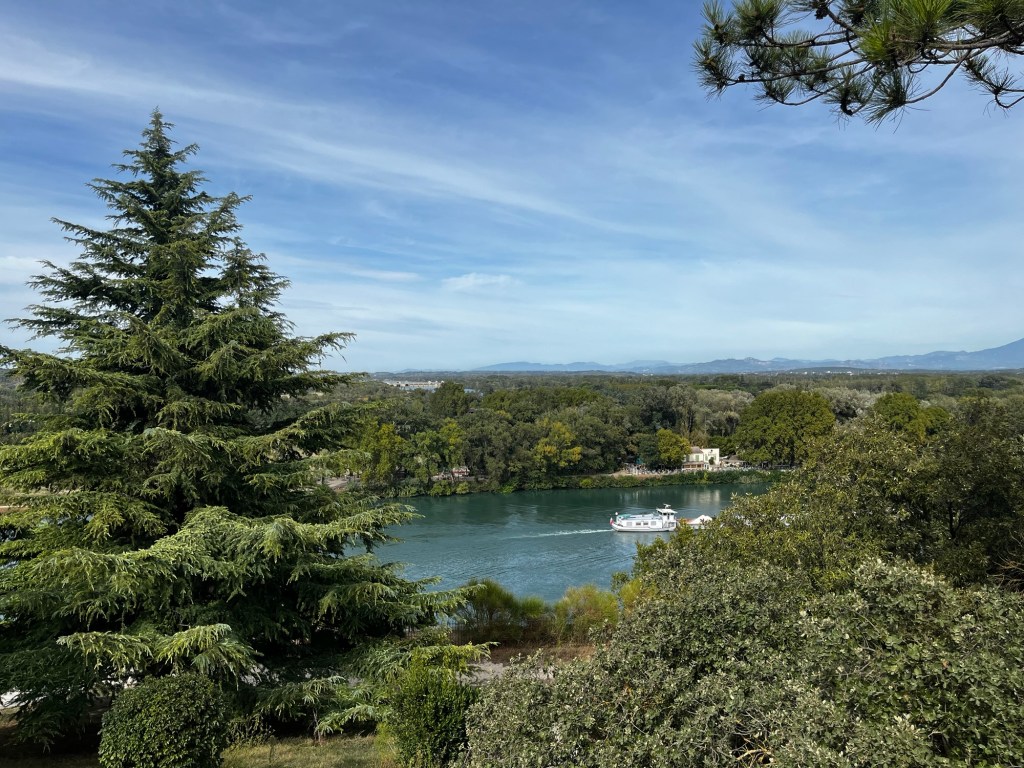
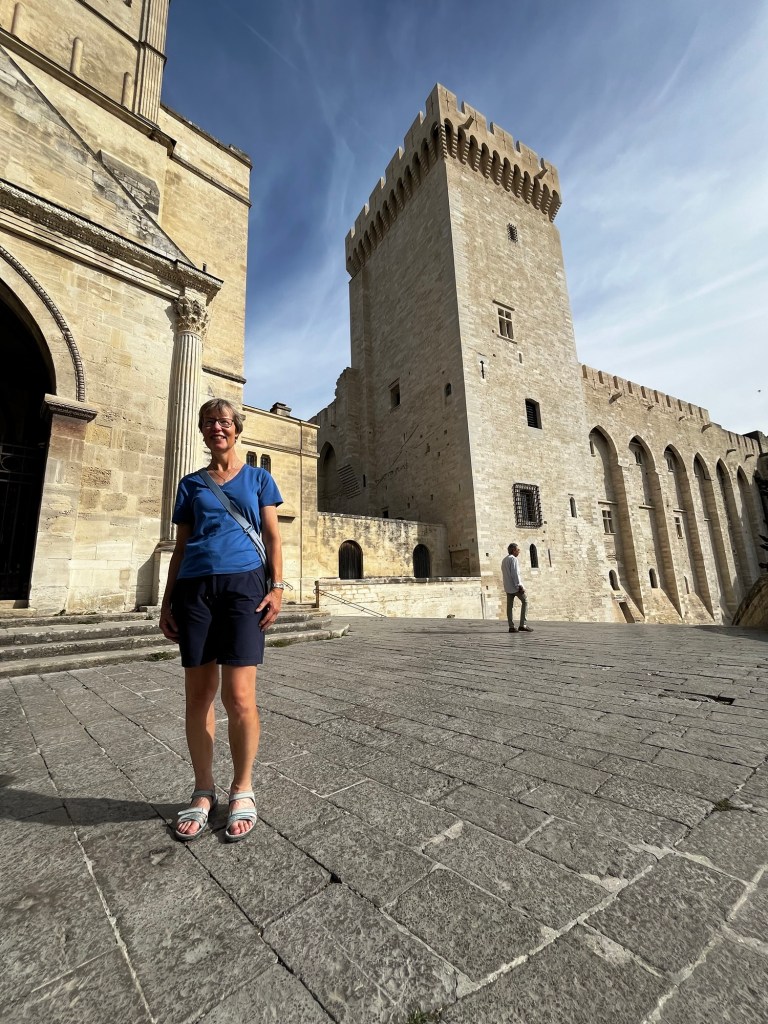
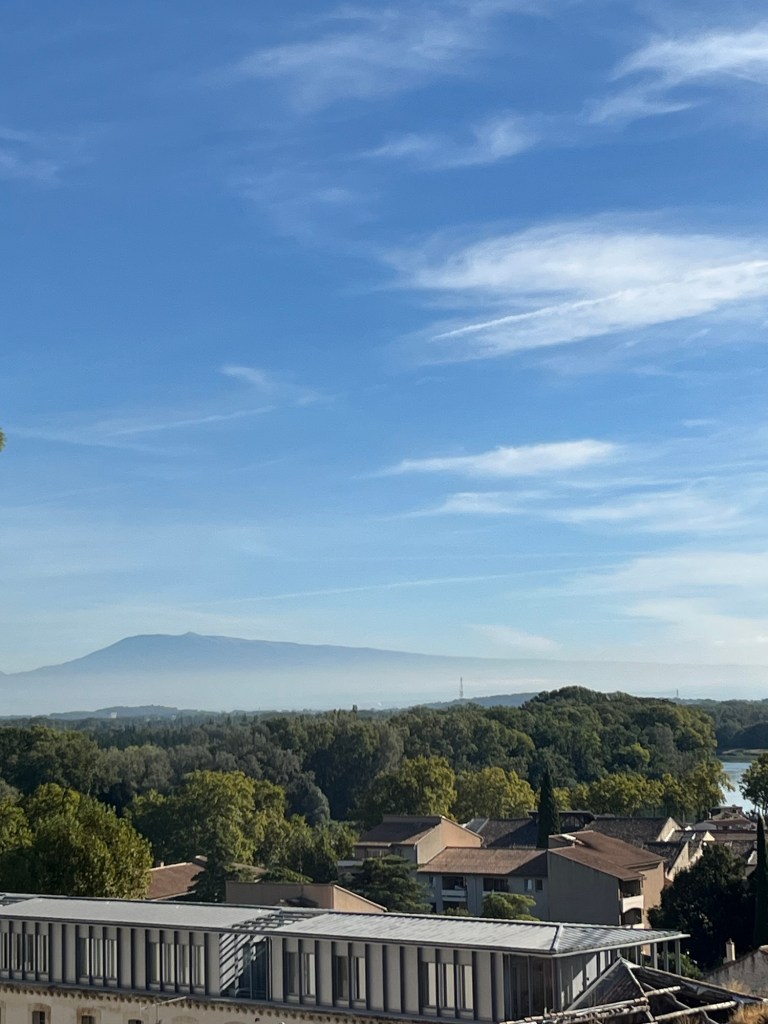
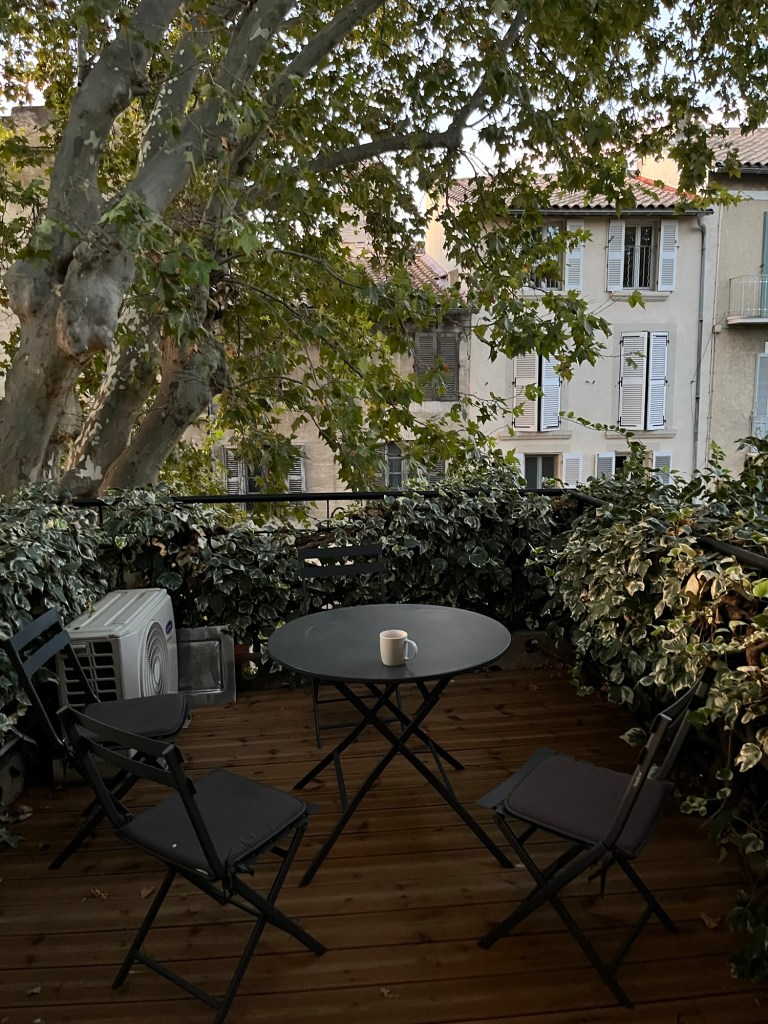
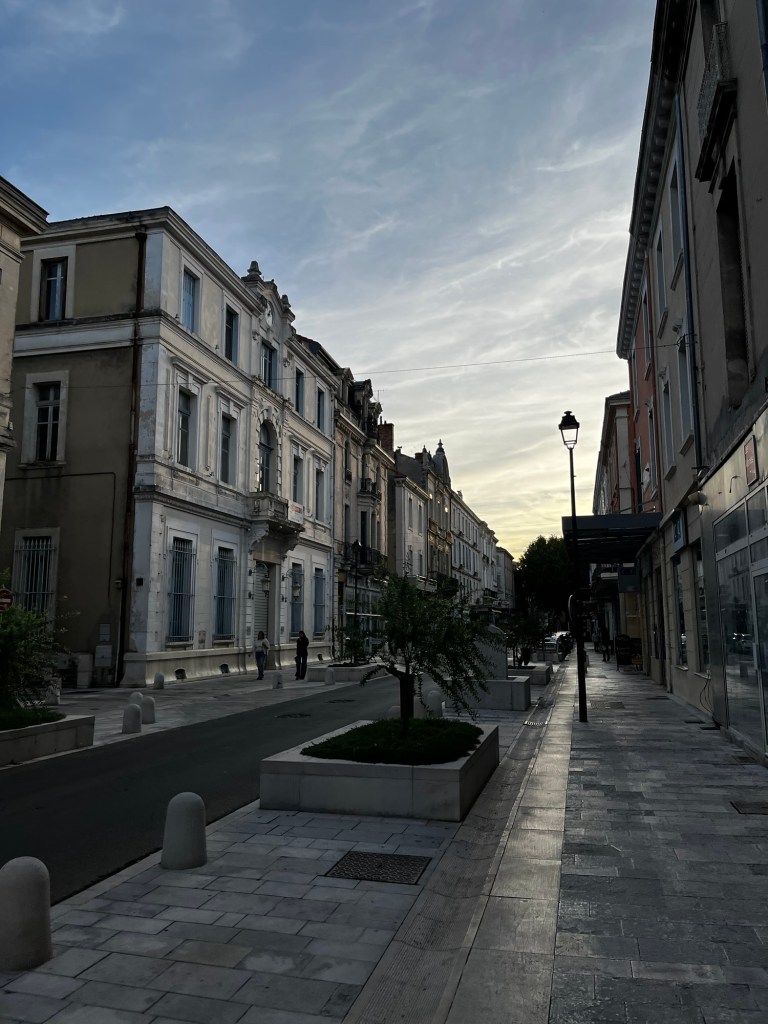
Afternoon was passed with a walk up to the pope’s gardens at the top of the old town, with great views out over the town, Mt Ventoux and back up the Rhone to Chateuneuf-du-Pape (visible in the distance) and beyond. We also revisited Rue Banasterie where we stayed in 2023 and located the Airbnb.
Gravel Ride
In Avignon
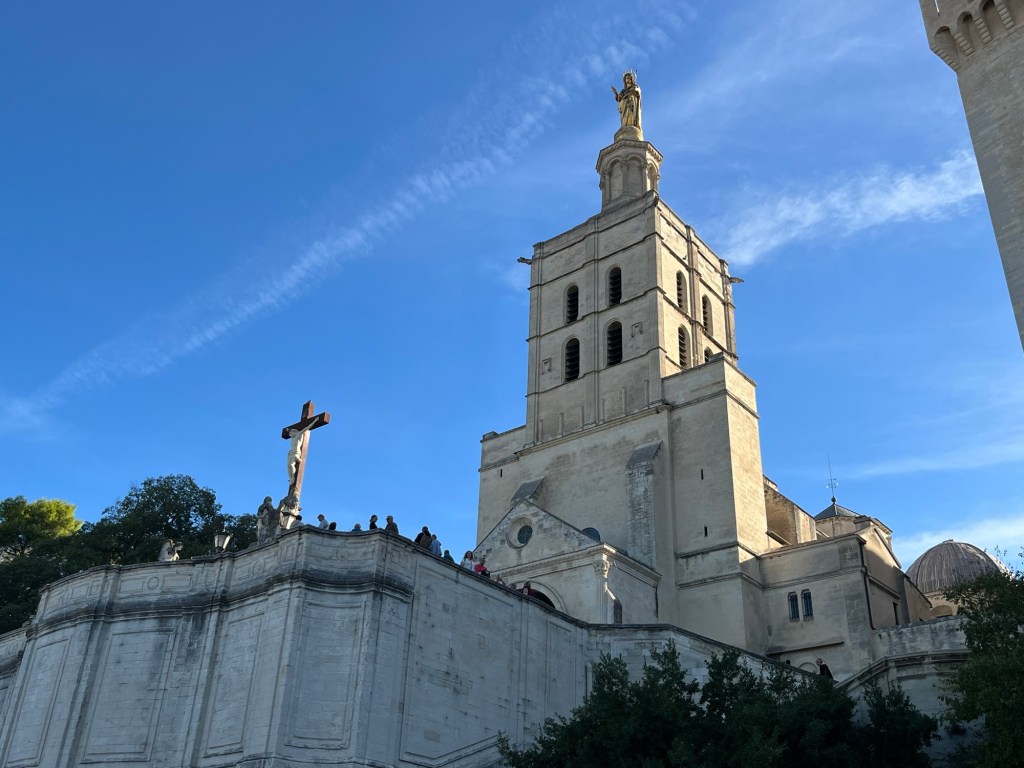
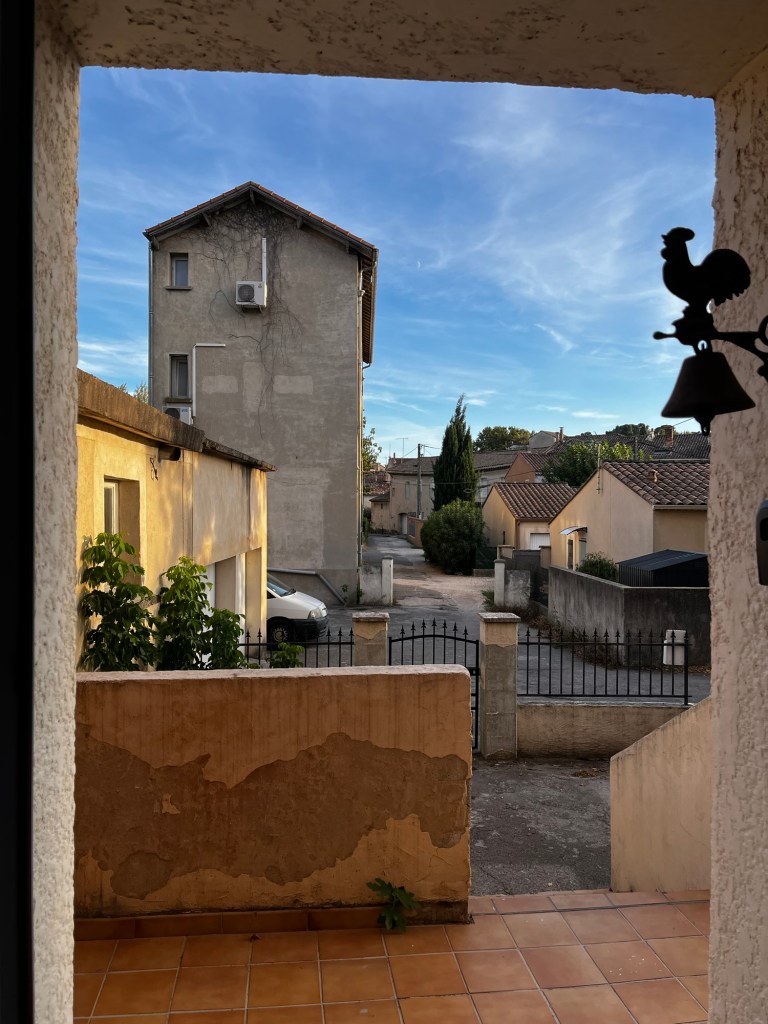
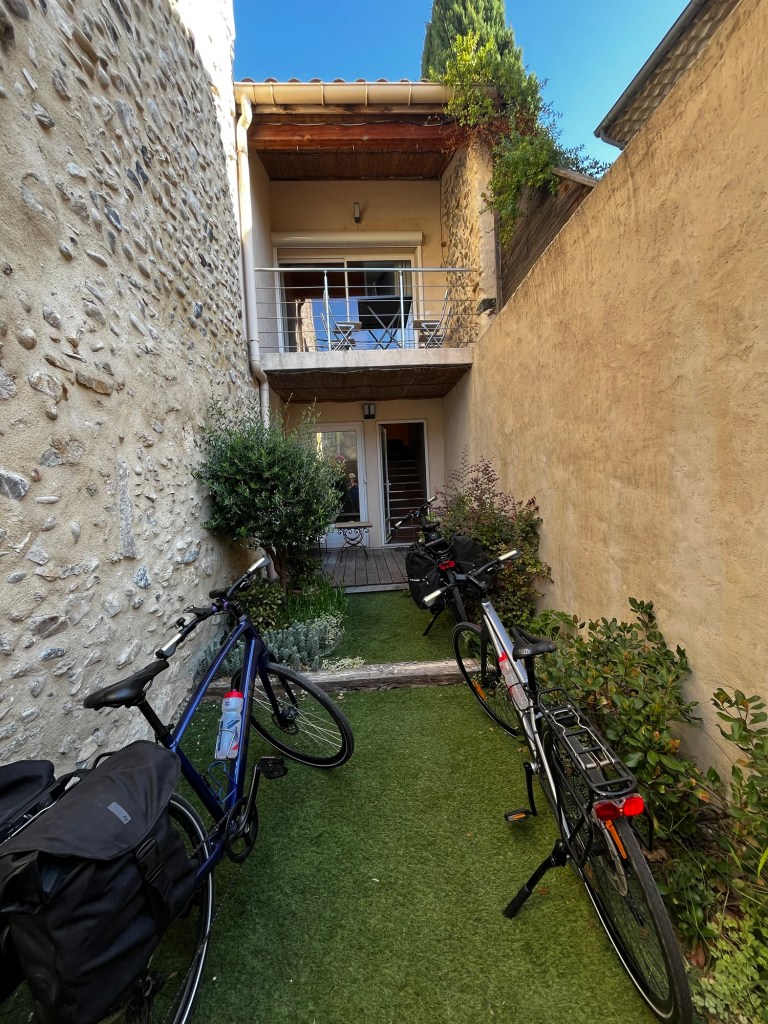
Mont Ventoux from above the Popes PalaceThe cathedralAirbnb patio
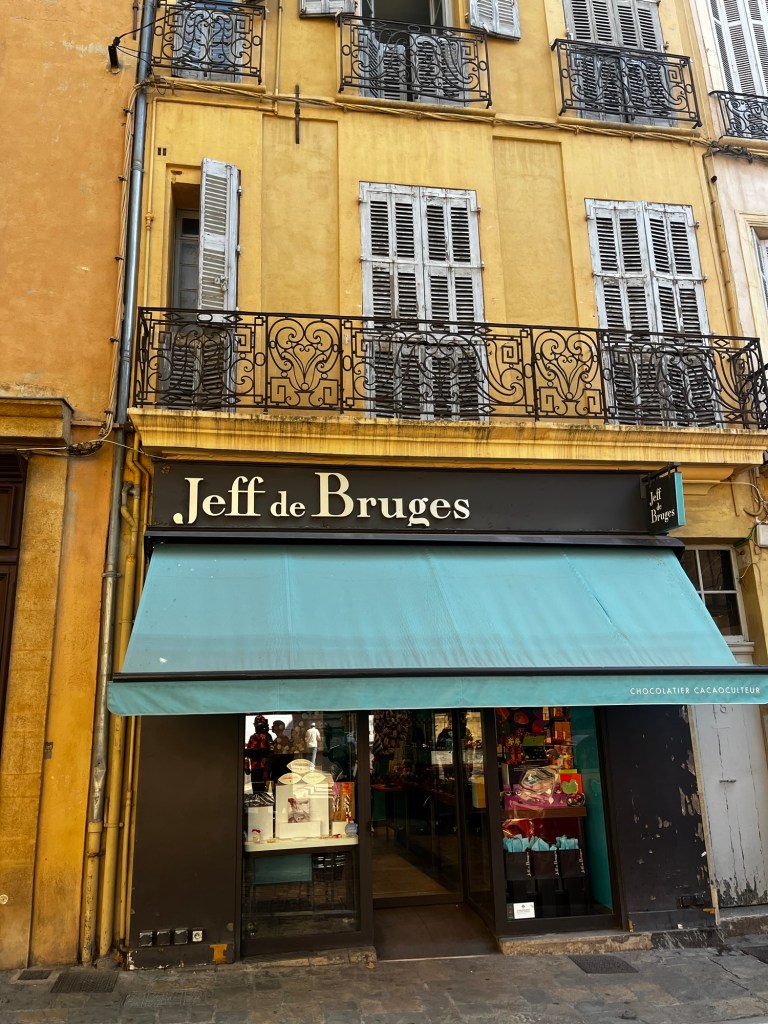
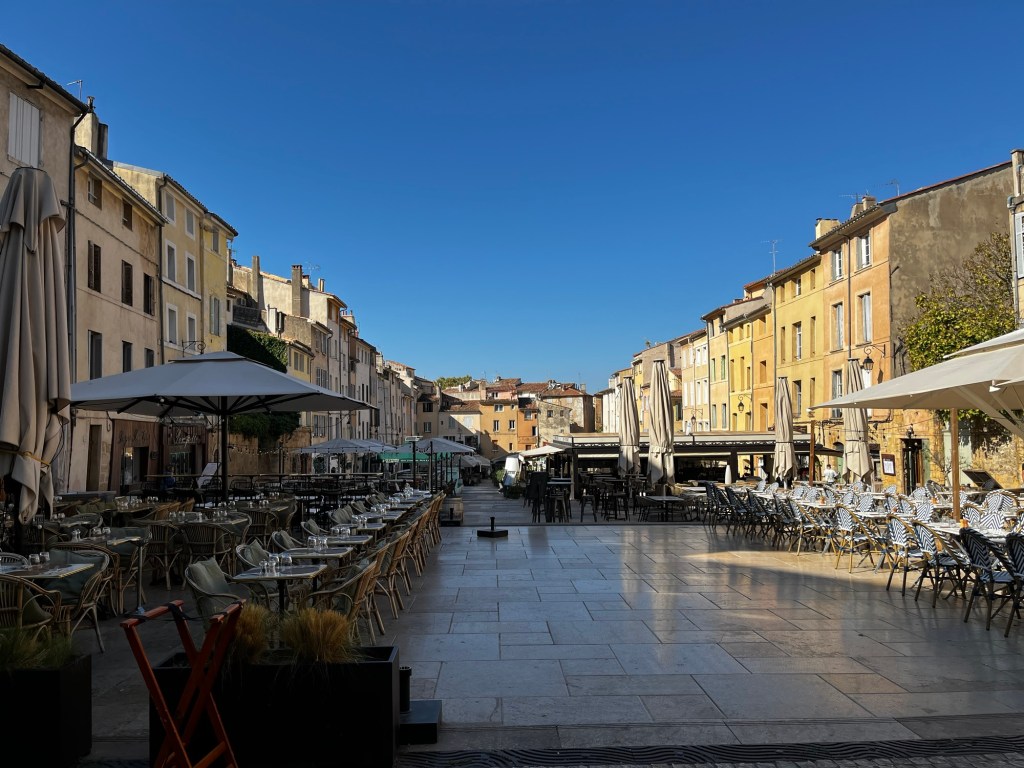
We scheduled most of this day for a gentle wander round Aix.
A word about the weather – as with every other day of this holiday, we woke to clear skies and as the day went on the temperature rose to around 30 degrees.
As with the Rhone valley, winds rose through the afternoon and helped keep us reasonably comfortable. It hasn’t felt particularly humid and it has been cooler in the evenings.
All the reviews of the Airbnbs we have been using have featured comments about the summer heat and the various properties’ air conditioning or lack of it. It looks like 40 degrees was the norm for long periods this summer and the wine salesman in Chateauneuf-du-Pape said that it had been that hot until very recently.
Happily, 30 degrees with breezy afternoons has made for comfortable cycling and general holidaying.
A final note on the heat – whilst researching Aix, we found the quoted average temperature for July was 25 degrees. That will need amending!
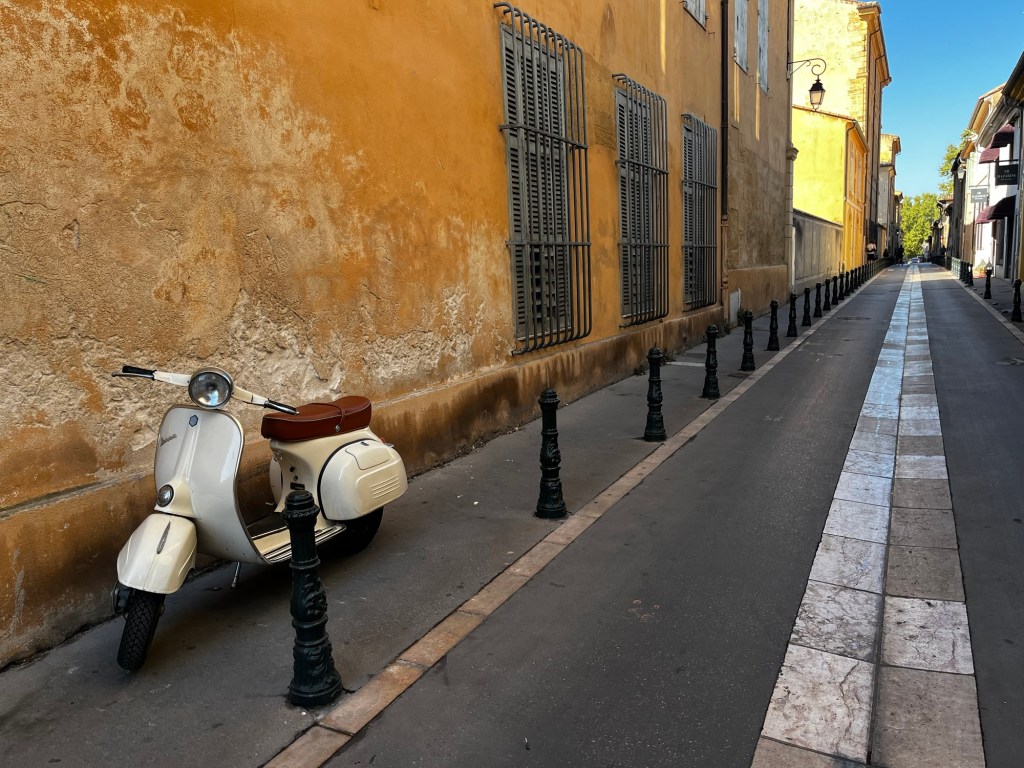
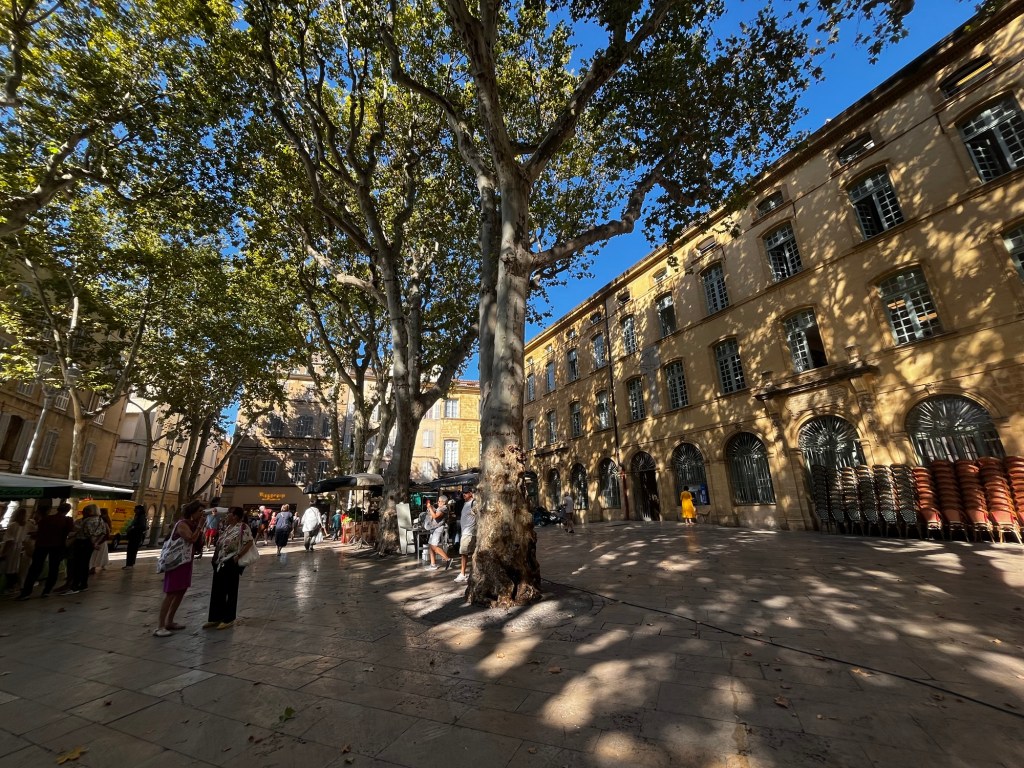
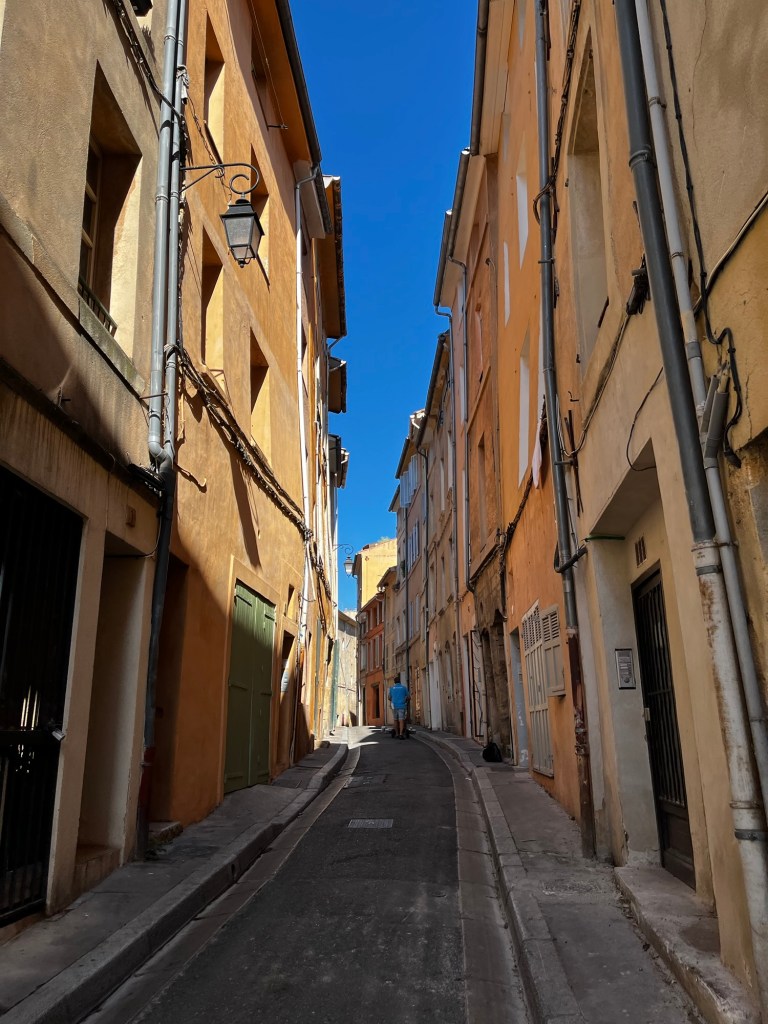
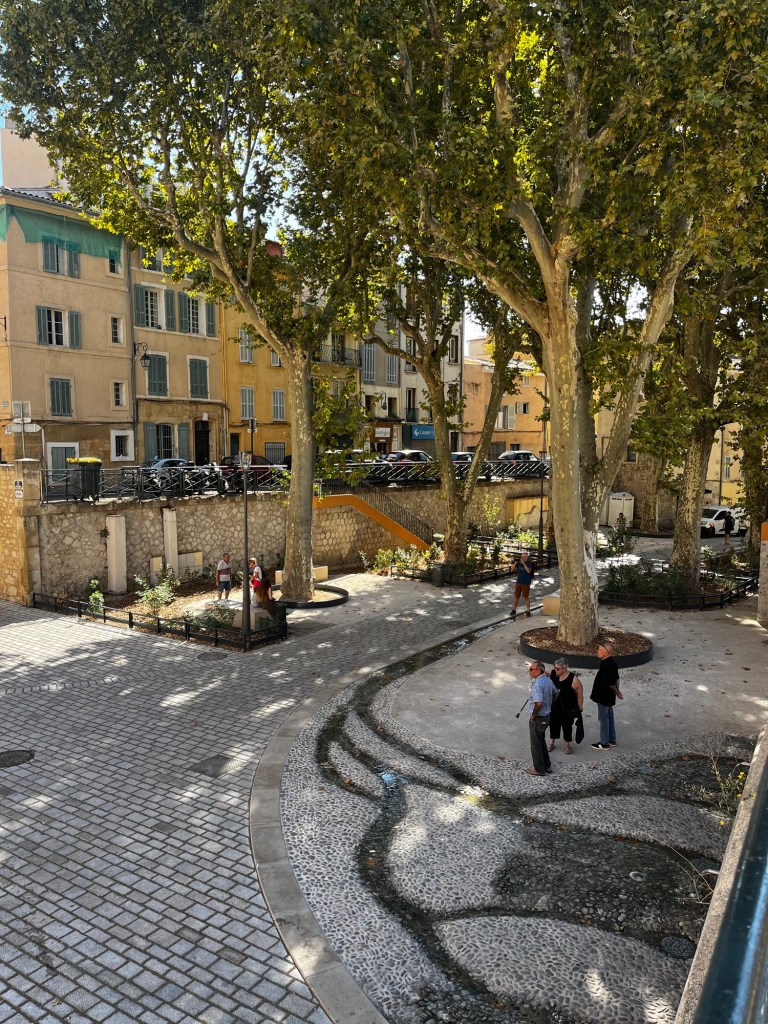
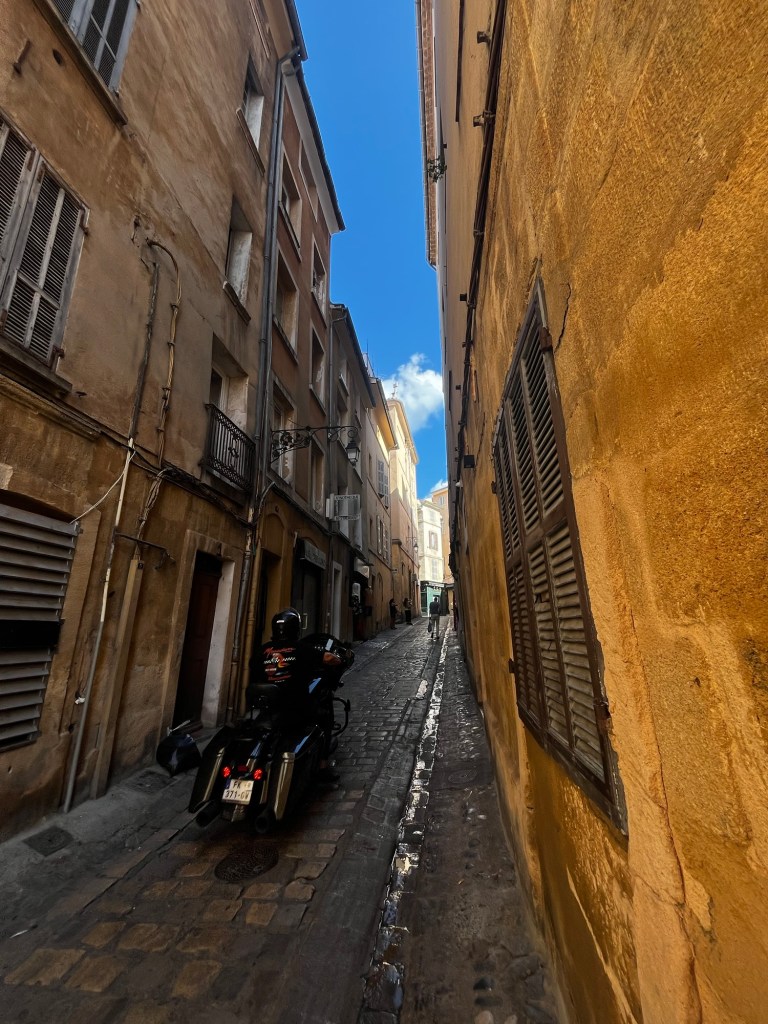
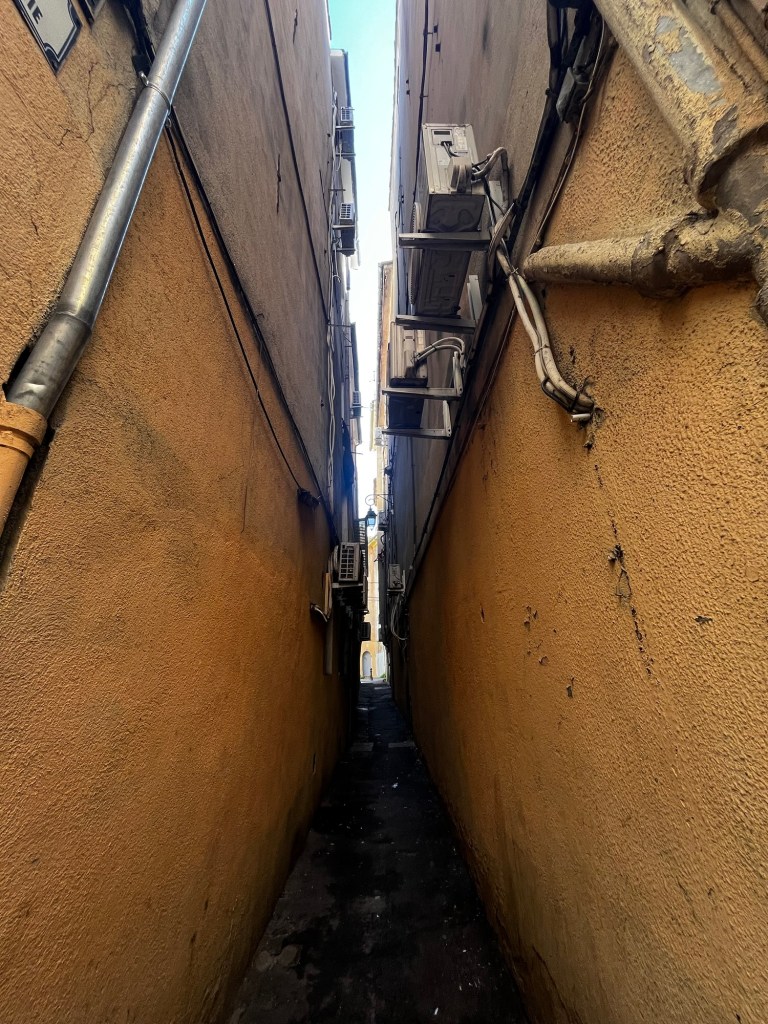
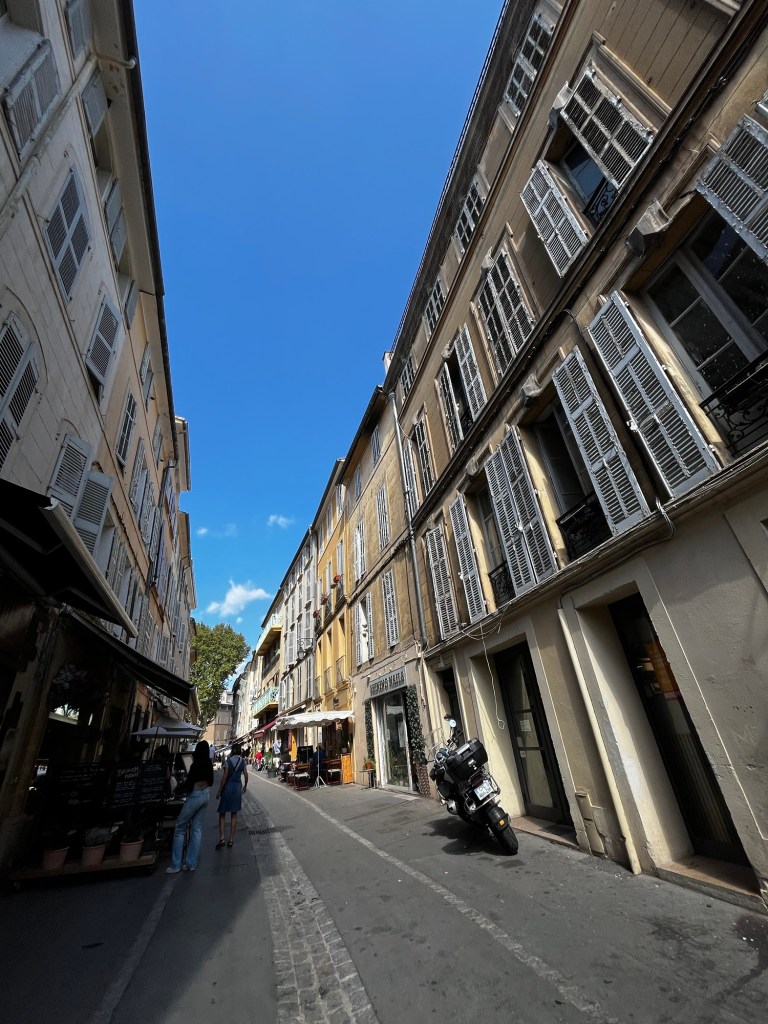
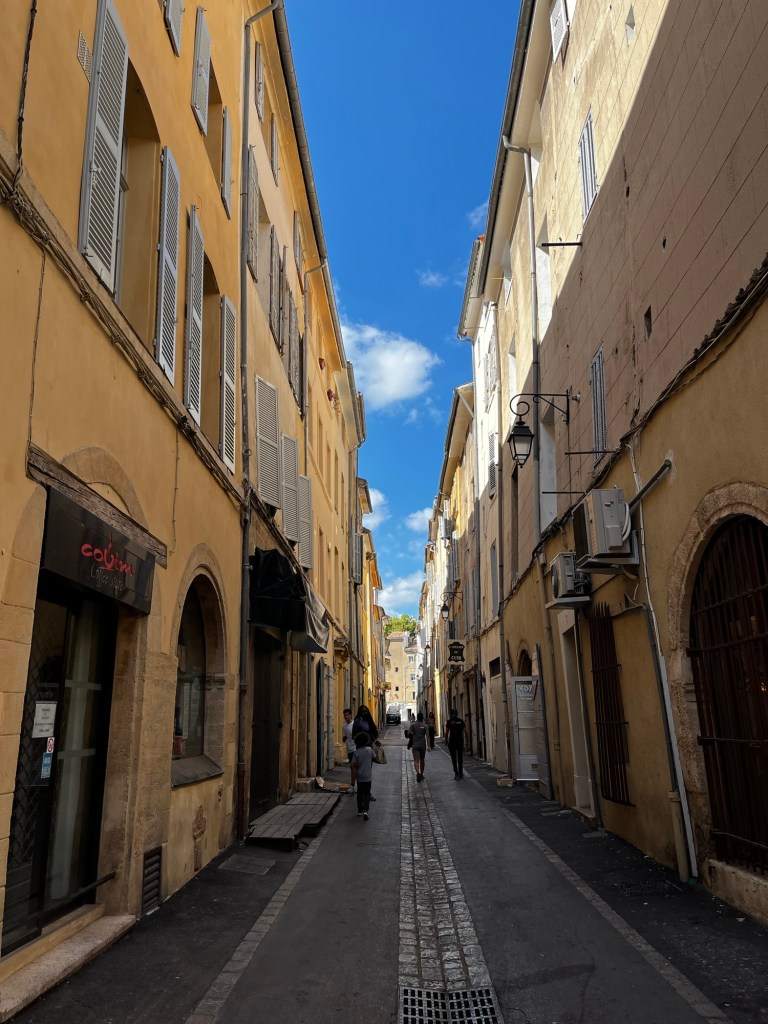
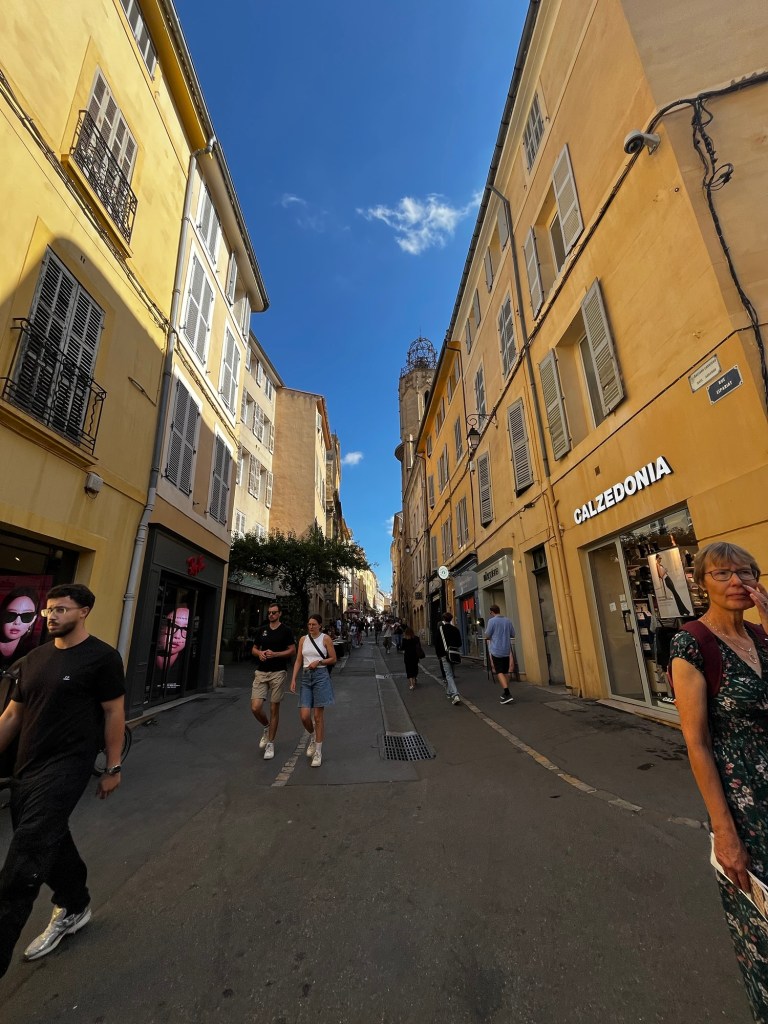
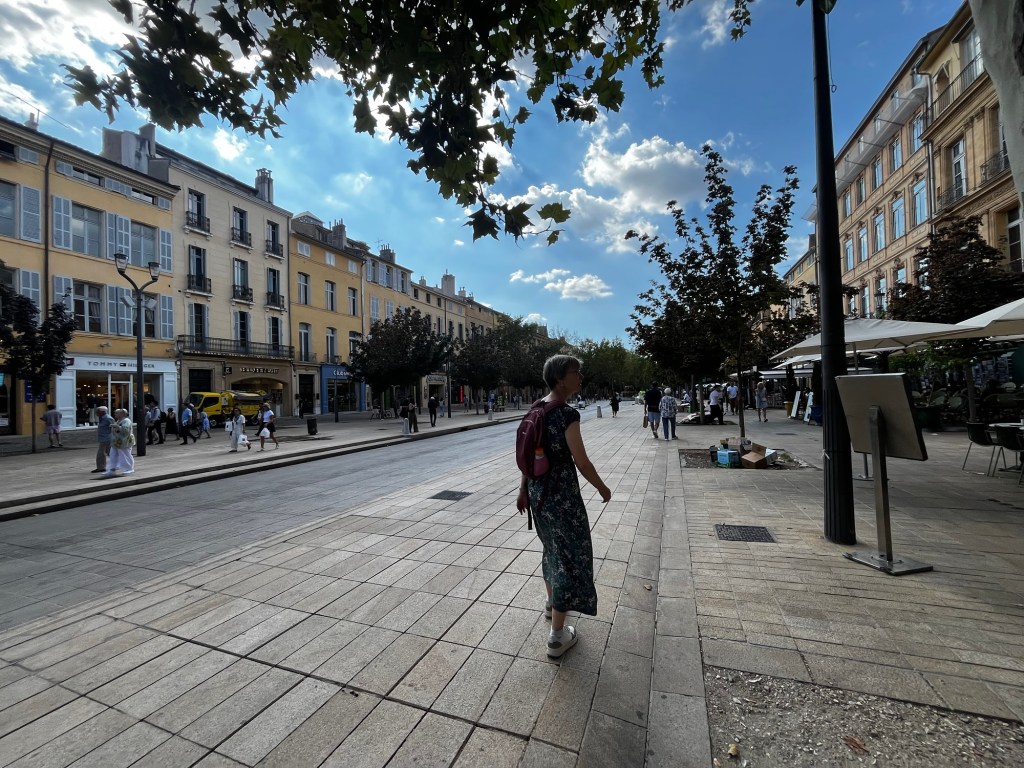
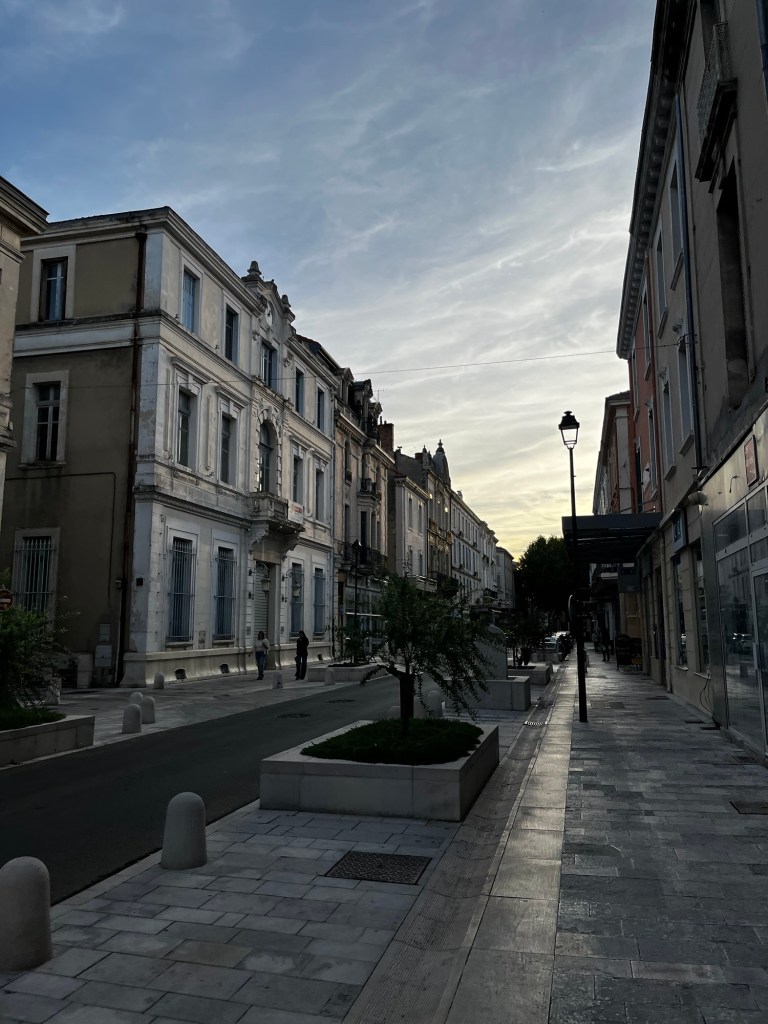
Back to Aix and we wandered the narrow and colourful streets to the north of the centre. Markets sprout in many of the squares in the morning and fade away sometime after lunch.
As previously noted, Aix is generally quieter and less touristy than Avignon and the high proportion of young people added to the sense of a vibrant city.
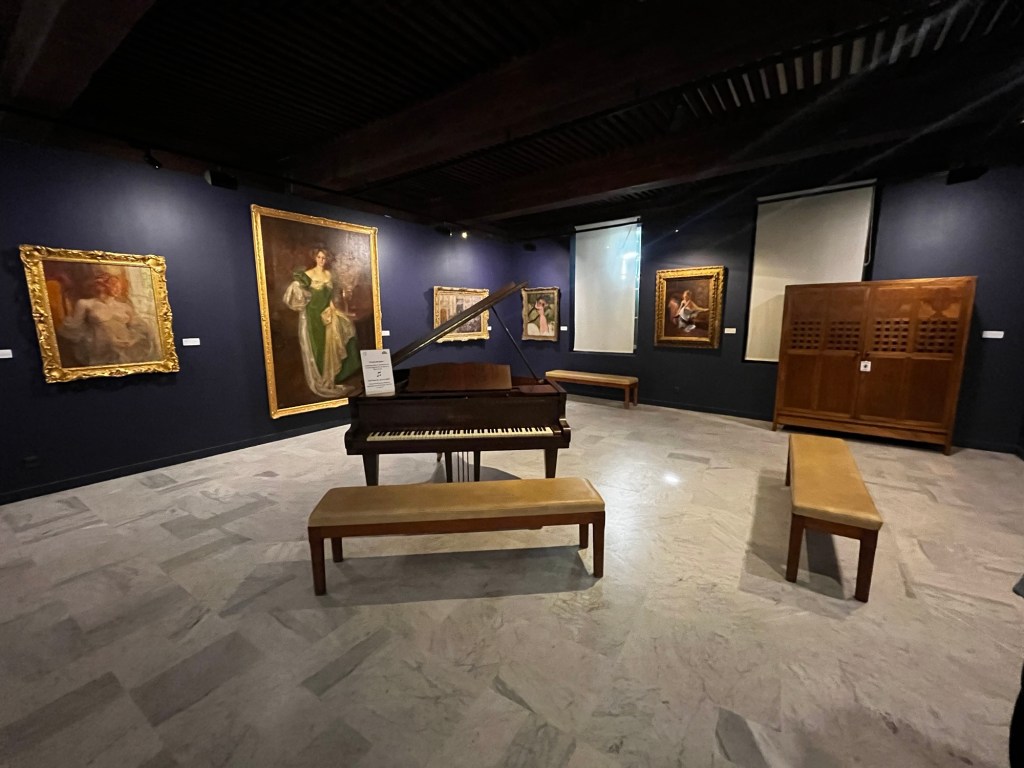
We spent a profitable couple of hours in the Musée Granet, which is dedicated to Paul Cézanne and has several of is paintings though most of his output is held elsewhere. We discovered more about this revolutionary artist who was born and died in the city and painted many scenes in the local Provence hills including La Montagne Sainte-Victoire, which we had explored the previous day.
The museum also housed a large sculpture collection. The current featured exhibition was dedicated to Paul McCartney’s photography from 1963 to 1964. It was an impressive selection of images and McCartney was clearly a talented and dedicated snapper.
There were shots from the Beatles trips to New York, Florida and Paris and additional photography from some of the press photographers of the time.
McCartney’s images were largely candid shots of the group and their support crew, and of fans at airports and city locations.
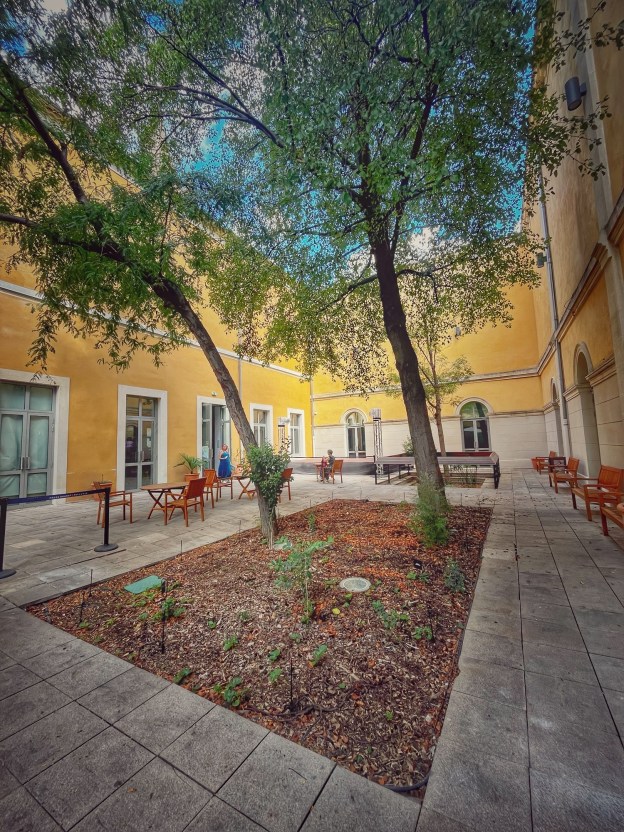
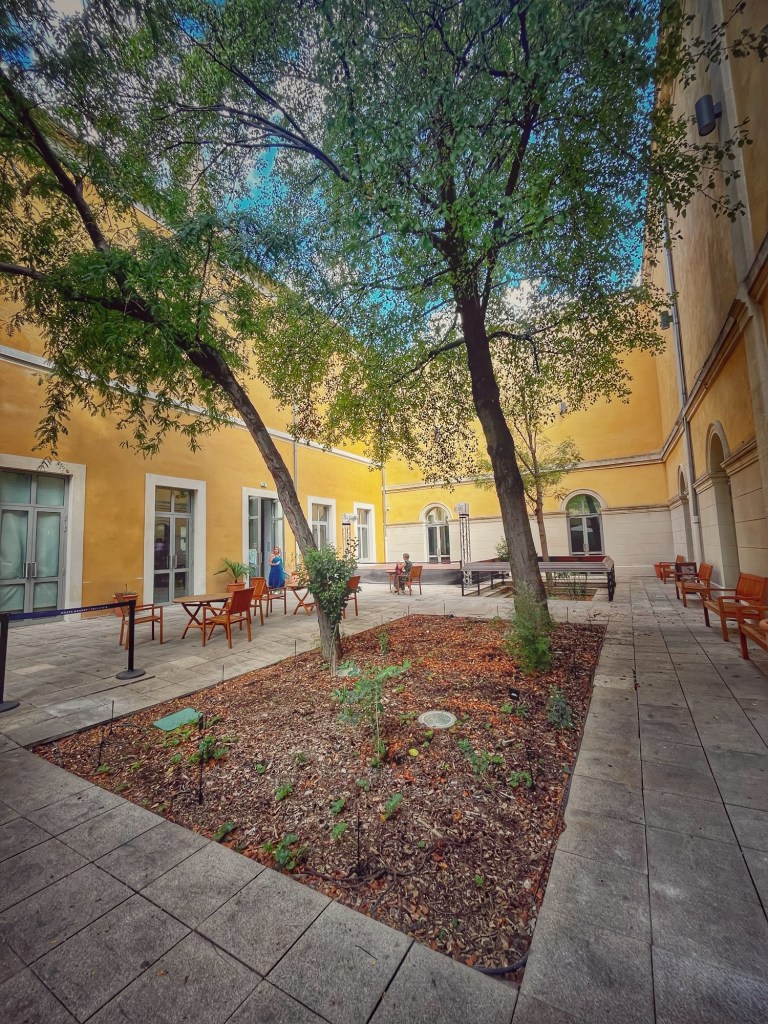
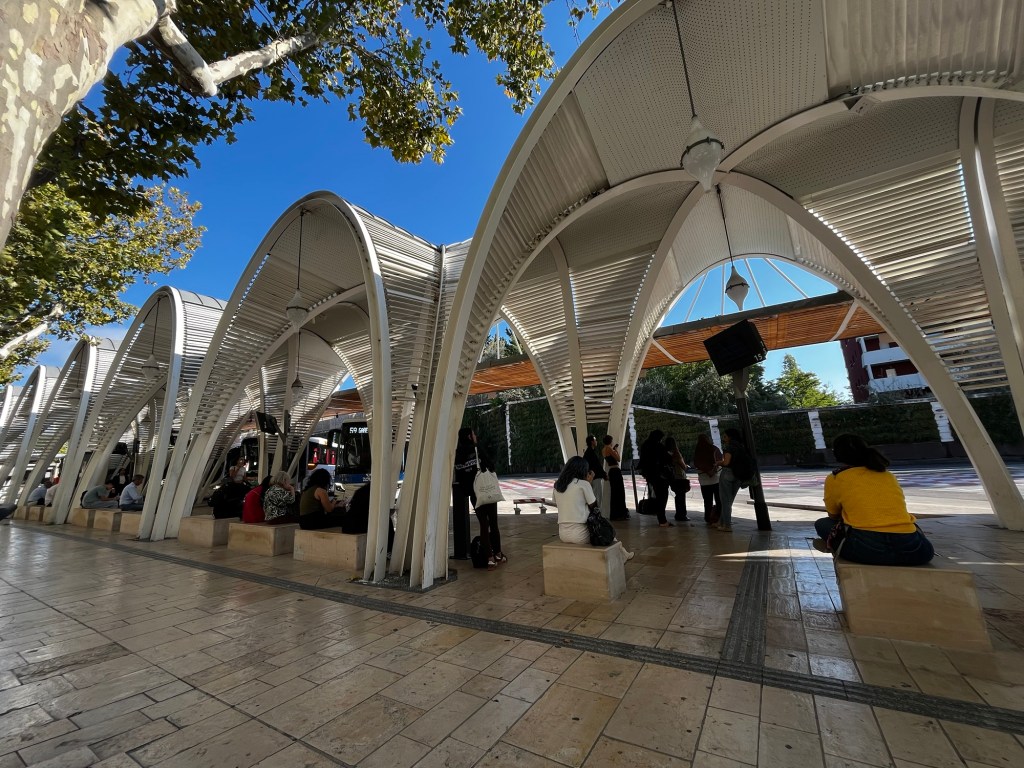
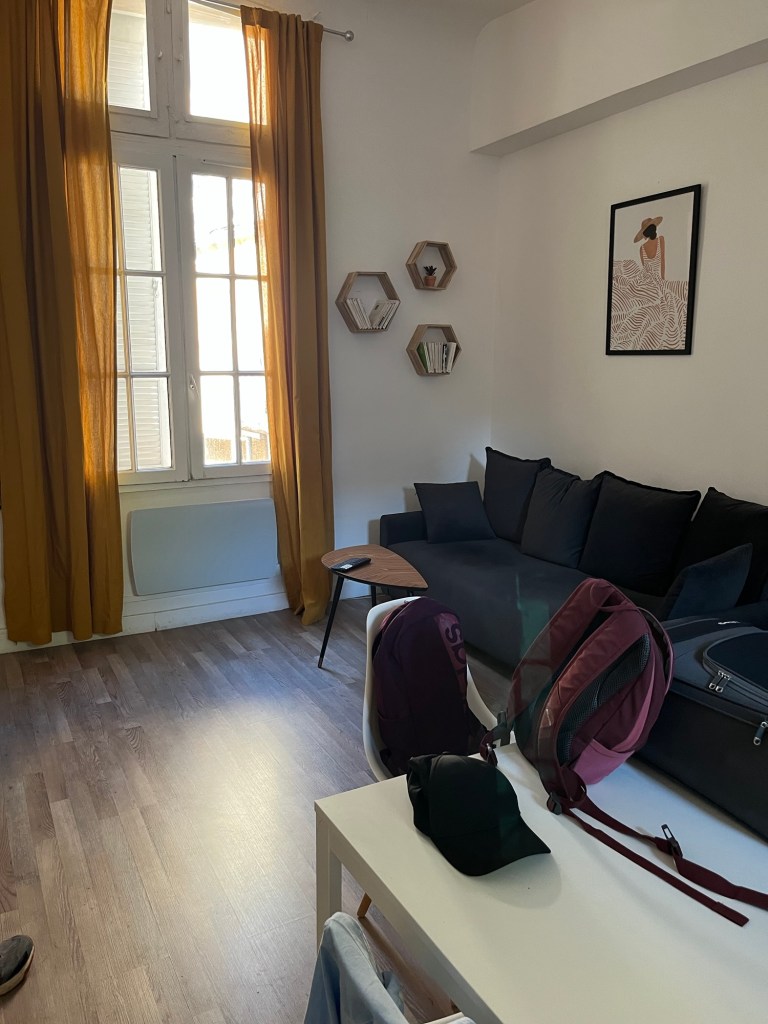
We ate lunch in the museum’s cool and peaceful courtyard, before heading off for a little shopping and then down to the bus station for our late afternoon trip to Avignon, where we had an apartment, appropriately called “Cezanne”, for our final two nights.
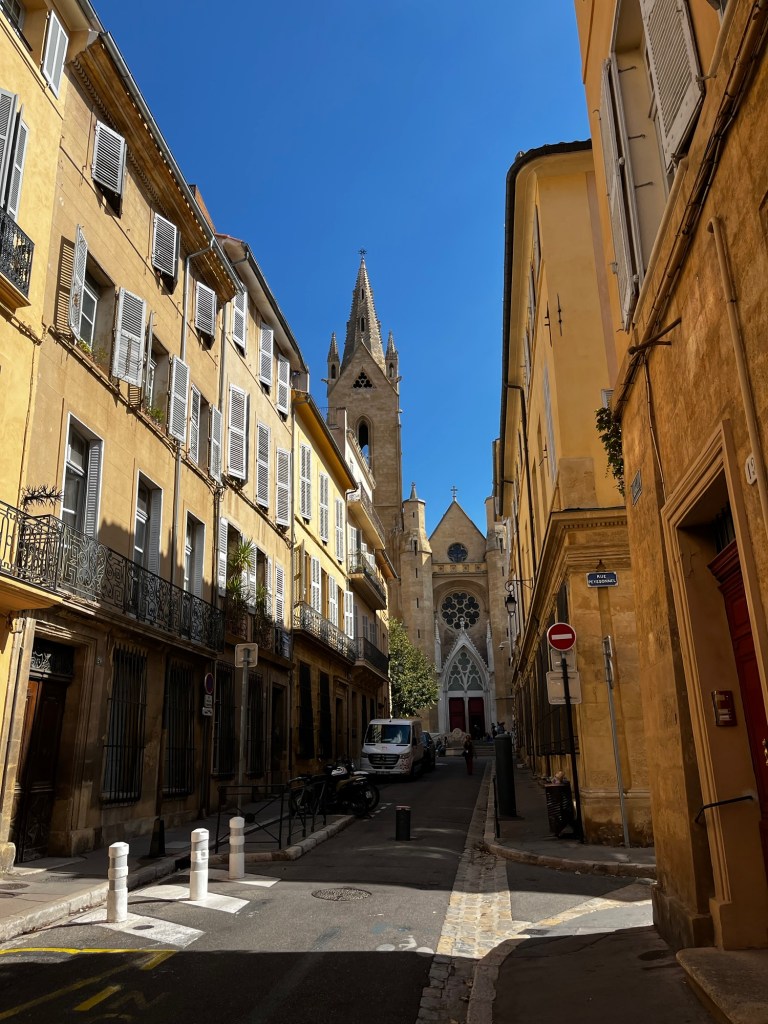
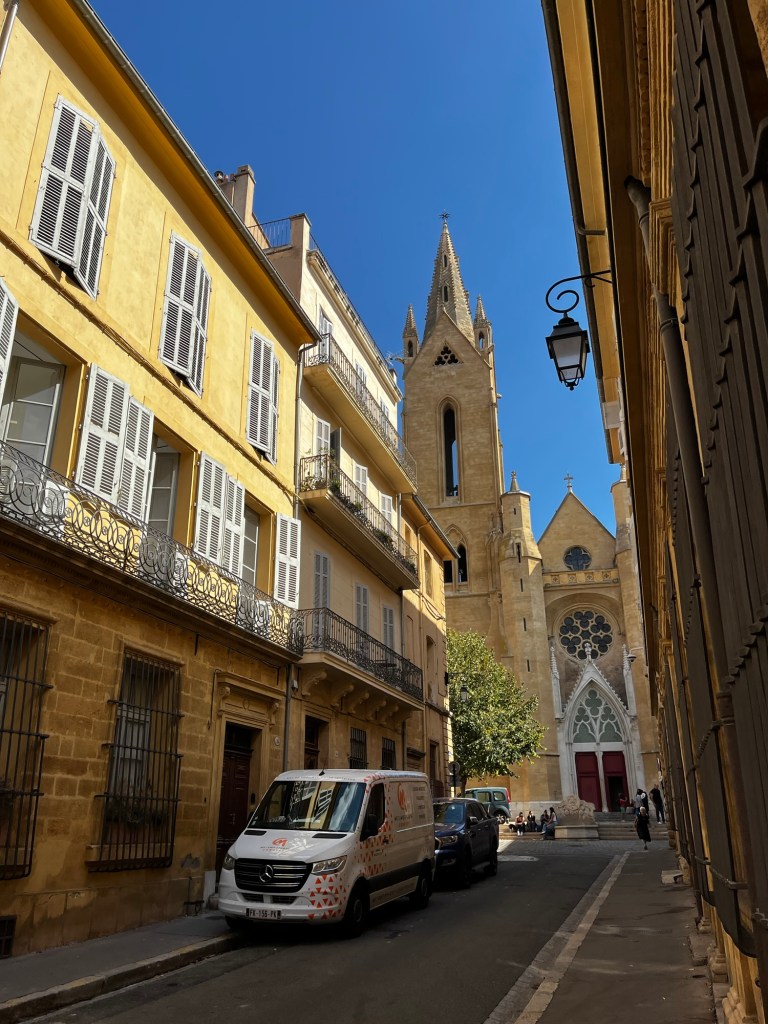
A quiet morning walking around Aix-en-Provence revealed a beautiful city, a lot less “busy” than Avignon and somewhat less touristy.
Those are qualities that are hard to be really accurate about, but the impression is of a place full of young people – the student population is clearly significant.
Julie visited the cathedral, including a guided tour of its historic cloisters built on the site of a Roman forum and incorporating the pillars found during excavations. The guide spoke English but rather mangled some of her explanations of the many biblical carvings due to her strong accent! Meanwhile Phil explored the several street markets, which included flowers, food and crafts.
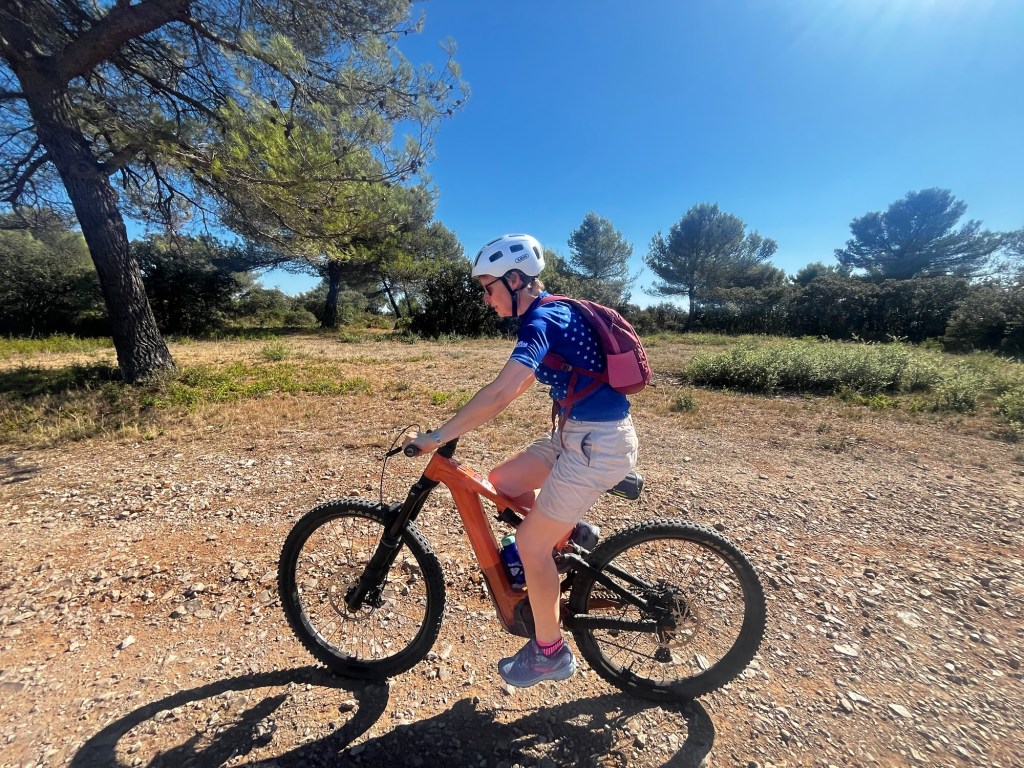
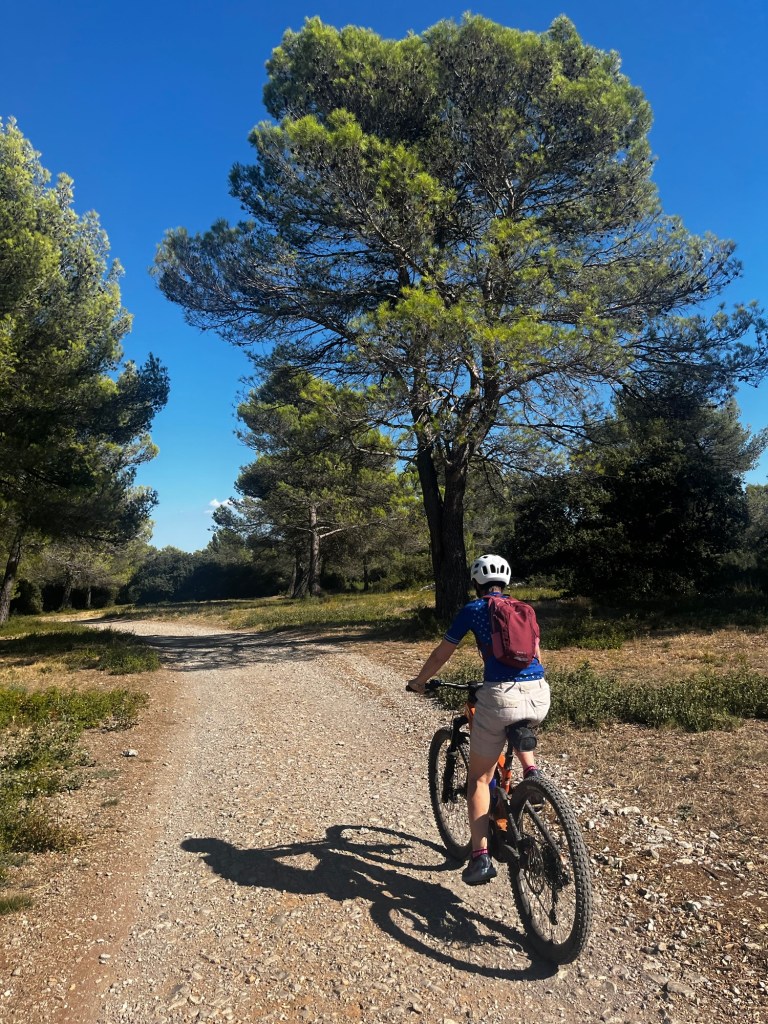
Our afternoon was spent riding a couple of hired e-mountain bikes. We had a rough plan to ascend the local mountain, Sainte Victoire, which stand 1,000 metres above sea level but this proved to be further away than expected and the “gravel” trails were also somewhat more challenging than expected.
We used Komoot to plan our route and did several “re-routes” along the way as we revised our plans.
Not only were the trails more technical than expected – very loose, with lots of larger stones and big drifts of fine gravel and dust – they were also closed in places, due to the fire risks.
Nonetheless, we had an excellent ride. It was hot for most of it, but the e-assist kept our effort levels low and we ended up covering a varied 23 miles of roads, tracks and trails.
Late in the ride we realised that the bikes’ tyres had been over inflated and after a major reduction in pressures all round, we found them much more stable and planted.
We suspect the otherwise charming hire shop owner subscribes to a roadie tyre-pressure regime on all his bikes.
For Phil, this was his first longer ride on an e-bike and, predictably, he found it an eye-opener.
Back in Aix we relaxed with well-earned beers before a meal of local sausage and pasta.
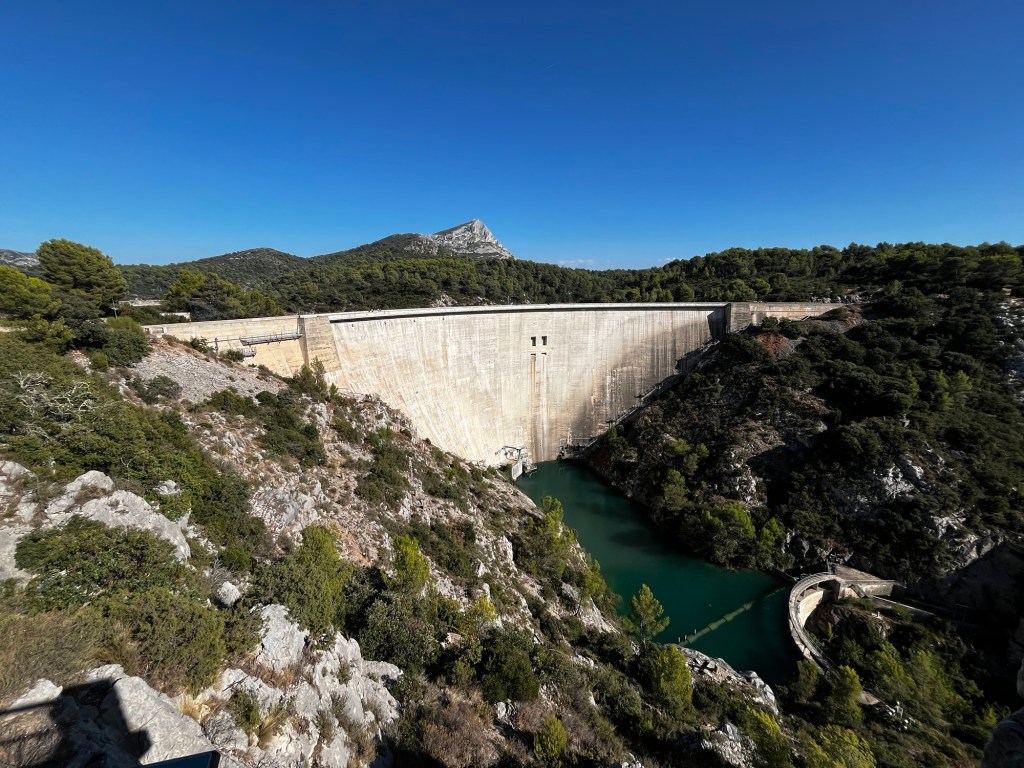
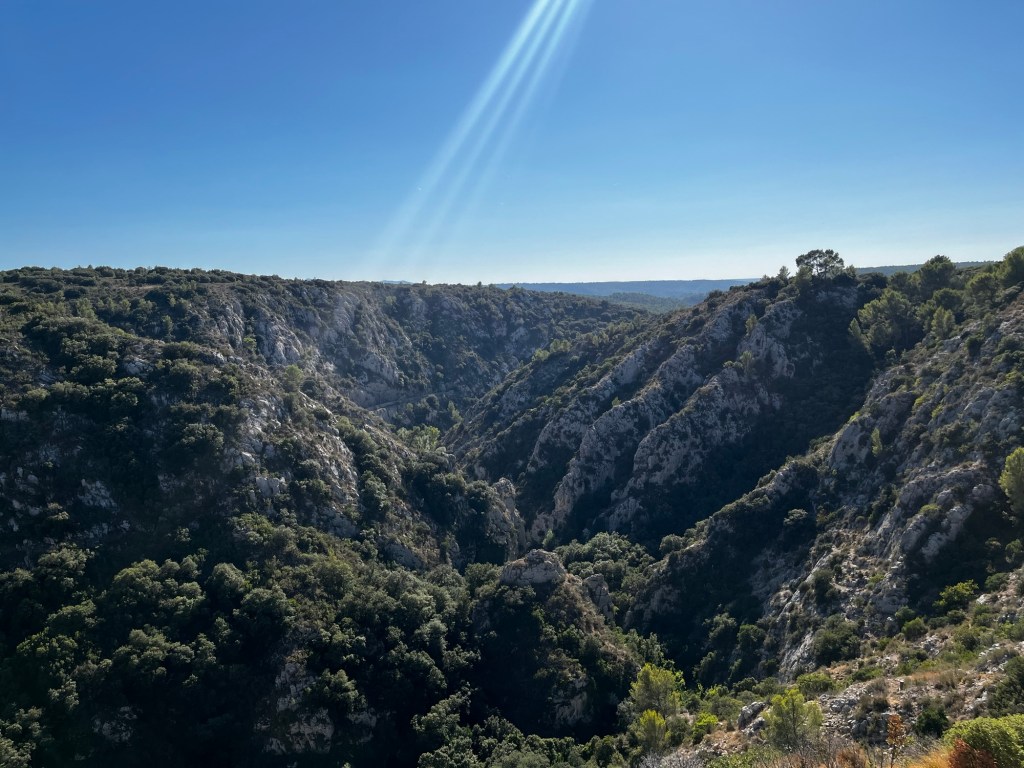
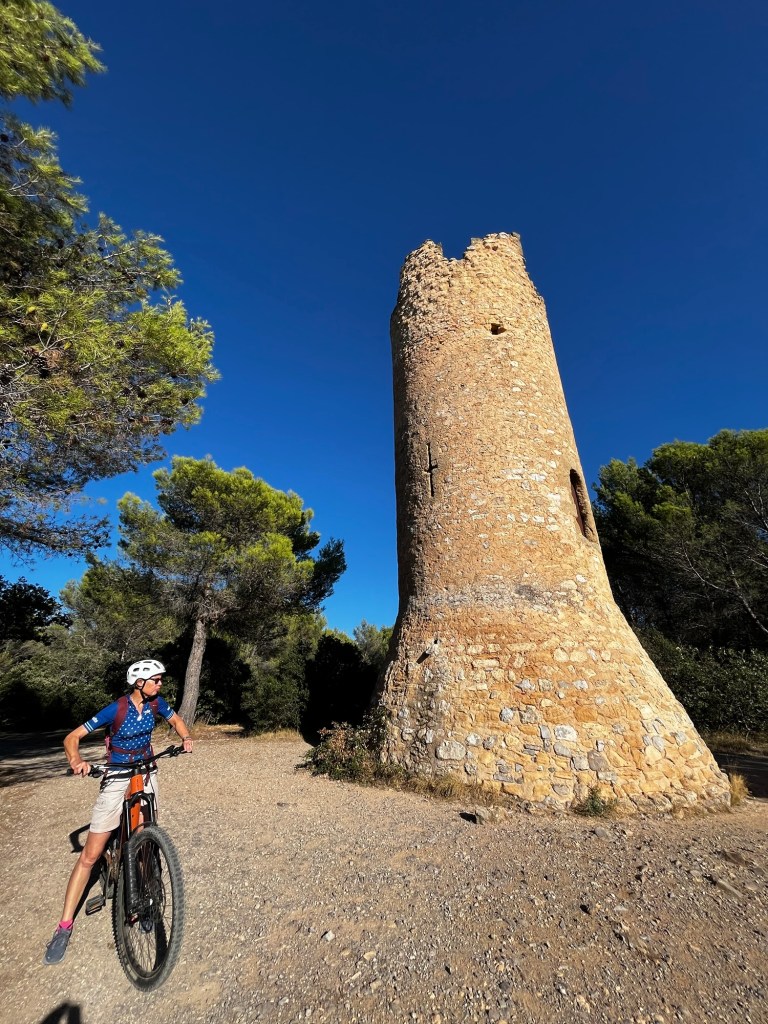
Heaven….. for Phil, at least SameLocal damGorgeTower and Julie
A transfer day – largely spent travelling from Avignon to Aix-en-Provence.
A 90 minute bus journey and the remainder of the day relaxing.
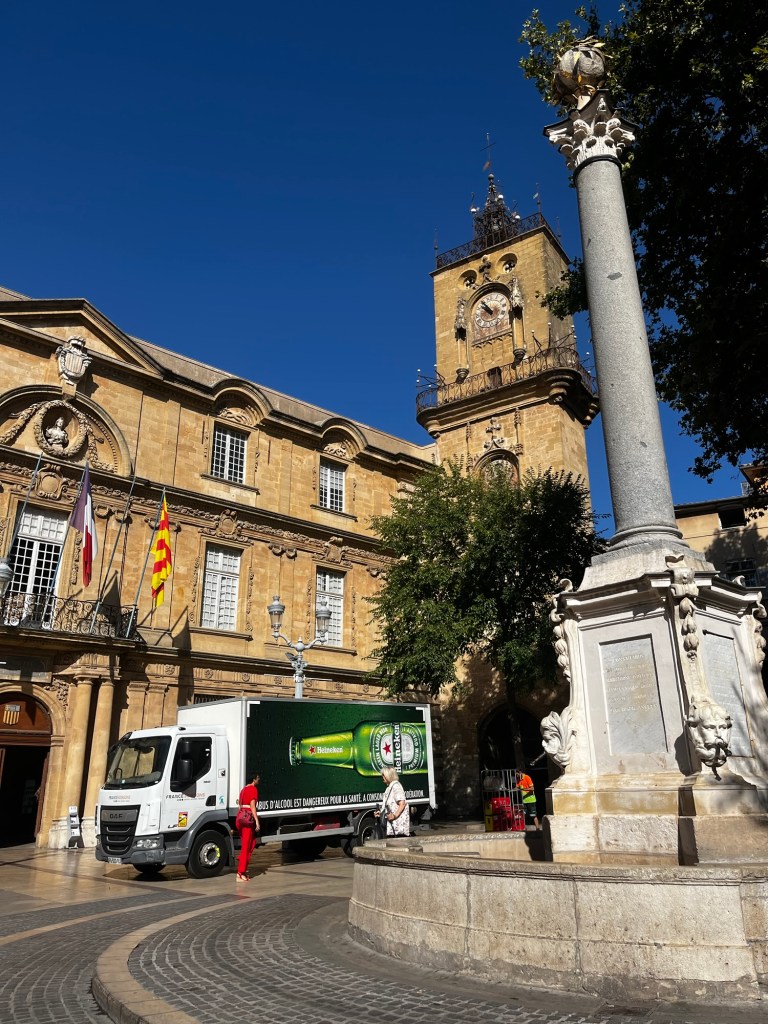
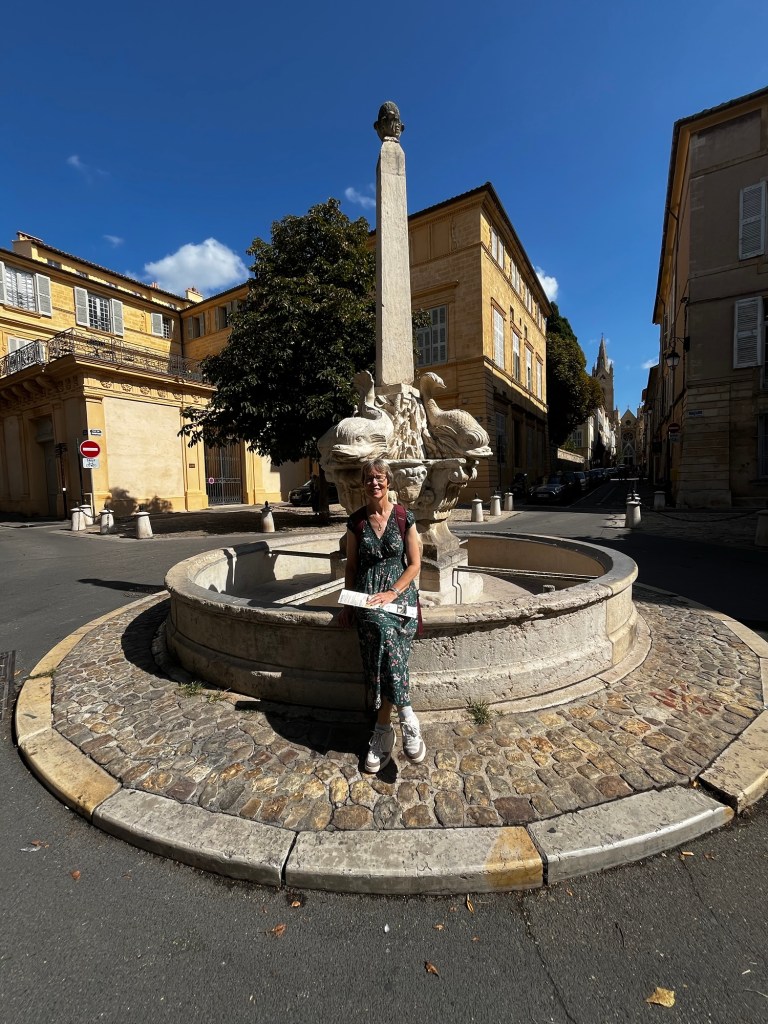
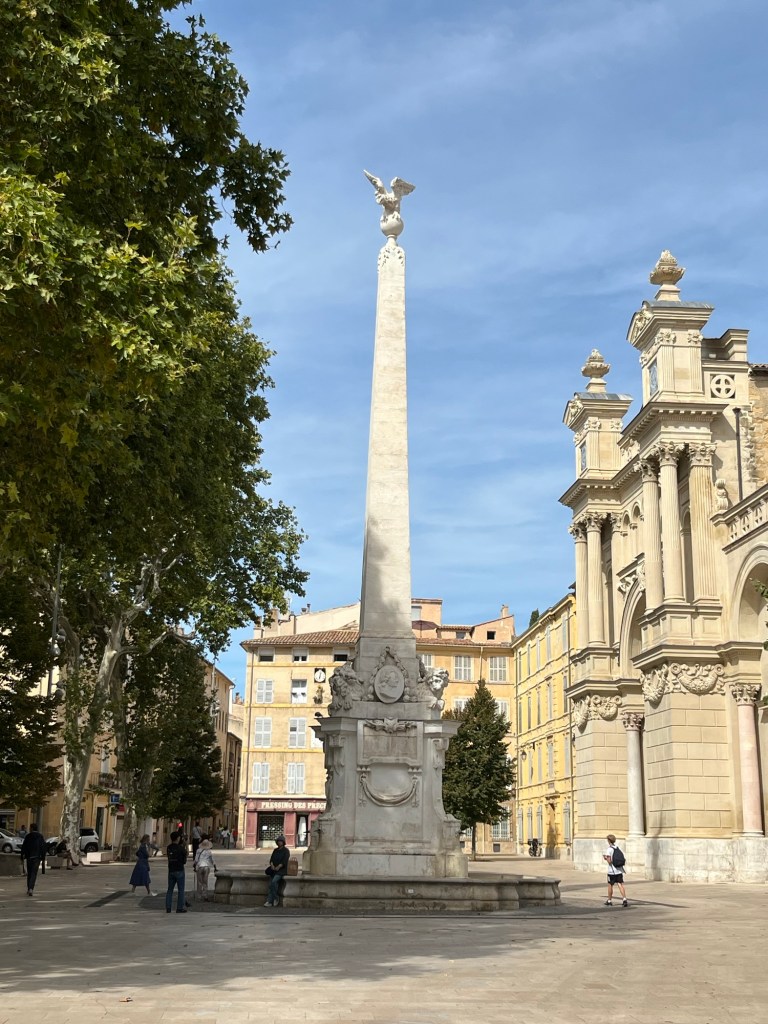
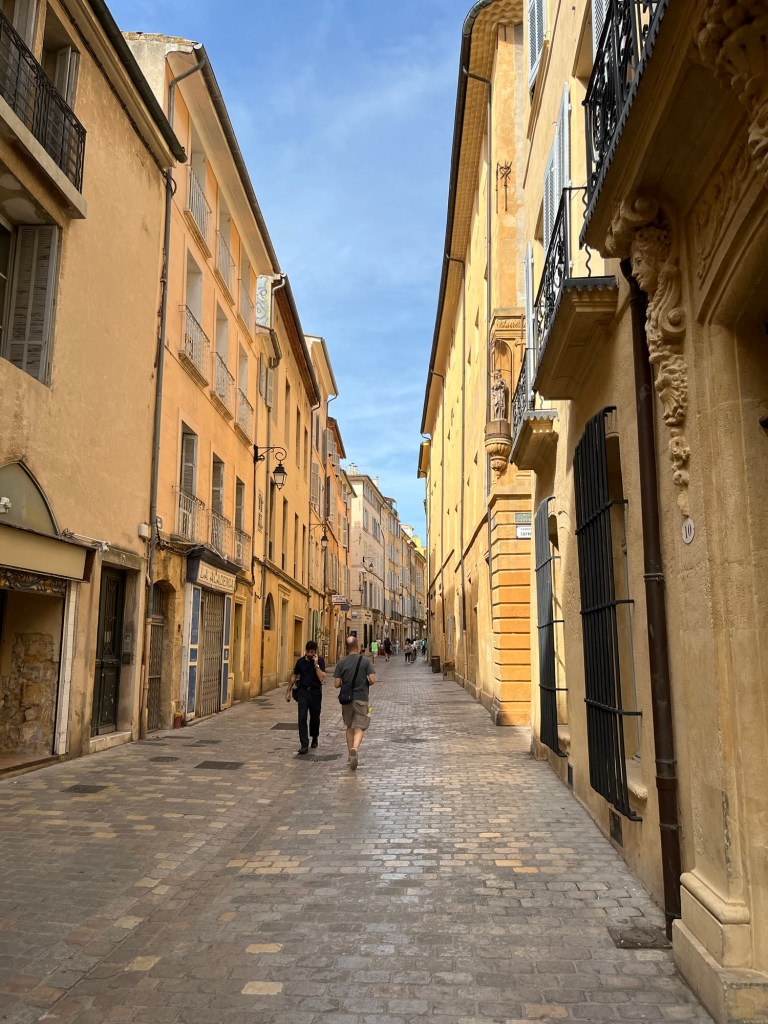
Aix though similarly touristy has a different vibe to Avignon and Arles. Lots of young people mingling with the visitors. The buildings are mostly honey coloured stone and very attractive. It’s known as the city of fountains and we saw the most famous on alighting from the bus, the Rotunde named for its large circular shape.
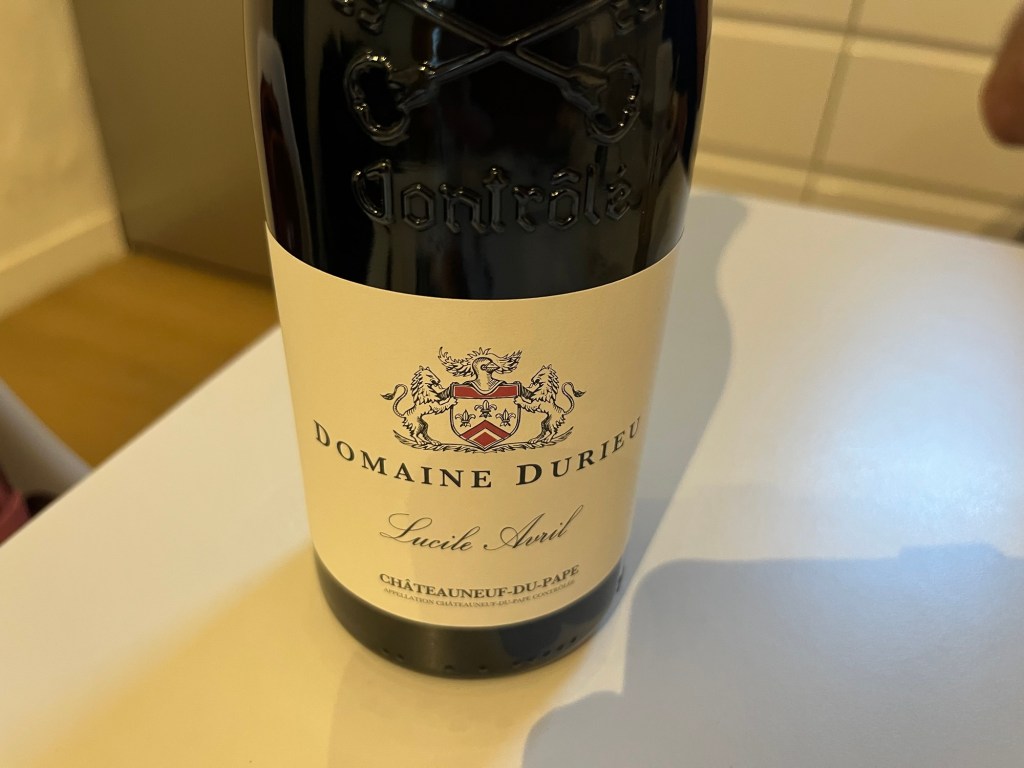
We cooked in our accommodation and opened our recently purchased bottle from the chateau neuf de pap winery. Then followed it up with an evening walk around town.
Not much else to report. So that’s it!
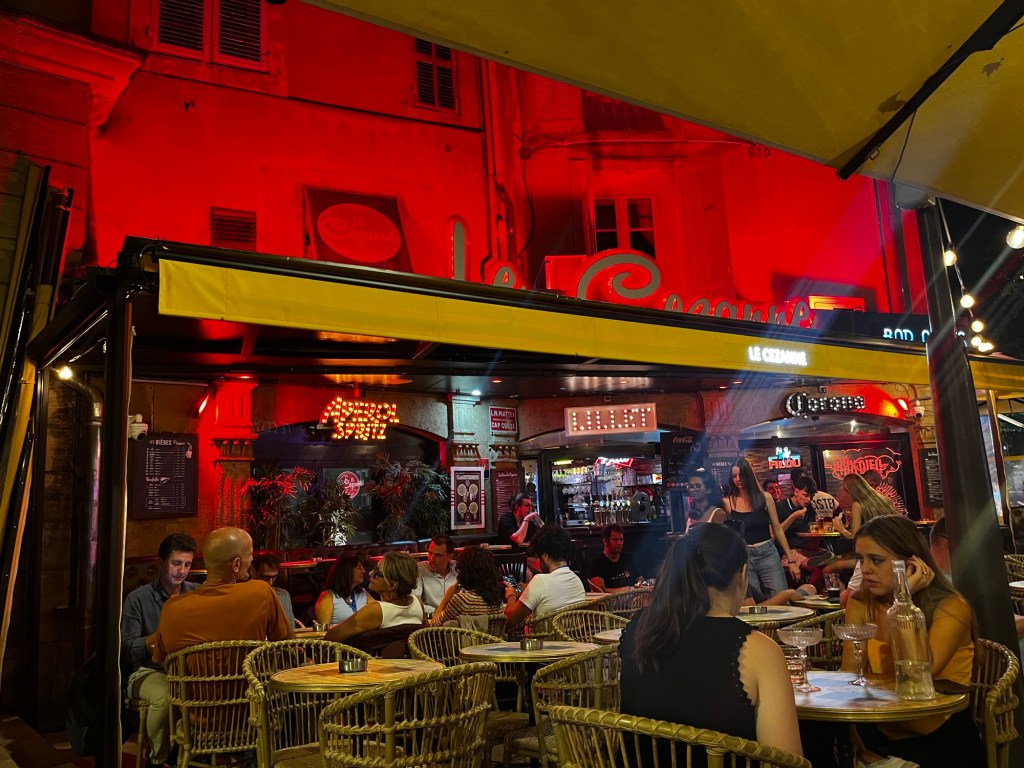
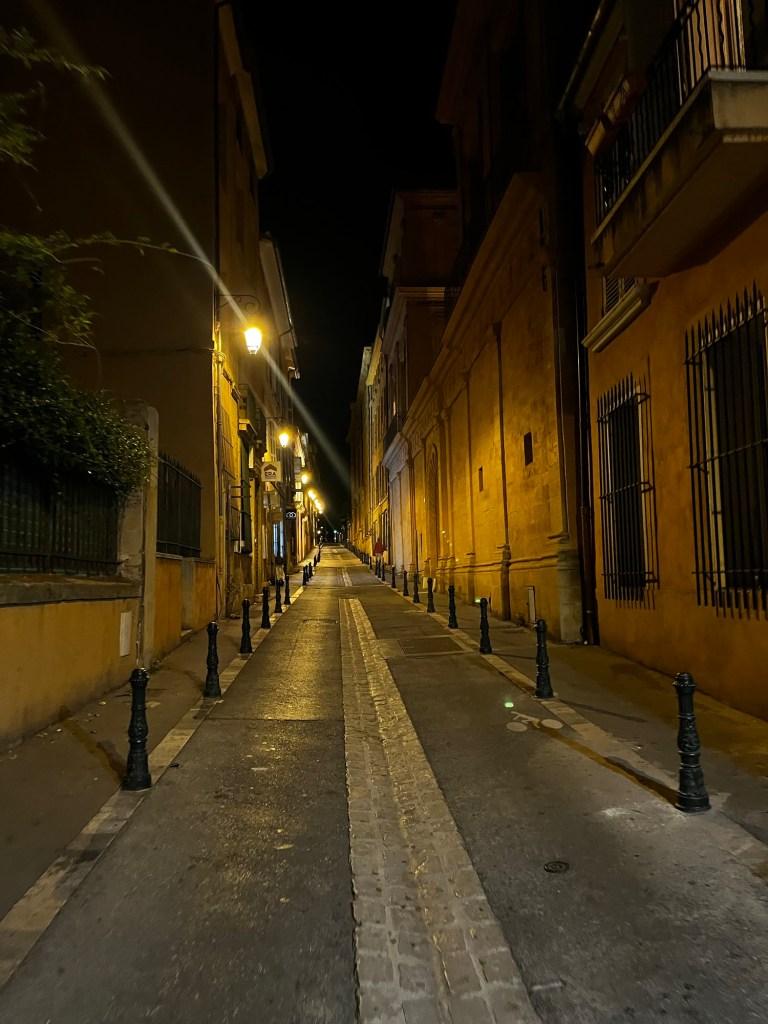
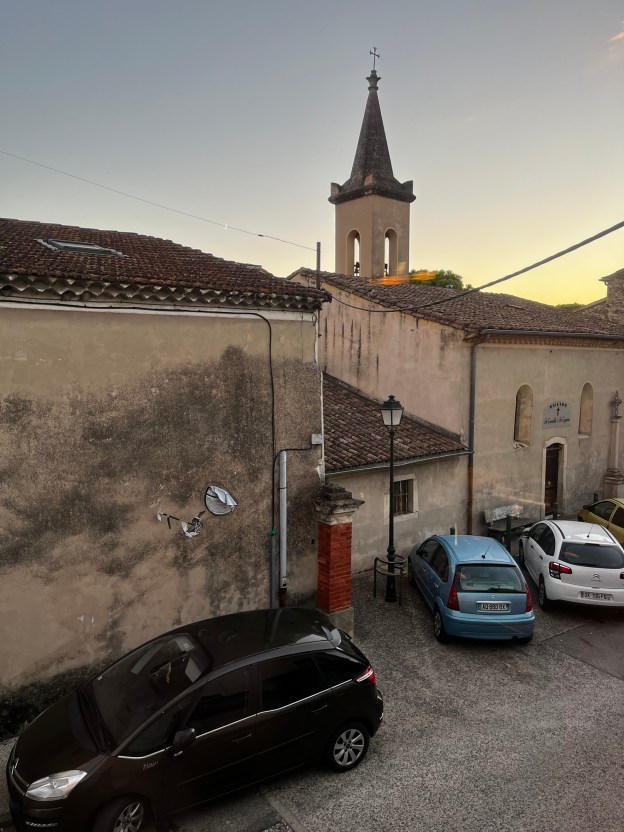
Le Cezanne – an excellent place to have an evening beer and watch peopleRoad home after beerAn excellent red wine from Domaine DurieeOur accommodation in Rue Manuel
We’d long wanted to visit the Camargue and took the train to Arles with the intention of lunching in the town and then taking the bus to a nature reserve.
However, a chance conversation with a local over the bus timetable, initiated a change of plan. As a result, we caught an earlier bus, deliberately overshot the reserve and had lunch in the white-washed seaside resort of Saintes-Marie-de-la-Mare.
It was a bustling place, with markets, shops, huge church and a bullring.
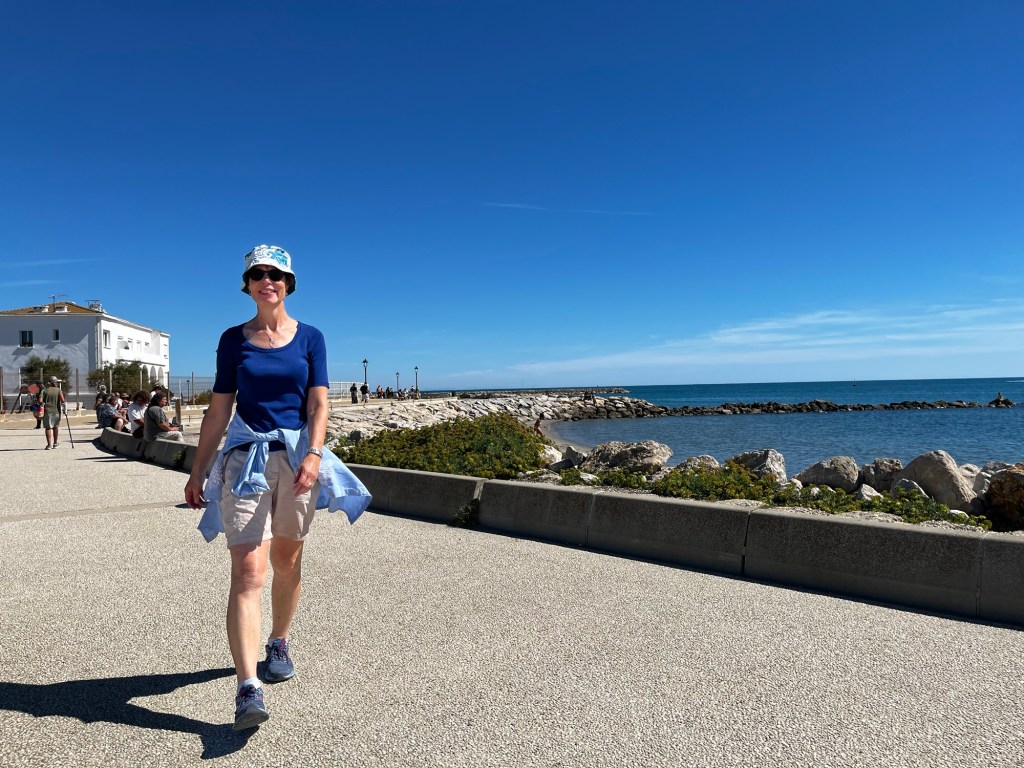
We took the opportunity to paddle in the Med’ and ate a picnic on the front. The bullring was gearing up for a show and bulls were being delivered by truck.
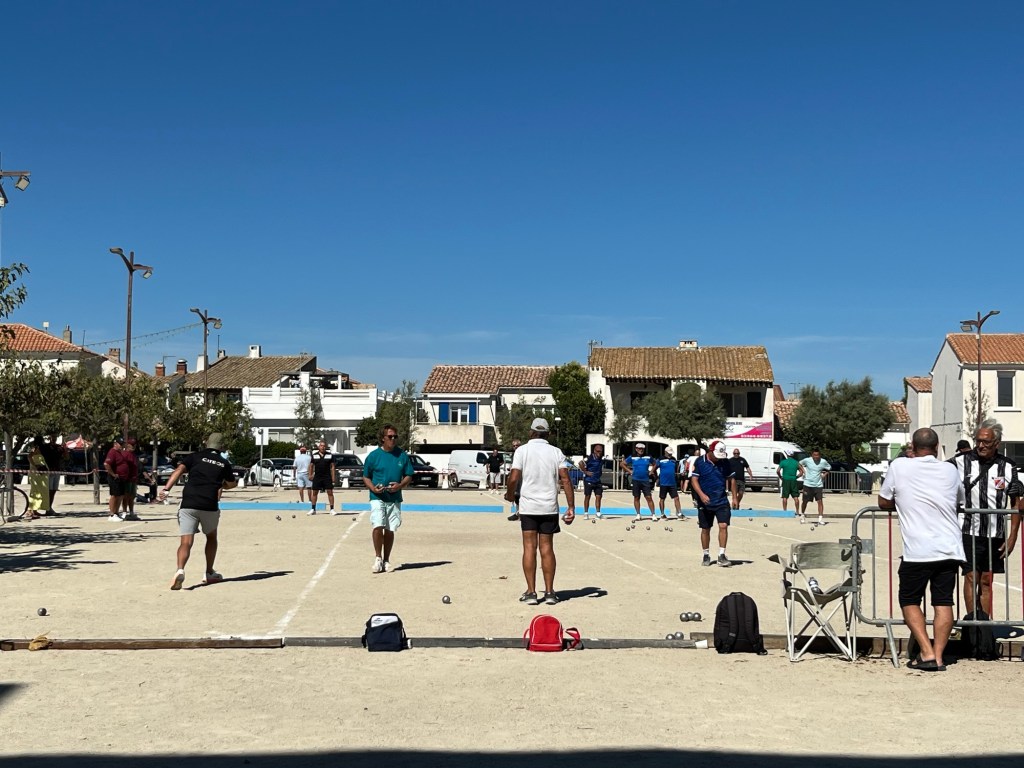
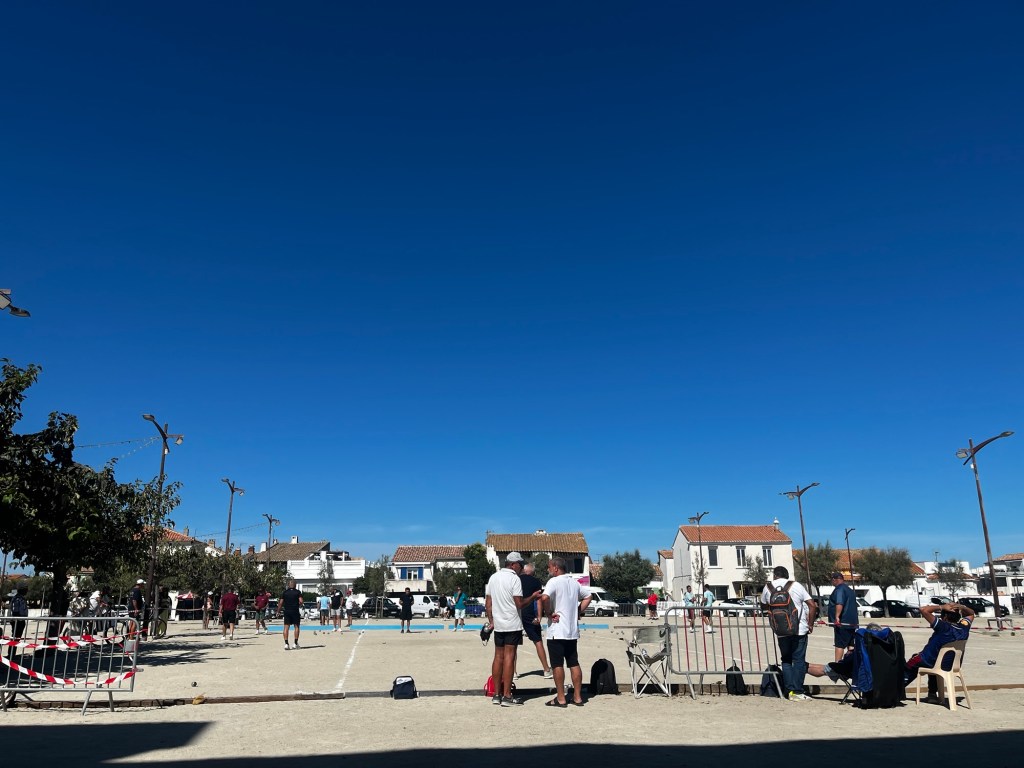
We watched pétanque being played, very seriously, on a sandy public square. The teams of two wore team-specific tops. All the players were men and the skills they showed were impressive, even if the precise rules were a mystery to us.
Pétanque in action
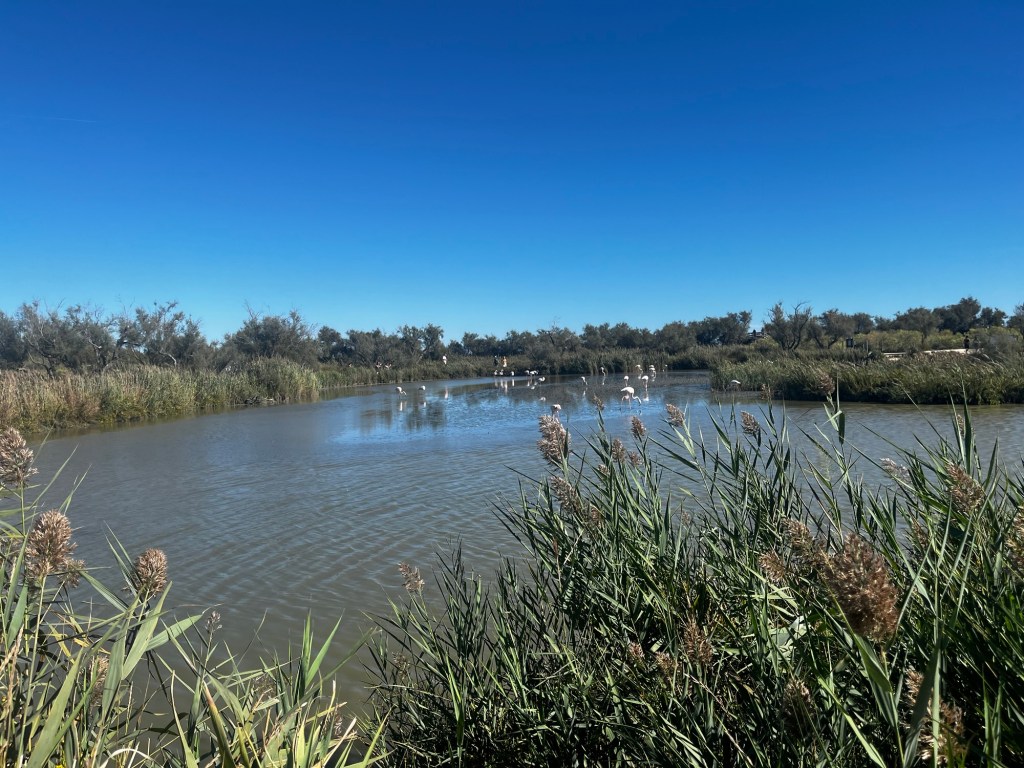
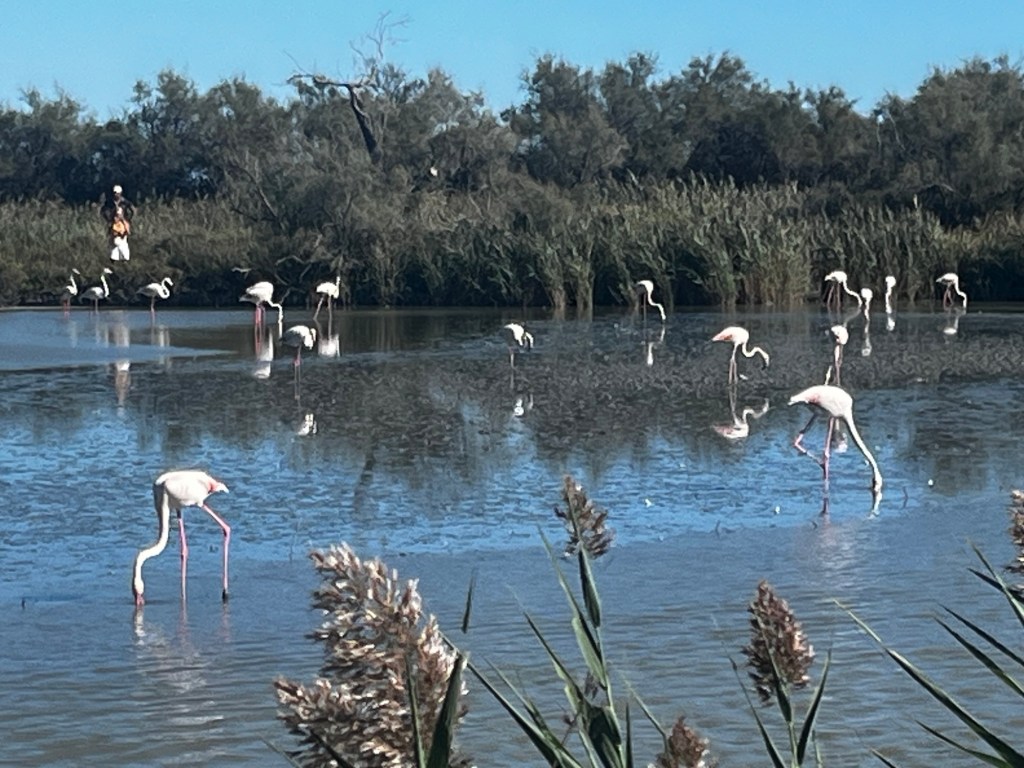
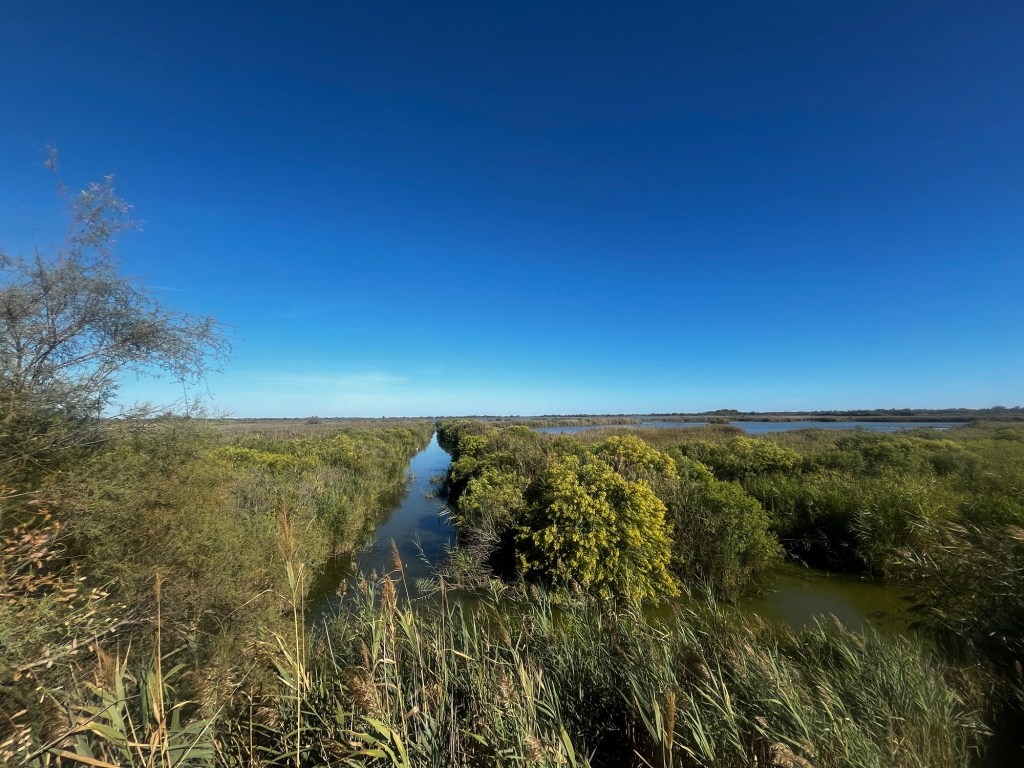
Returning to the nature reserve by bus, we enjoyed a warm couple of hours wandering around some carefully curated lagoons, on which numerous flamingos were feeding.
Egrets and herons were also abundant. Phil also scanned the surrounding marshes and spotted a number of more obscure species. The full list can be found below the images.
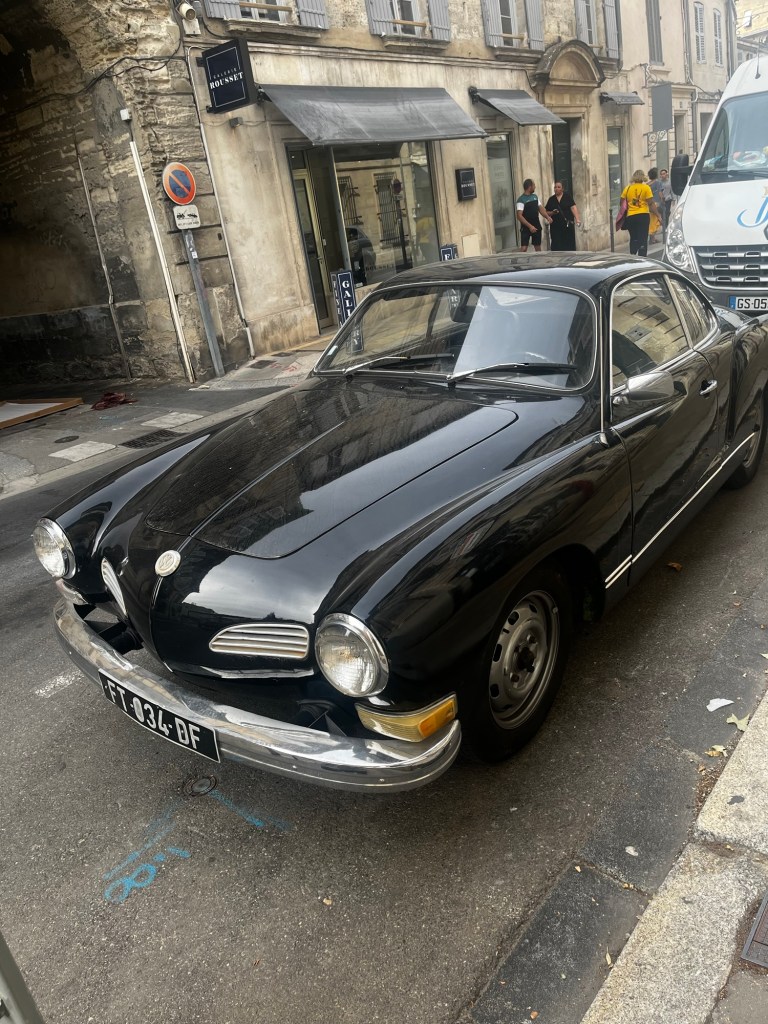
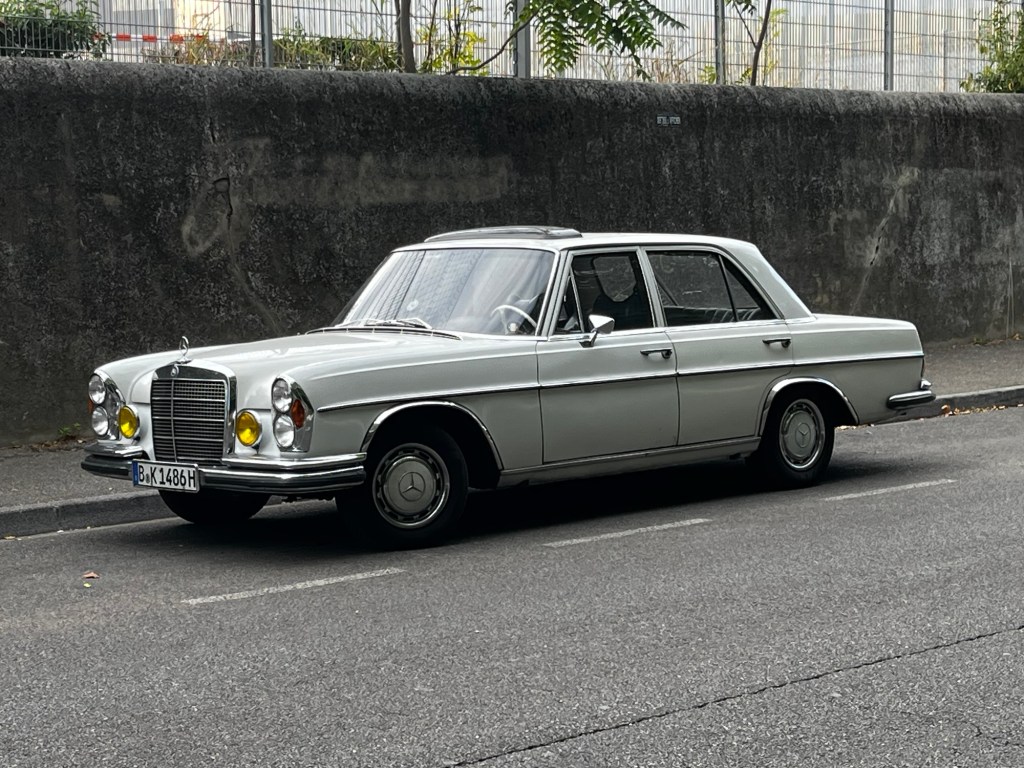
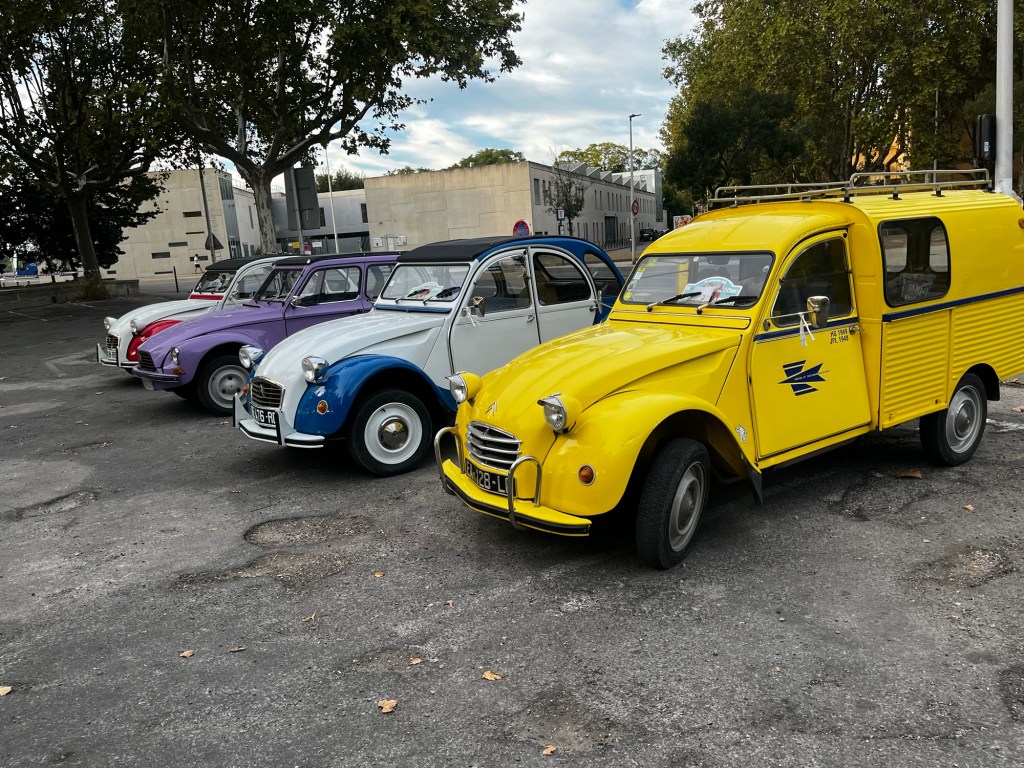
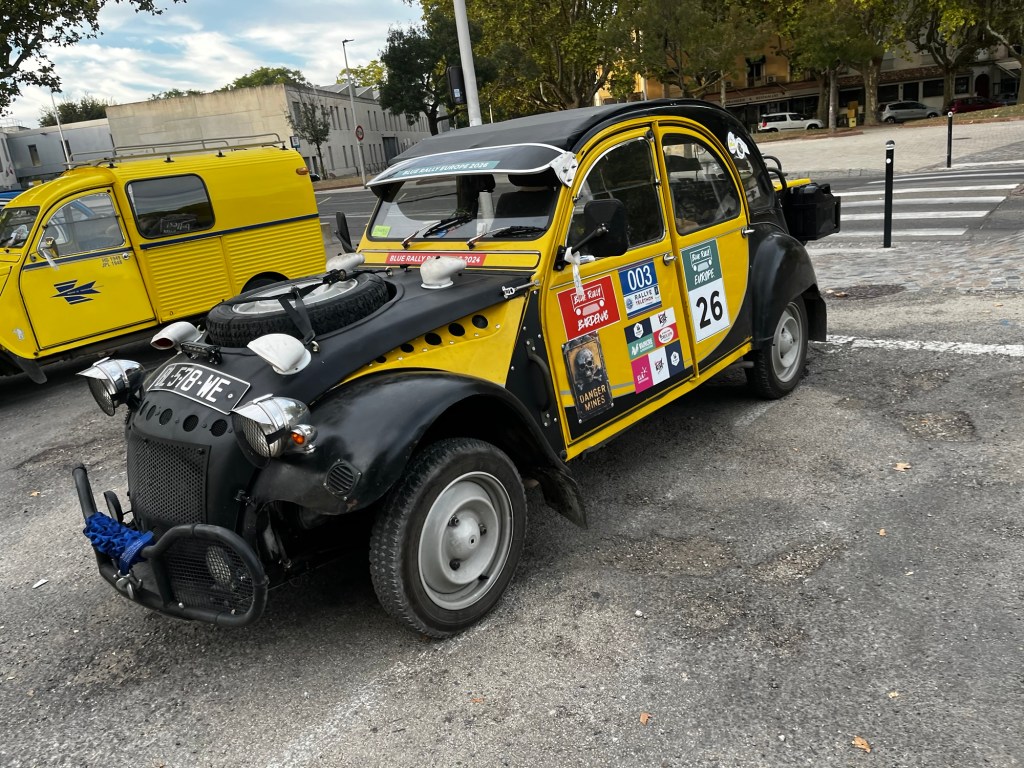
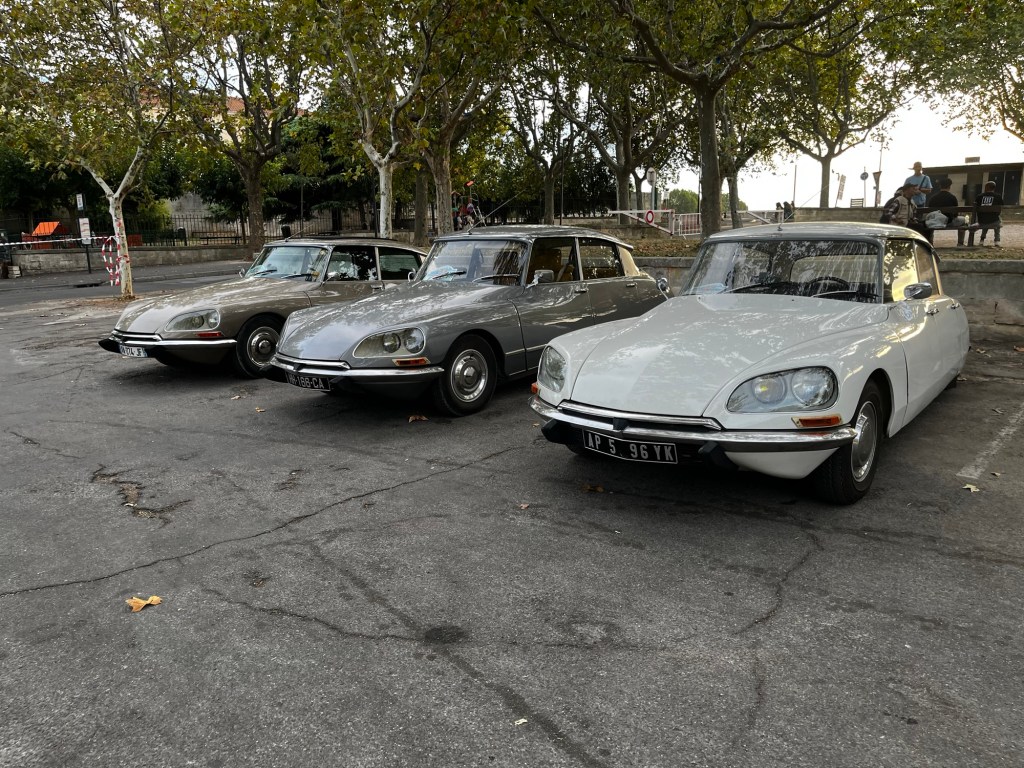
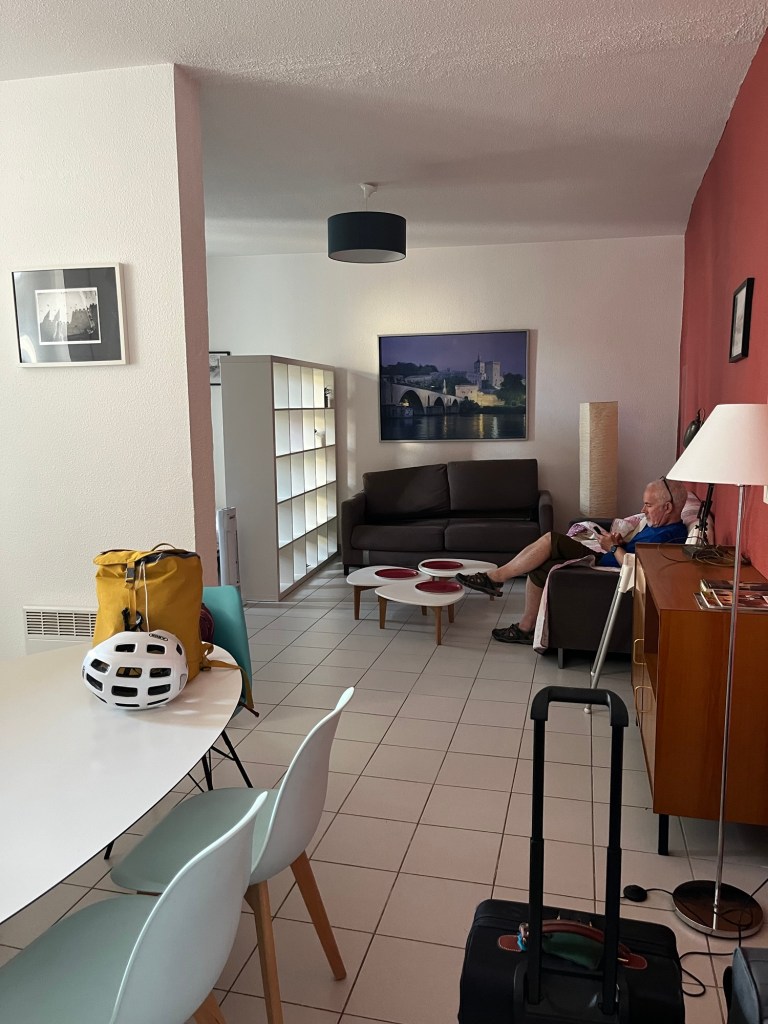
With our return train delayed by fires, we ate in Arles after viewing some classic cars parked by the station then caught the first available service at 9pm. It was packed with grumpy locals who were clearly not impressed with the resolutely upbeat tannoy announcements, both in the station and on the train.
Sea and sunCan you guess the sport?Birds … in the distanceDistinctive birdsBig skies and reed bedsHead downOld cars part 1Part 2Part 3Part 4Our apartment in Avignon
Pont du Gau nature reserve – birds spotted in the order in which Phil remembered them:
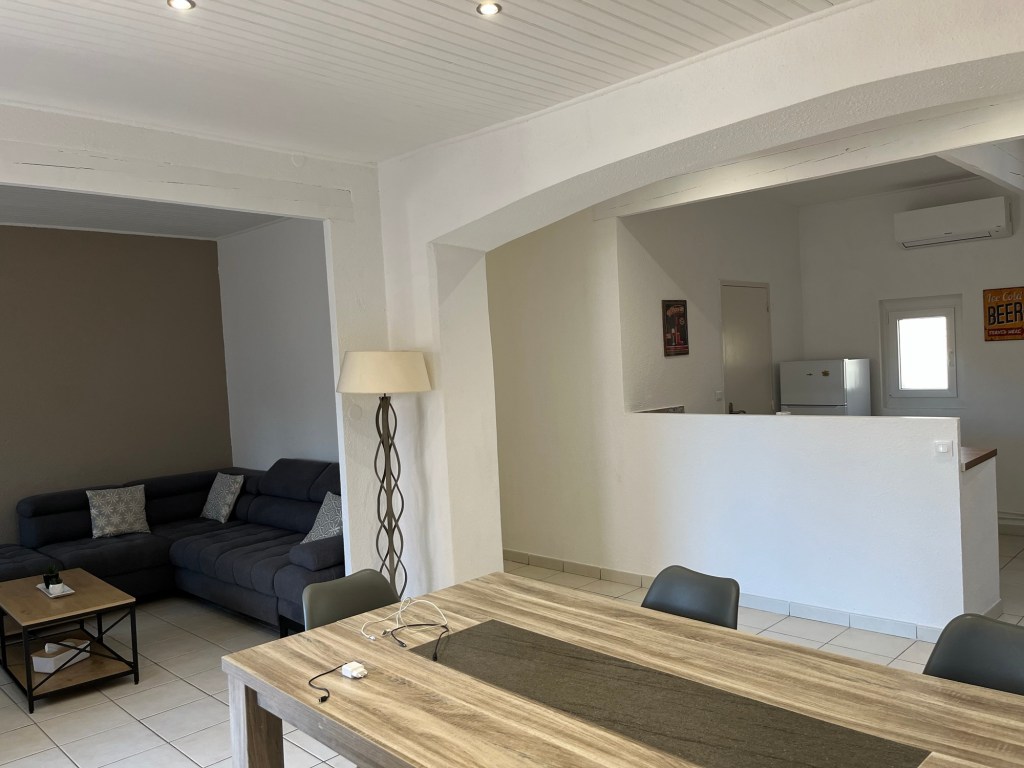
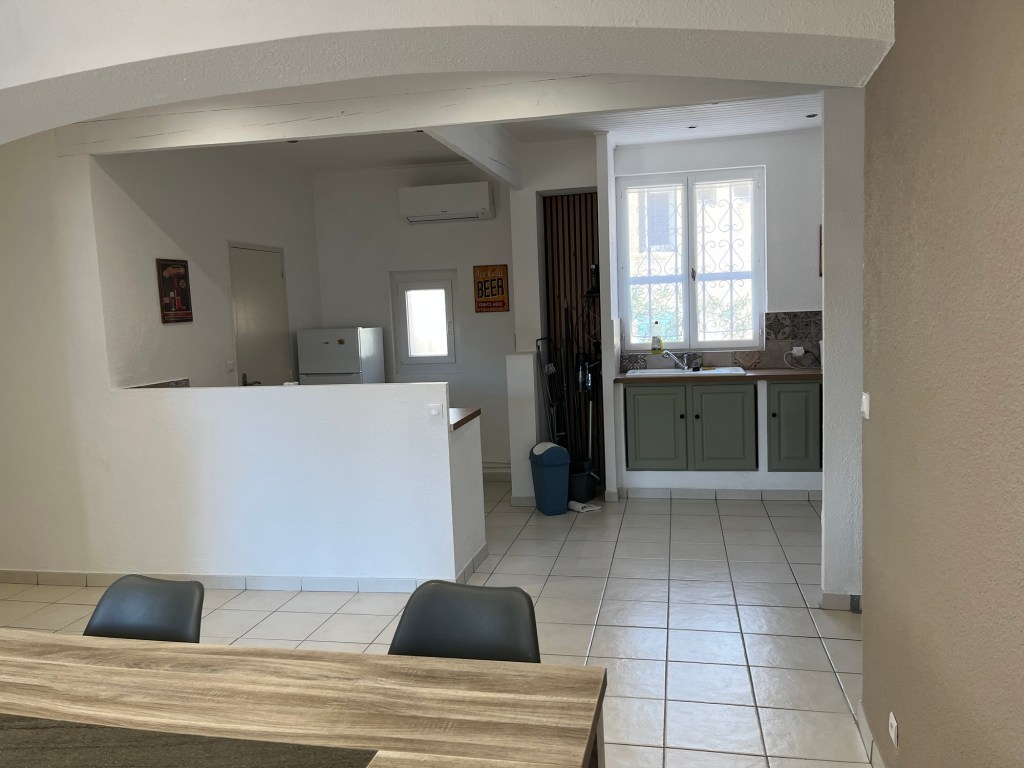
Our accommodation in Orange was immaculate and spacious but unfortunately did not include cleaning! We got stuck in before leaving determined to leave it as we found it!
The final day of cycling took us back to the Rhone from Orange, via the hilltop village of Châteauneuf-du-Pape.
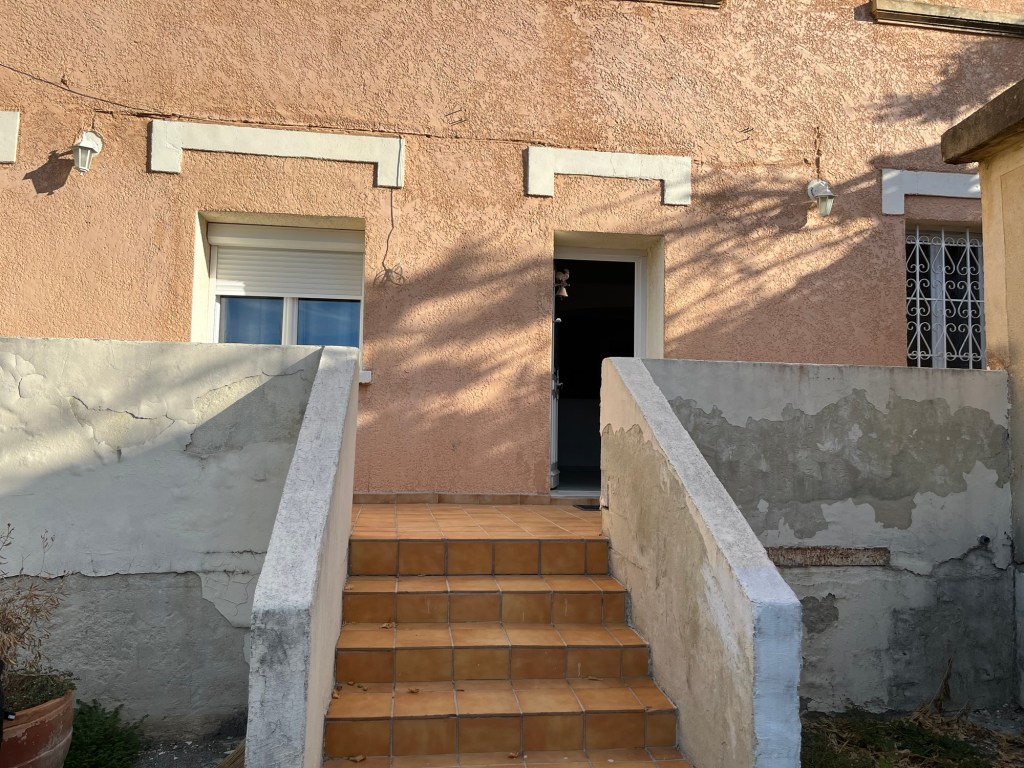
Orange Airbnb
The route out of Orange was pleasantly safe and relatively traffic free – thanks to the Komoot app, which is generally really good at planning routes and has a “quiet” option, which really maximises the “away from traffic” choices.
As we approached Châteauneuf-du-Pape, we climbed the first notable hill of the week, though not especially challenging compared to those back home.
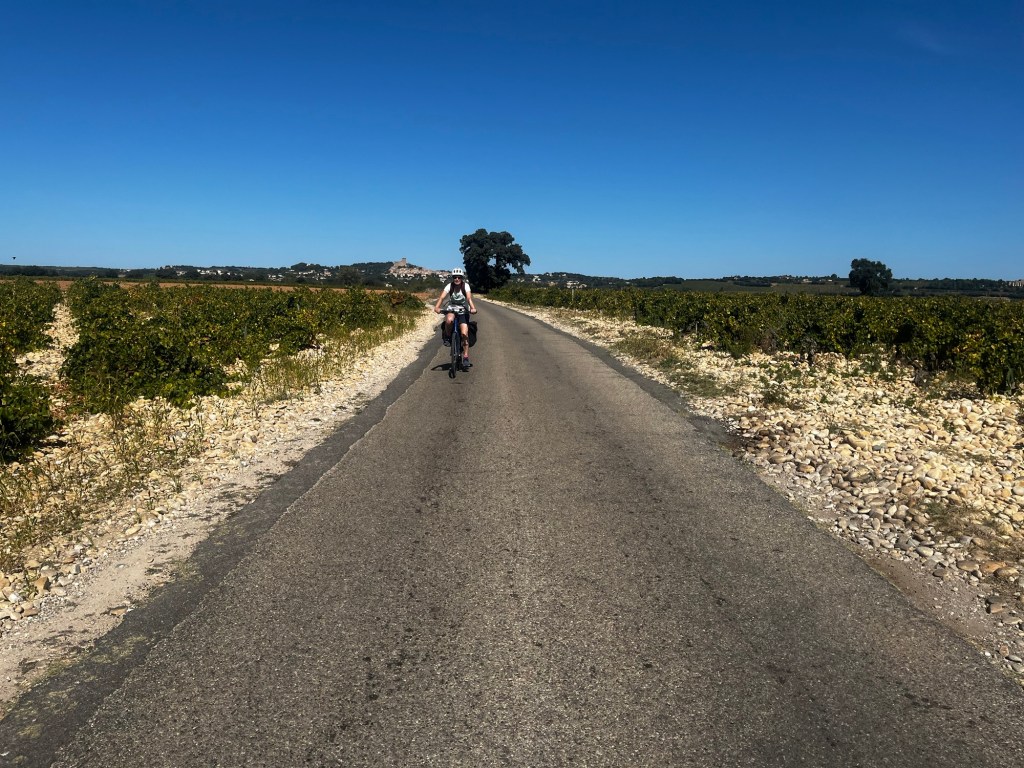
The fields gradually became vine dominated and the land was increasingly strewn with smooth, riverbed stones and pebbles. These contrasted with the green rows of vines, most of which had already given up their fruits to the harvest.
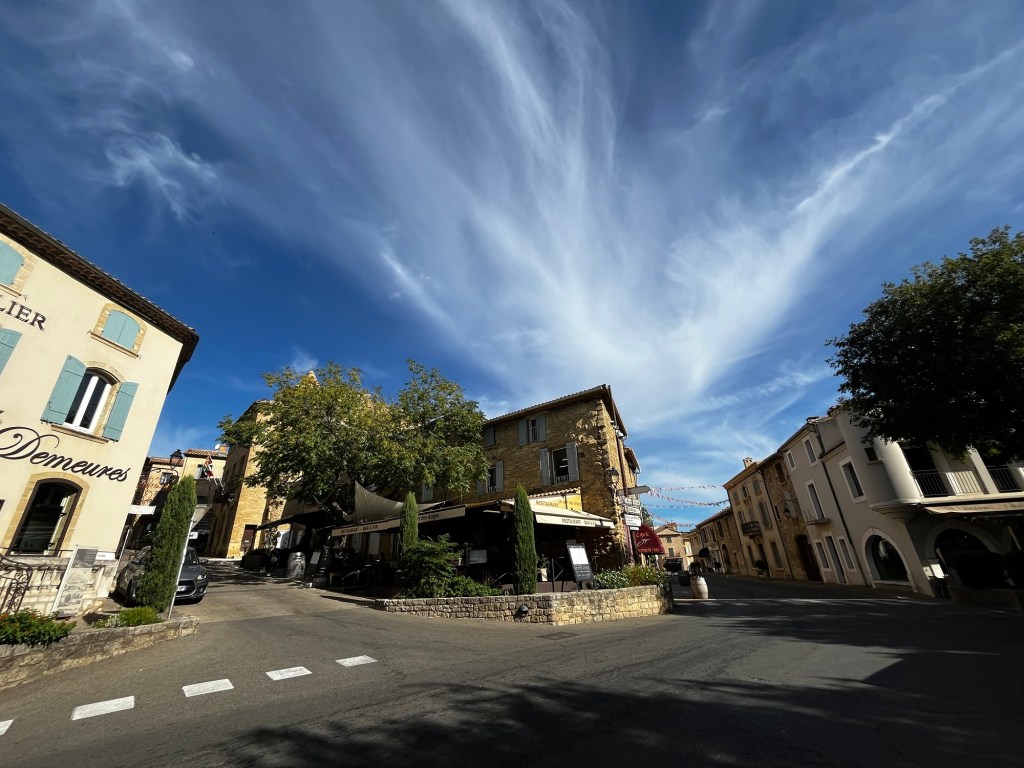
Châteauneuf-du-Pape itself is pretty and almost entirely dedicated to promoting wine with tasting and buying options at numerous well appointed farms on the surrounding roads and shops and units within the town.
Porsches and Ferraris cruised the streets and, the public toilets excepted, the town was immaculately turned out.
We had a leisurely mid morning coffee and fresh orange in a cafe where the service was glacial… but charming.
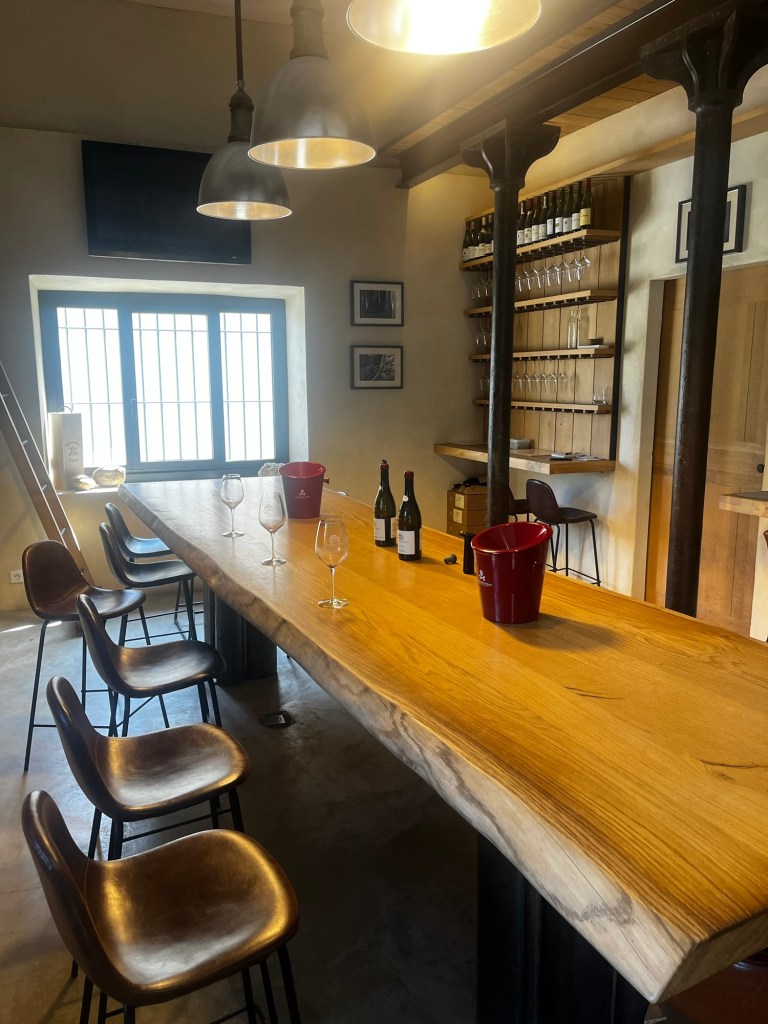
Keen to sample the local wines we visited the Domain Durieu winery. There we confessed that we’d be limited to buying a single bottle due to our mode of transport. Their salesman was undaunted and gave us a very informative talk in the local wines, their exceptional qualities and the reasons behind their excellence.
We also got to taste and compare two of their recent vintages and discussed the effects of climate and soil (terroir) on wine quality and production.
We left with our limited wine knowledge slightly bolstered and with a bottle of 2023 wine for 33 euros! We were advised to keep it for a year or two to let it mature. We discovered the best recent vintage was 2016 and the worst 2013!
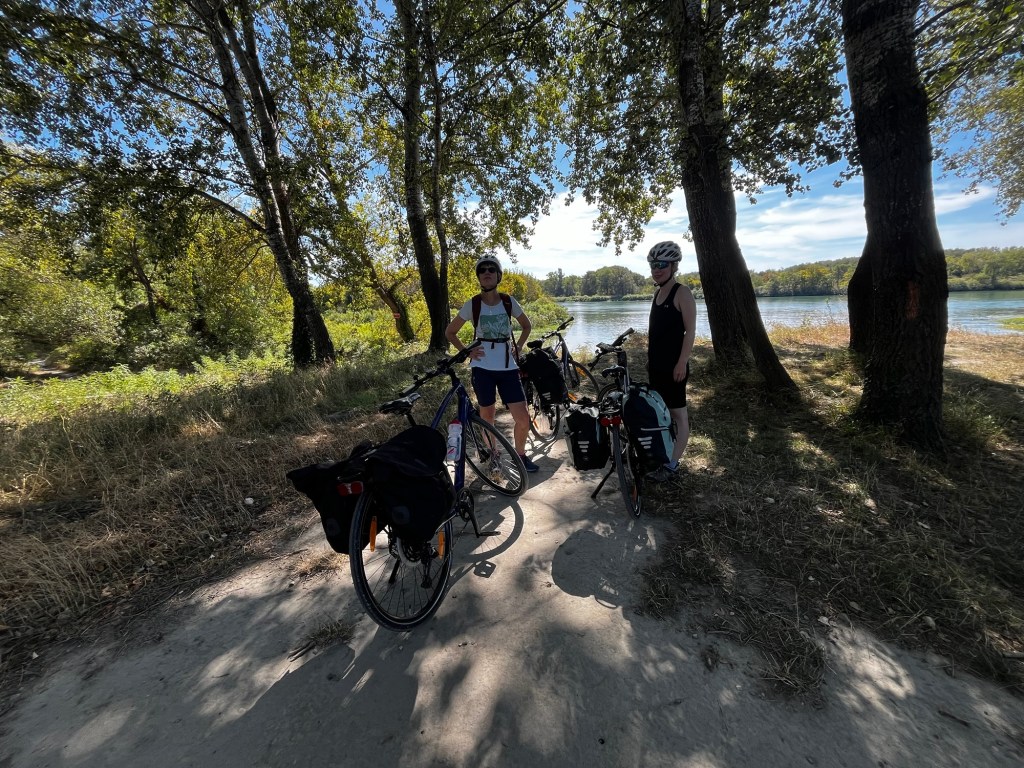
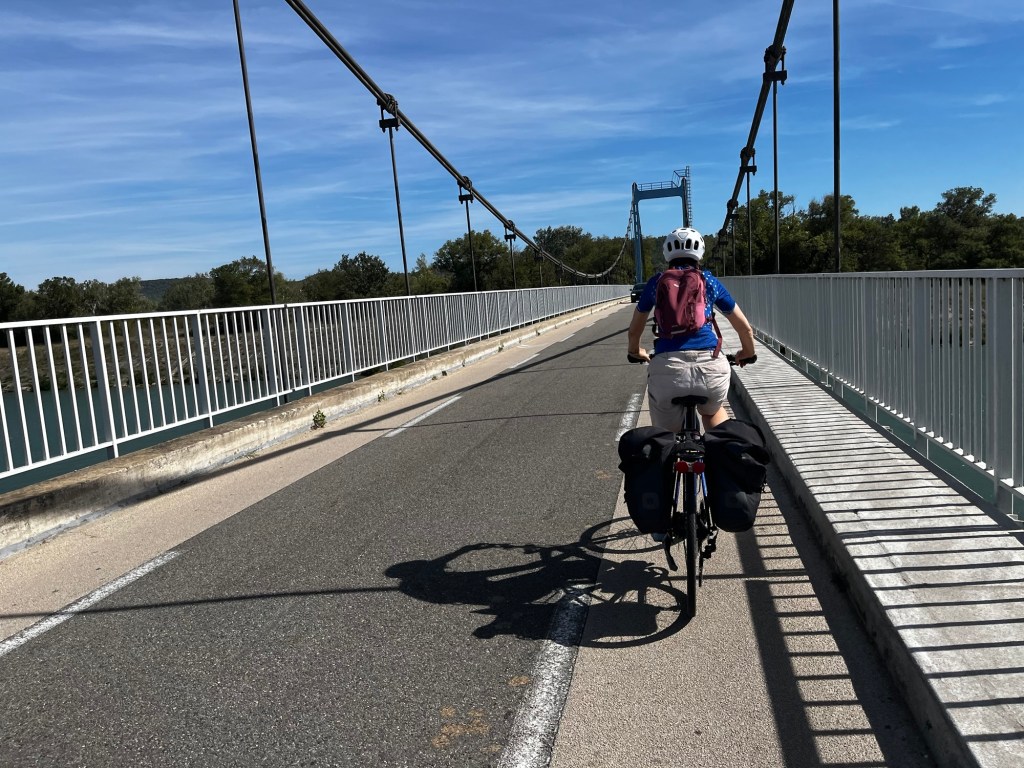
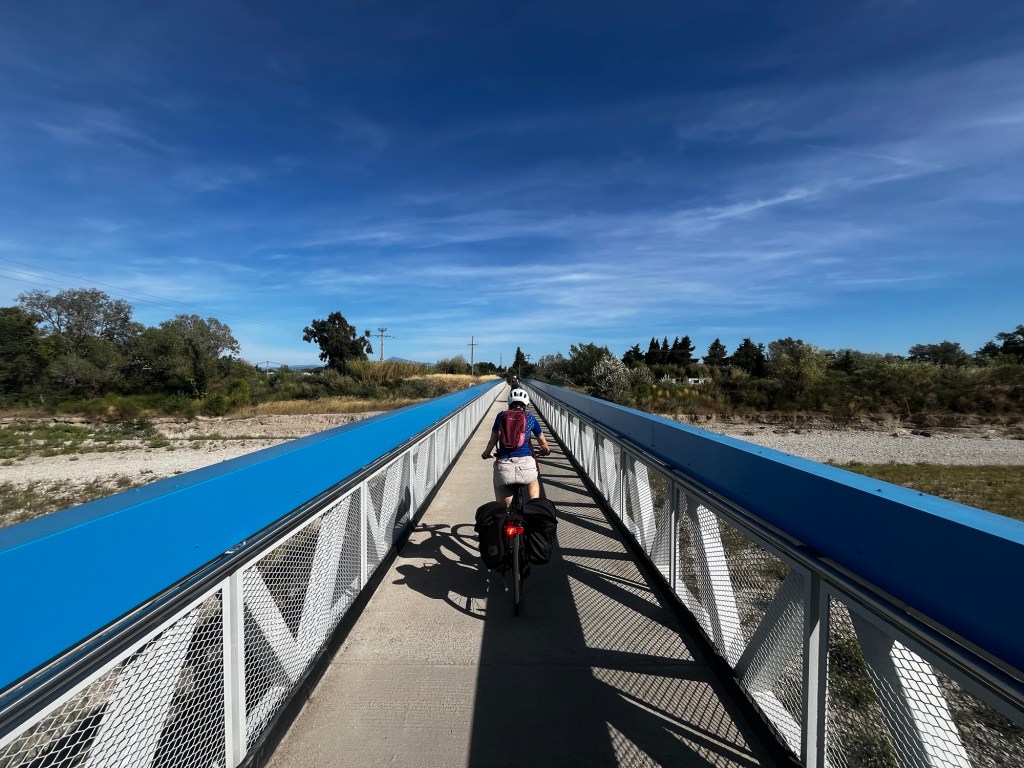
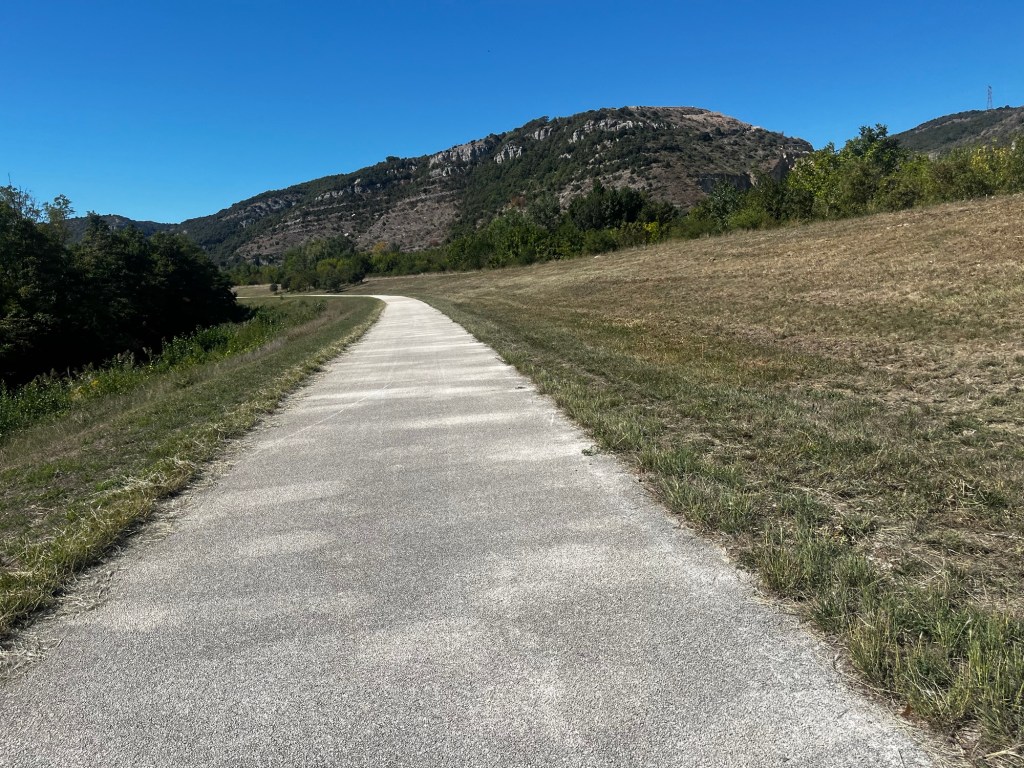
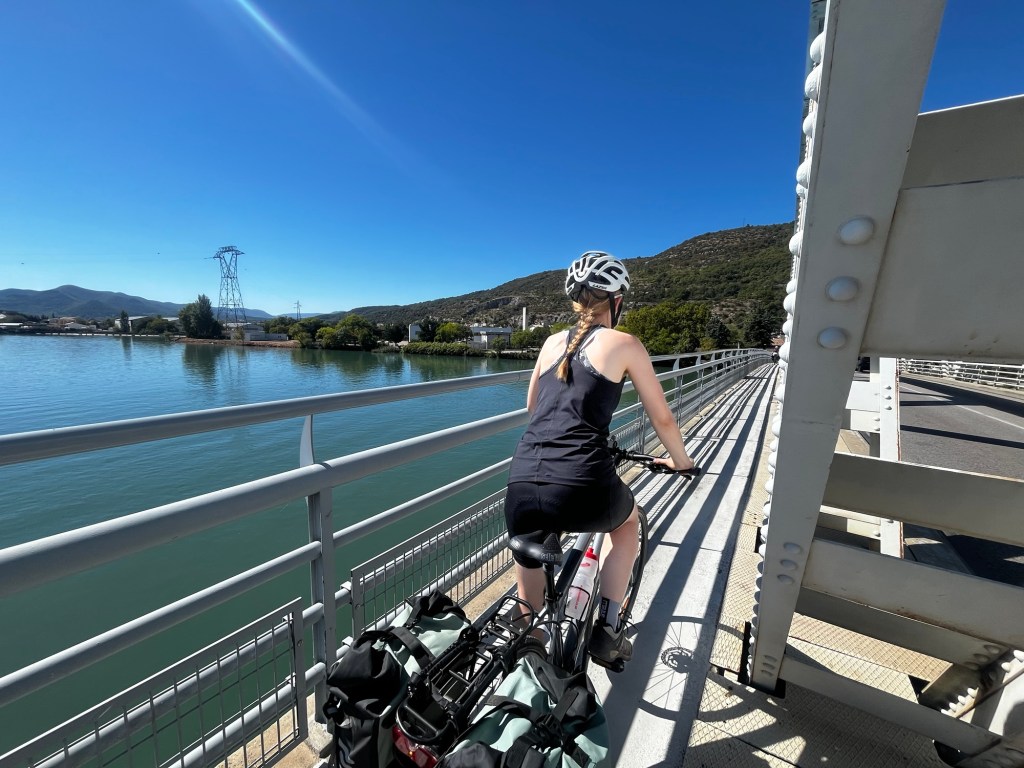
The remainder of the ride took us along the banks of the Rhone into Avignon. This section featured some very fine new cycle paths and infrastructure.
All too soon we were back at Southern Spirit cycles, decanting our panniers into suitcases and handing back our bikes. We were able to report to Mattieu the proprietor, an incident free week, with not so much as a puncture to our names.
A quick word about our Trek hybrids – with flat bars, hydraulic disc brakes and 10 very wide ratio gears, they proved to be exceptionally well suited to the job of lugging heavy panniers along paths with very variable surfaces. We did wonder if we’d miss our own bikes, but the opposite was true. We grew to really appreciate the rugged, easy-handling Treks, which matched the upright comfort and control of mountain bikes with surprisingly smooth rolling on tarmac, despite heavy ish Schwalbe Marathon tyres.
We didn’t achieve high speeds, but the riding was surprisingly easy and we also enjoyed a couple of town centre visits without panniers, where the unencumbered Treks became nimble but steady platforms for jousts with the ever-enthusiastic French urban drivers.
Olivia now heads for home while Julie and Phil turn to more sedentary tourism in Provence, for few more days.
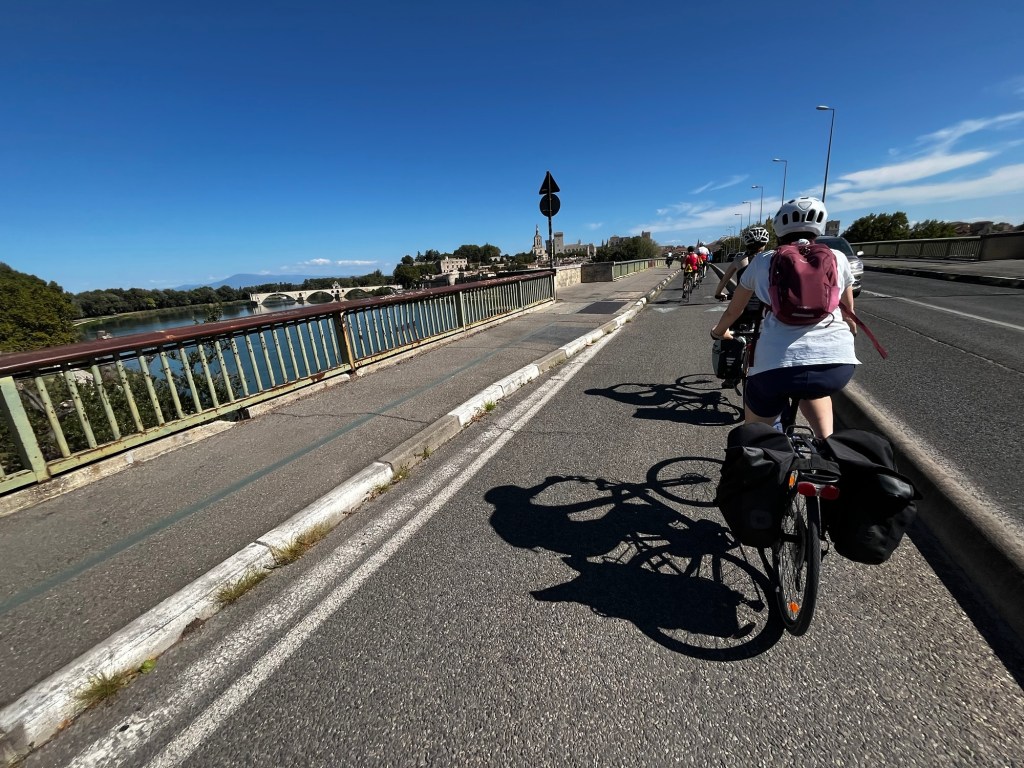
Into wine countryApproaching Chateauneuf-du-PapeThe wine village Seats of learningAnother sunny day! Lunch in the shadeAnother great bridgeOver the bridge into Avignon
With our journey down the Rhone almost done – we have just 20 miles to ride to Avignon tomorrow – we opted for a day exploring Orange.
It’s a town with some outstanding Roman remains and an attractive centre, with the obligatory cafes, bars and chic shops.
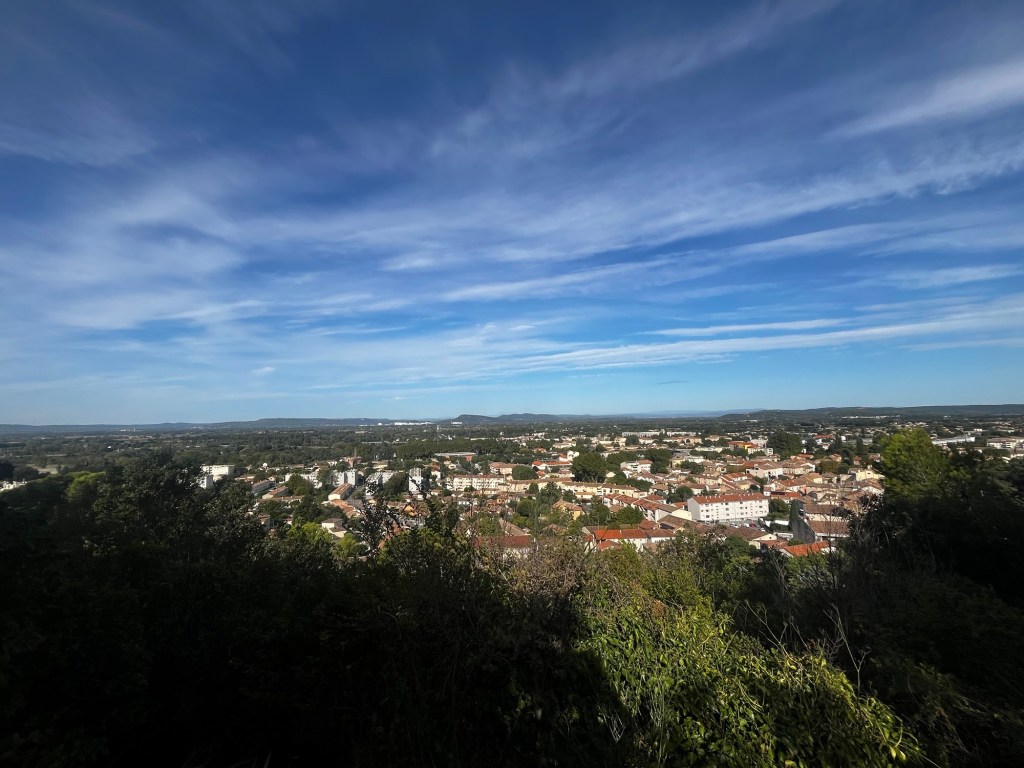
We began the day with a walk up the CollineSaintEutrope, a 300 foot high outcrop which looks down on the city and offers great views back up the Rhone Valley down which we have cycled.
Looking up the Rhone Valley
This hill was once the location of a large fortress, very little of which remains. There is excavation work ongoing, which is unearthing some significant stonework.
We then descended into the town and picked up a very good coffee in a very well presented and tiny cafe.
In the afternoon we visited the town’s museum, home to the usual local artefacts from down the ages. Again, it was well presented.
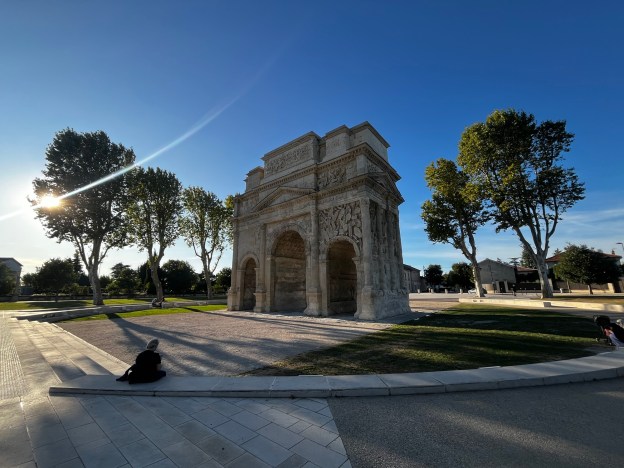
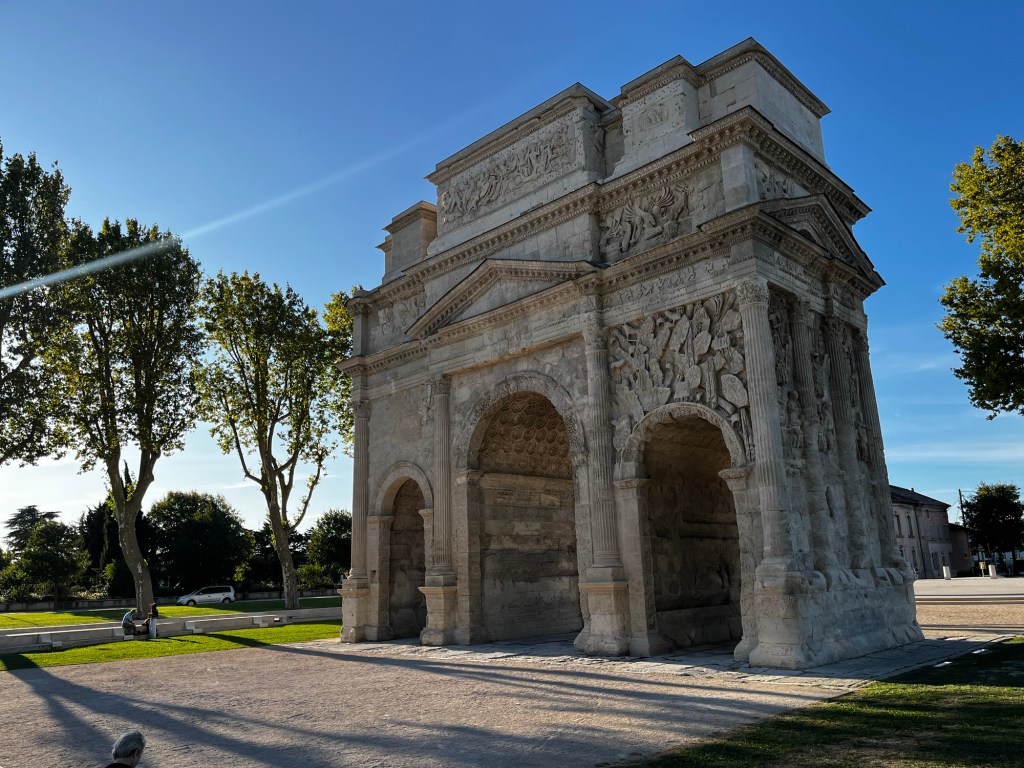
A short cycle ride then took us to the town’s Roman triumphal arch. This stands now, as originally, at the gateway to Orange and depicts, in its stone carvings, scenes of Romand army and navy triumphs.
Whereas, in Roman times the main road through the area passed under the main arch, modern road engineers have put the arch at the heart of a large roundabout.
The arch looked all the more impressive in the late afternoon light.
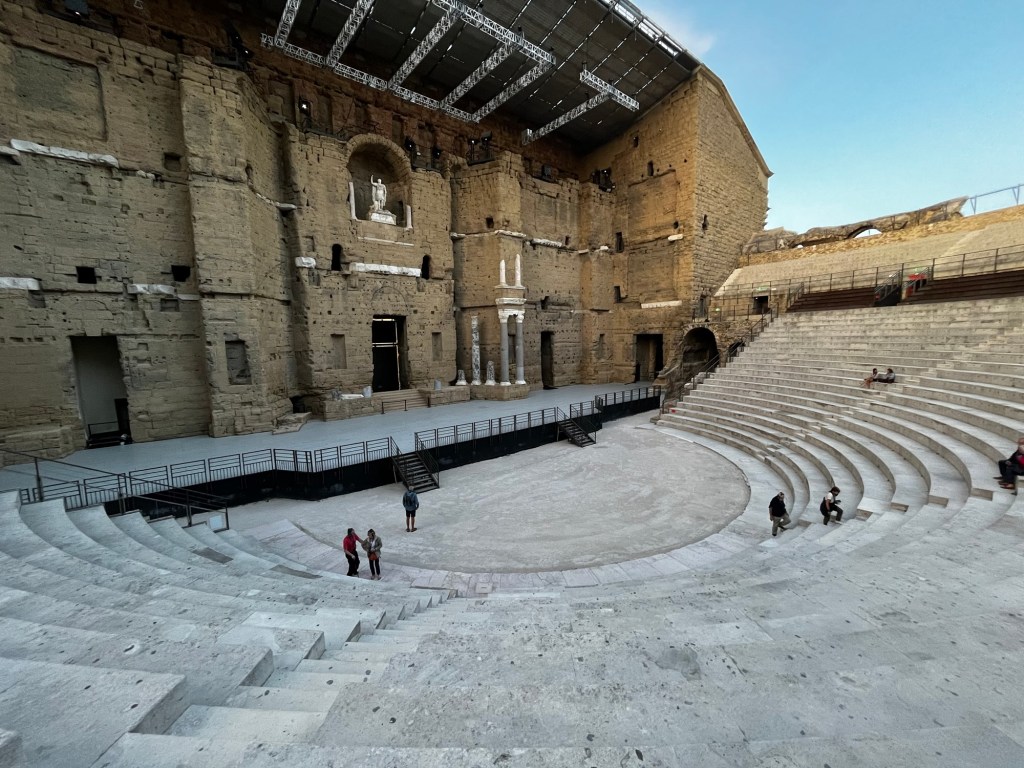
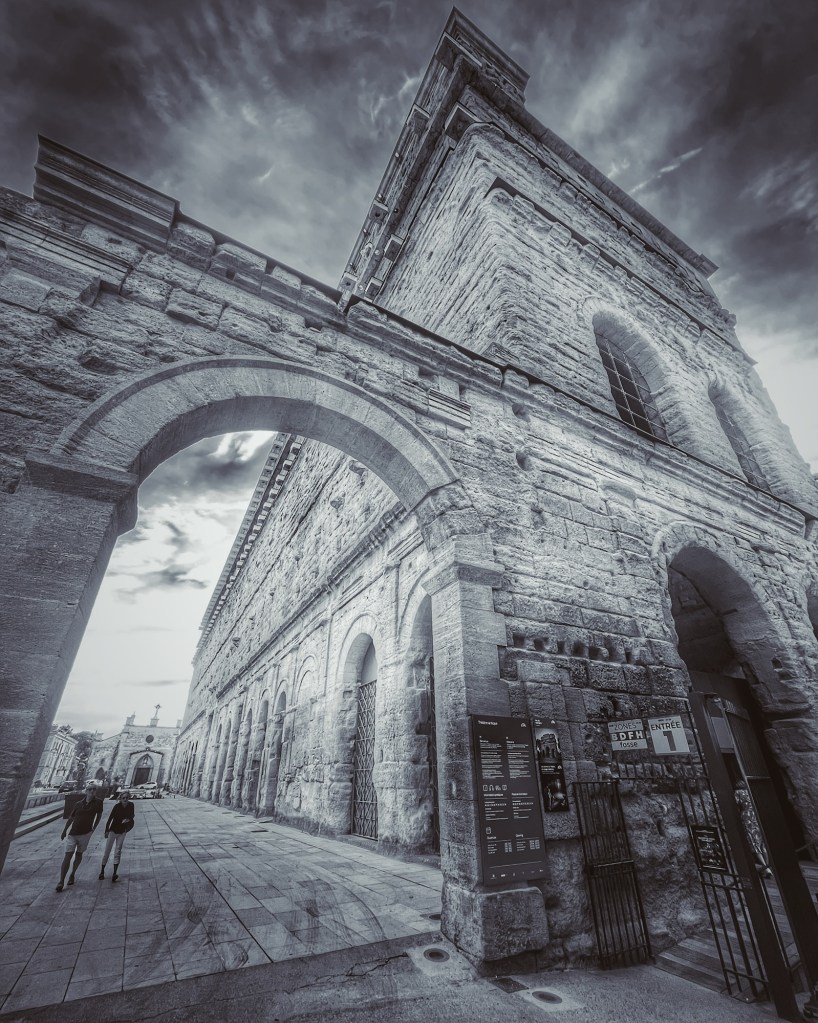
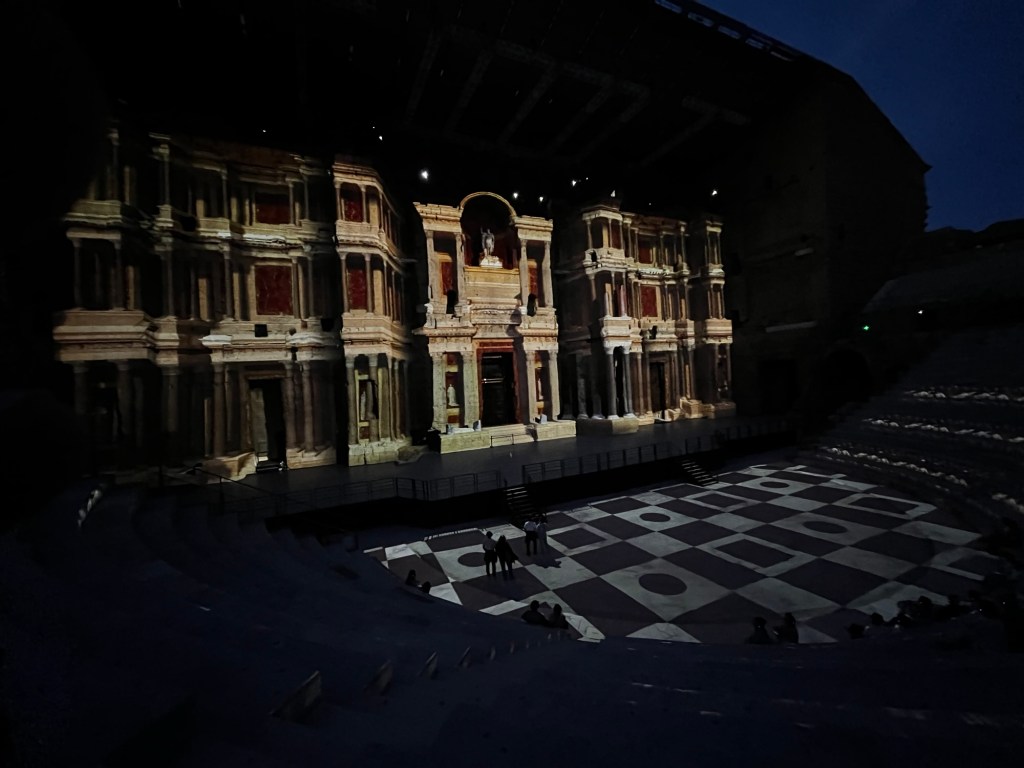
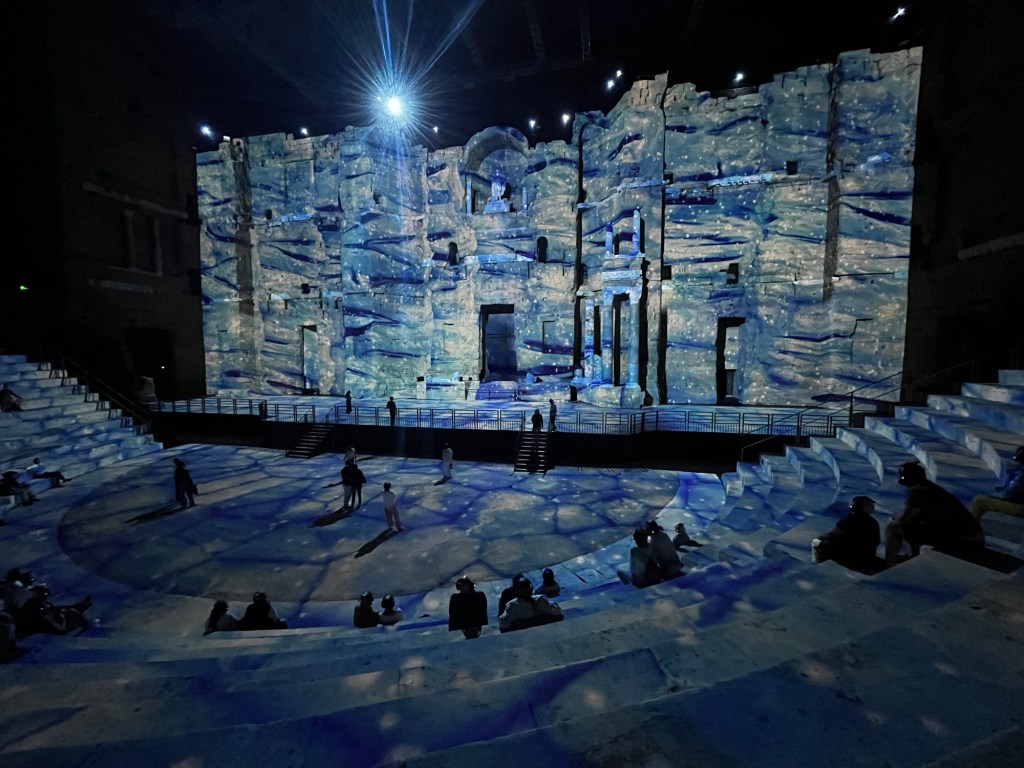
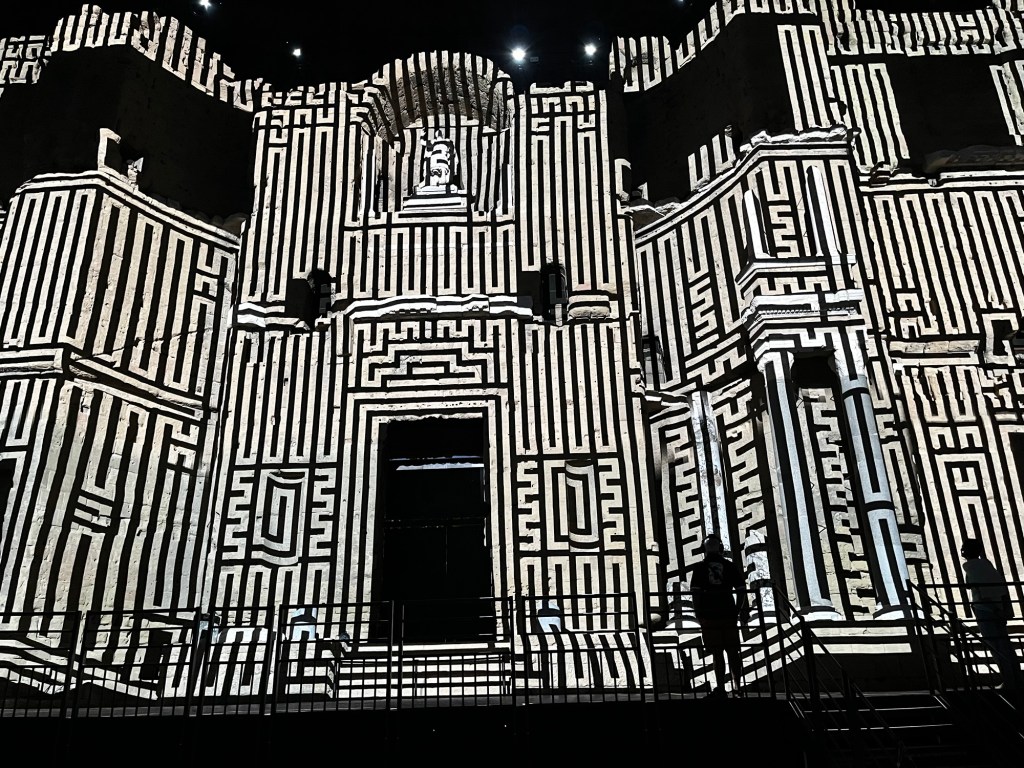
As darkness fell we visited the Roman theatre, which dominates the town with its immense wall.
Inside, we explored the restored semi-circle of seating whilst enjoying a light and sound display that made good use of the setting and provided us with a mesmeric and relaxing end to the day.
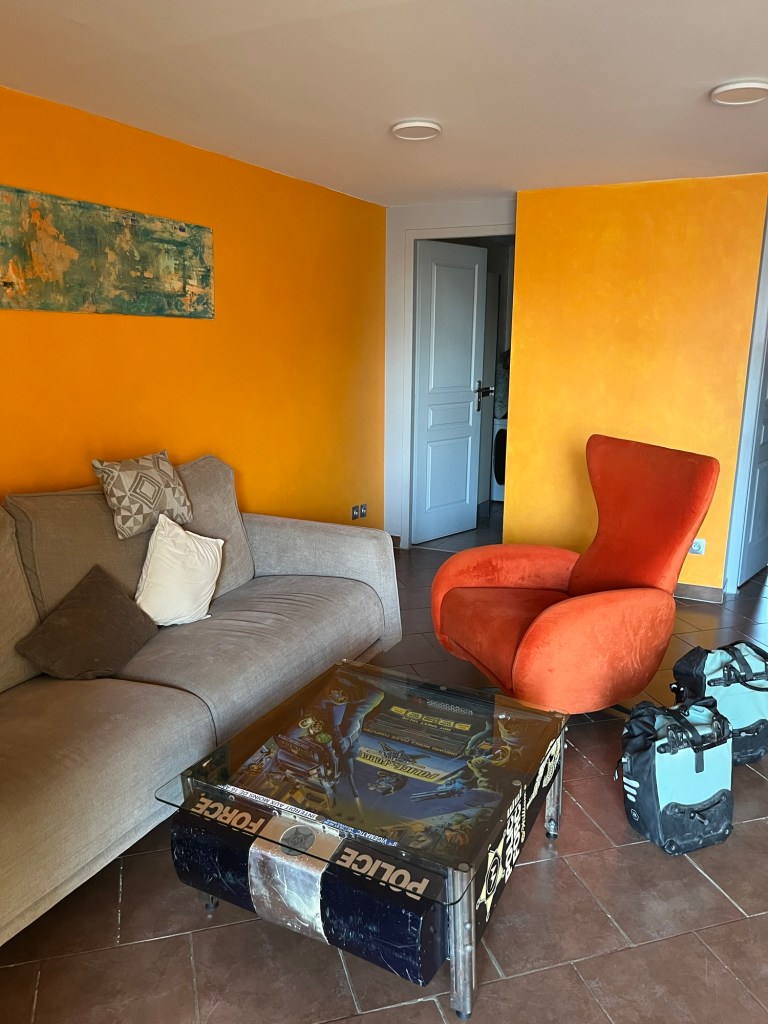
MuseumNeat and chic OrangeThe Roman triumphal archThe Roman TheatreThe immense theatre wallLight show reveals the original theatre Light showLight showOur smart AirbnbWhere we ate dinner
Our longest day in the saddle (just short if 40 miles), but not particularly taxing as we had the Mistral at our backs for most of it and a fresher (though still very sunny) feel to the weather.
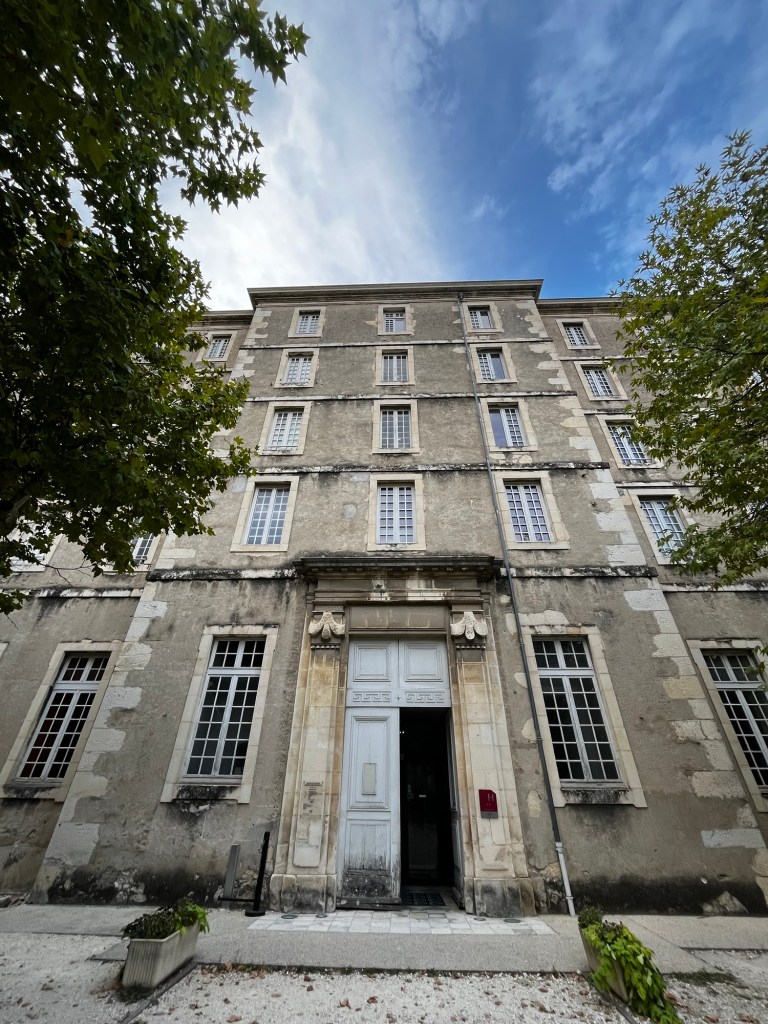
But before we get cycling again, a quick look back at our very unusual overnight location, the former seminary, the Hostellerie Charles de Foucauld.
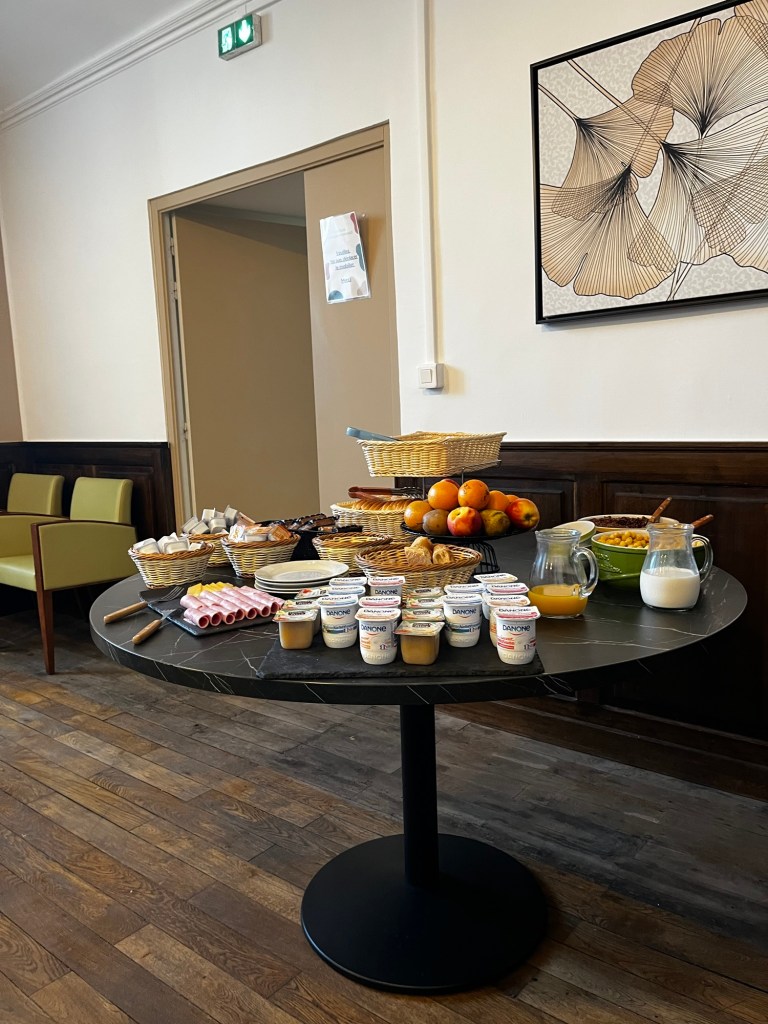
When we arrived, having pre-booked, we were met by the living embodiment of the French bureaucrat stereotype: he managed to make a 2 minute registration process extend to nearly 30 minutes (including 10 minutes waiting for him to arrive). Bear in mind we’d carefully timed our appearance to coincide with their stipulated “after 4.30” registration time.
He faffed, stabbed at his keyboard and generally acted like a fool for an inordinate length of time before failing to take a card payment due to non-specific WiFi issues. We eventually paid him in cash, put our own bikes in the bike room and carted our kit up to our third floor room.
Checking out was infinitely easier, handled by a young woman who took our keys and sent us in our way in 30 seconds flat! What a relief.
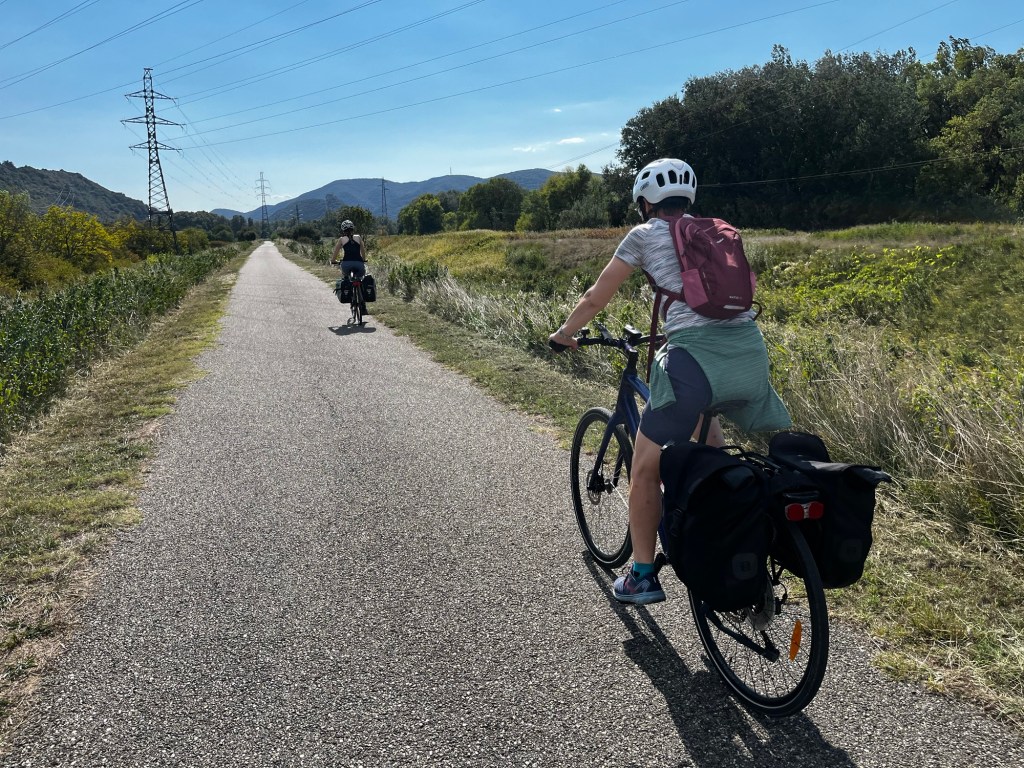
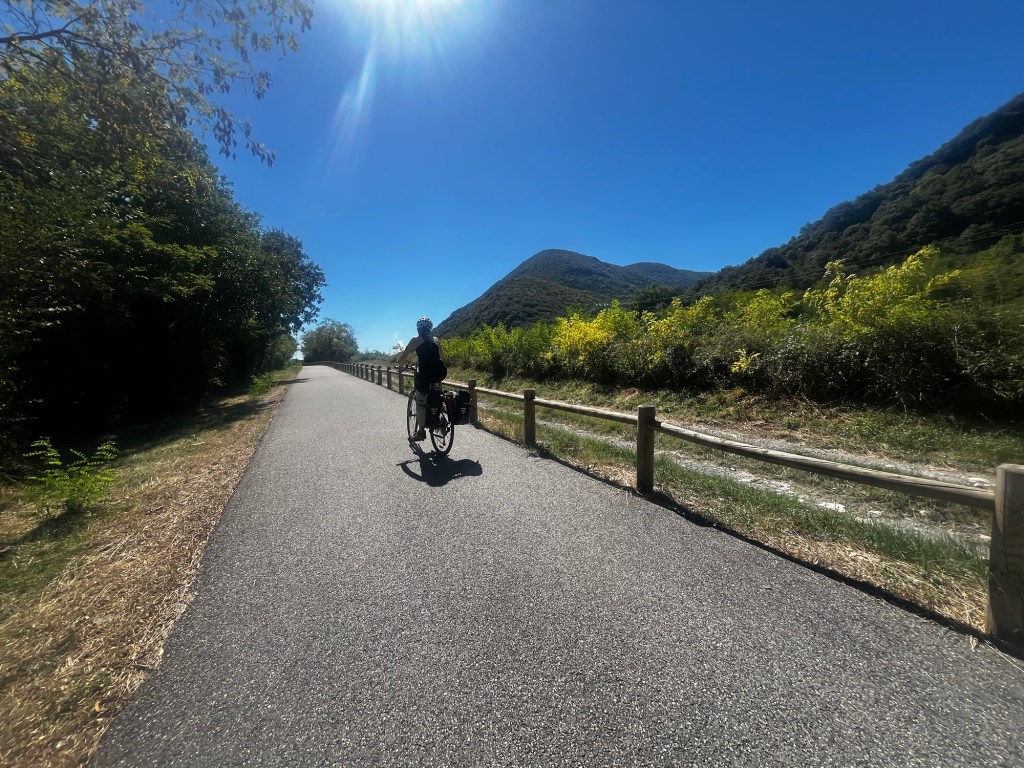
Once on the Via Rhone again, we enjoyed some of the best paths, scenery and weather of the trip to date.
We’d originally aimed to cover about 20 miles before hopping on a train for the last run into Orange.
But after lunch and coffee in the small town of Bourg-Saint-Andéol, we found we were making such good progress that we decided to ride straight into Orange.
For some of the way we ran parallel to the main TGV line and periodically braced ourselves as trains rocketed by shaking the ground and making a noise closer to a jet fighter than a train.
Today’s landscape also revealed changes, with lower hills, limestone escarpments and increasingly good views of Mont Ventoux, its peak topped by the familiar, white weather station.
We arrived in Orange after an almost entirely vehicle-free journey, only to find ourselves jousting with heavy traffic in the last mile or so. It focused our minds and made us all the more pleased to find our next AirBnb, a spacious ground floor flat, 10 minutes walk from the city centre.
We finished the day with beer and food at a tourist restaurant in the centre, with a big party of Scandinavians at the next table and a big flock of jackdaws coming in to roost, noisily, in the canopy of plane trees overhead.
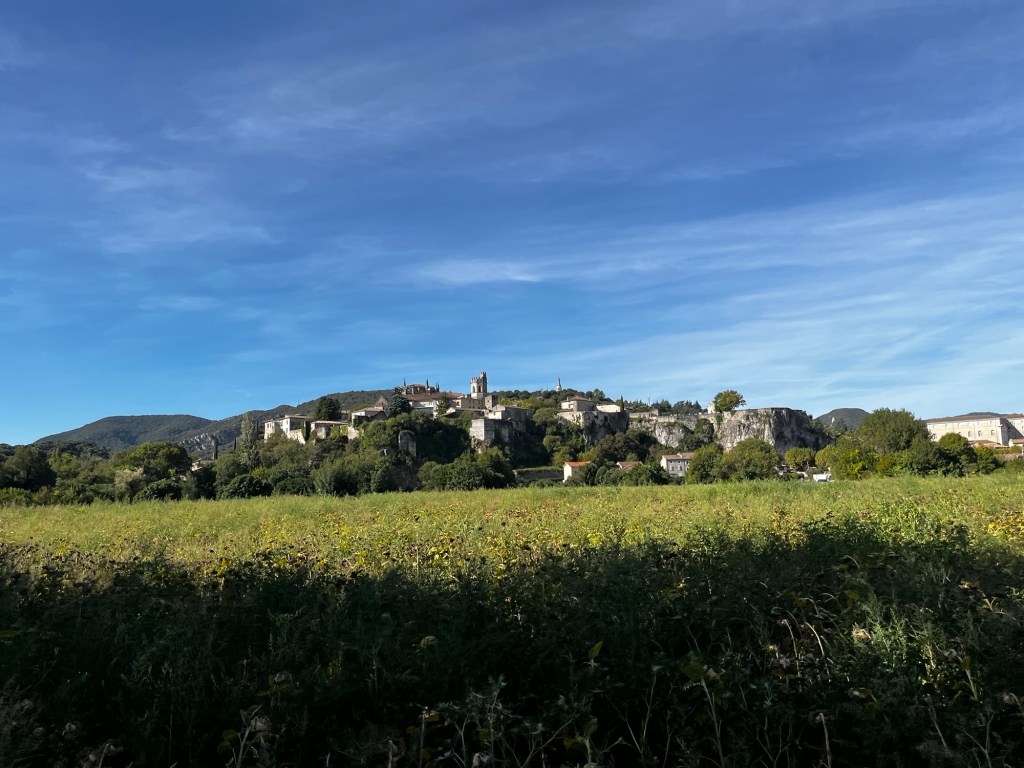
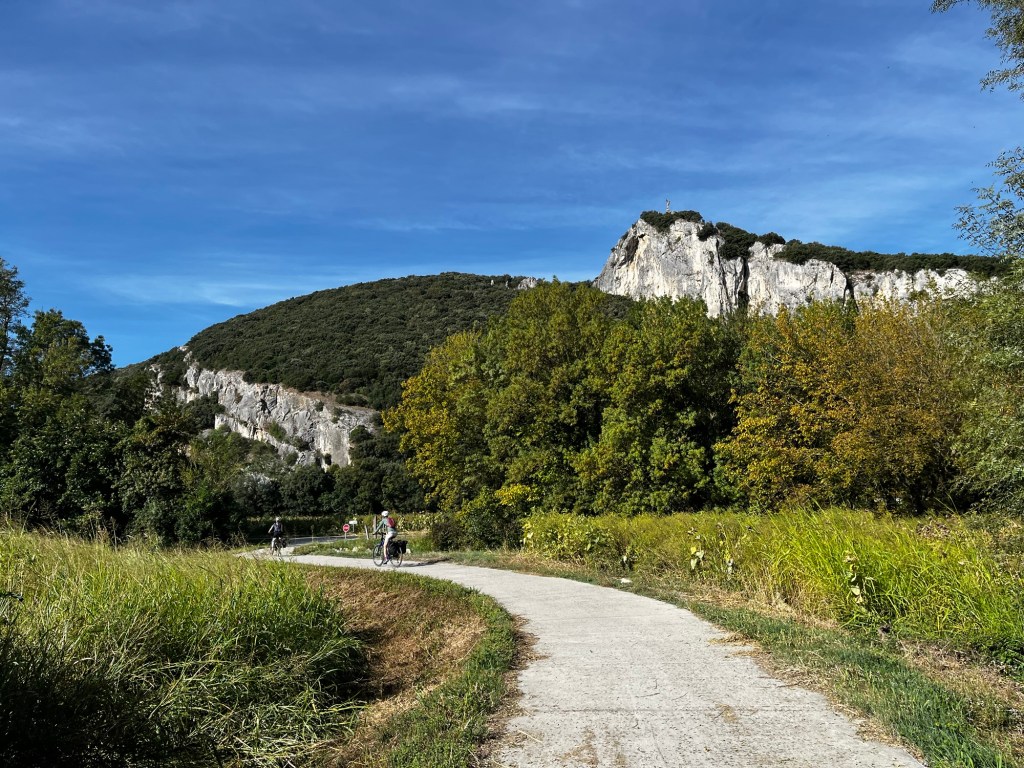
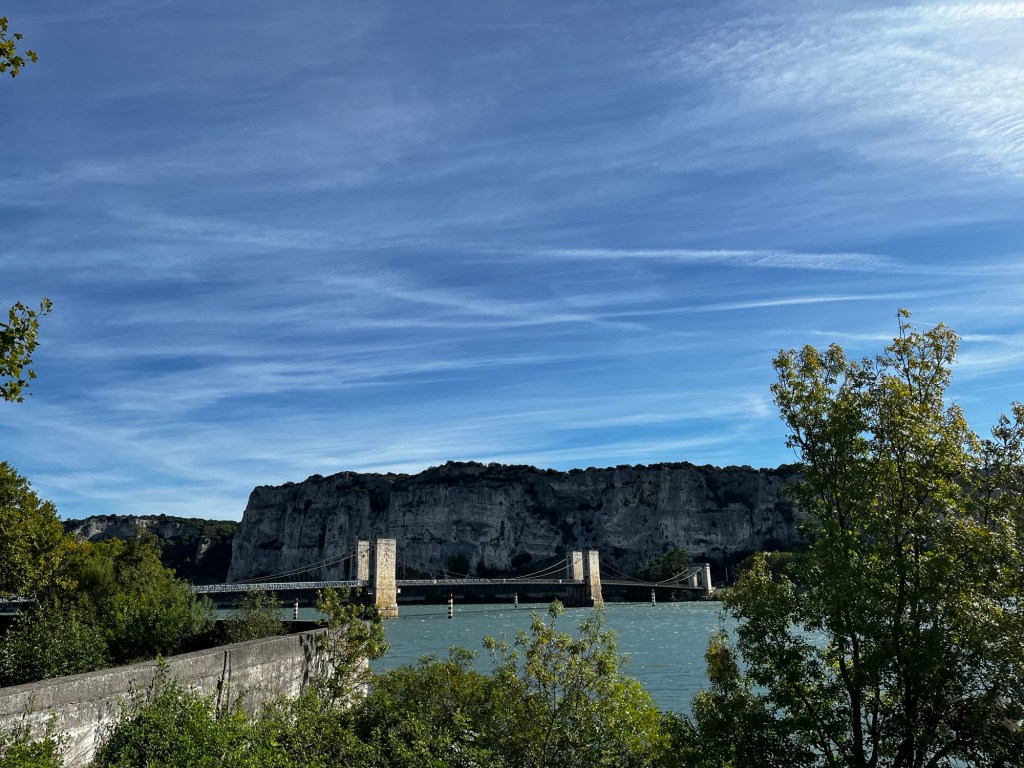
A fairly monkish breakfast at the old seminary Leaving Viviers Distinctive new landscapesBridges and cliffsRiverside shade heading southLunch location Town square, Bourg-Saint-AndéolCycle lanes on bridges More bridgesPower infrastructure dominates the RhoneInto OrangeOrange at sunsetThe view from our latest front door
Leaving our Airbnb in Ancone, we cycled a couple of miles into the nearby town of Montelimar.
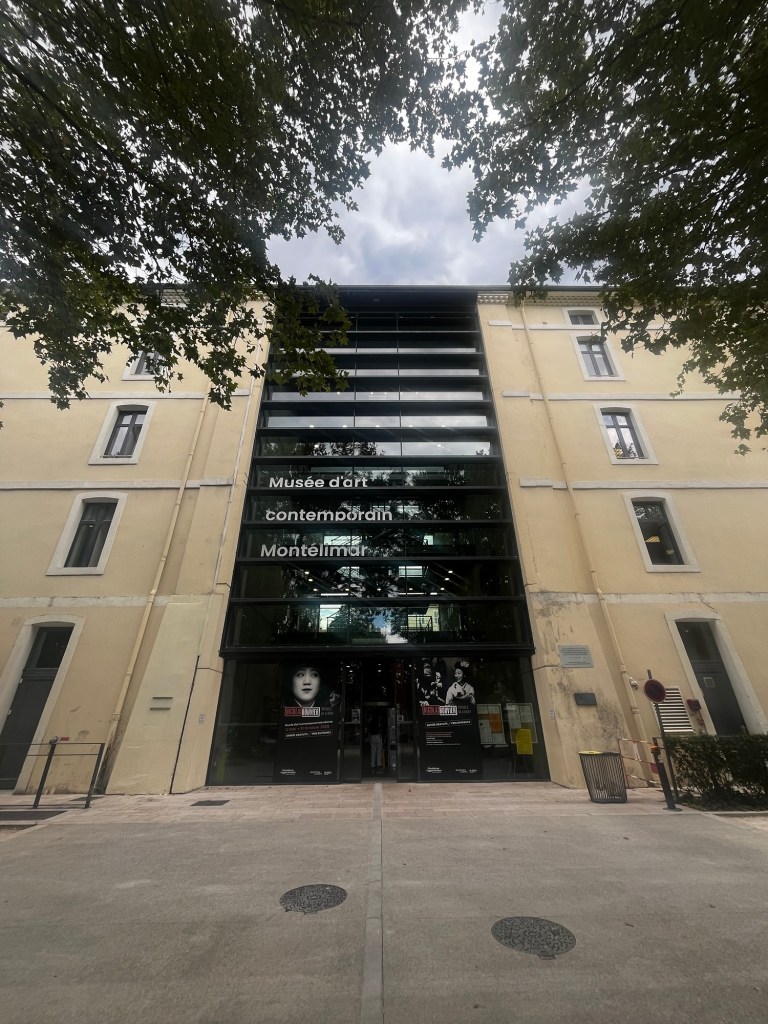
We then enjoyed half a day exploring the narrow streets, chic shops, open market, contemporary gallery and generally relaxing.
We collectively decided we were tired and therefore put the emphasis on taking it easy.
Montelimar is a very typical small French town and kept us entertained without delivering any particular highlights.
Lunch was a mix of market and supermarket buys: greengages, figs, crisps, quiche and sushi: eclectic but suiting our moods and fads very well.
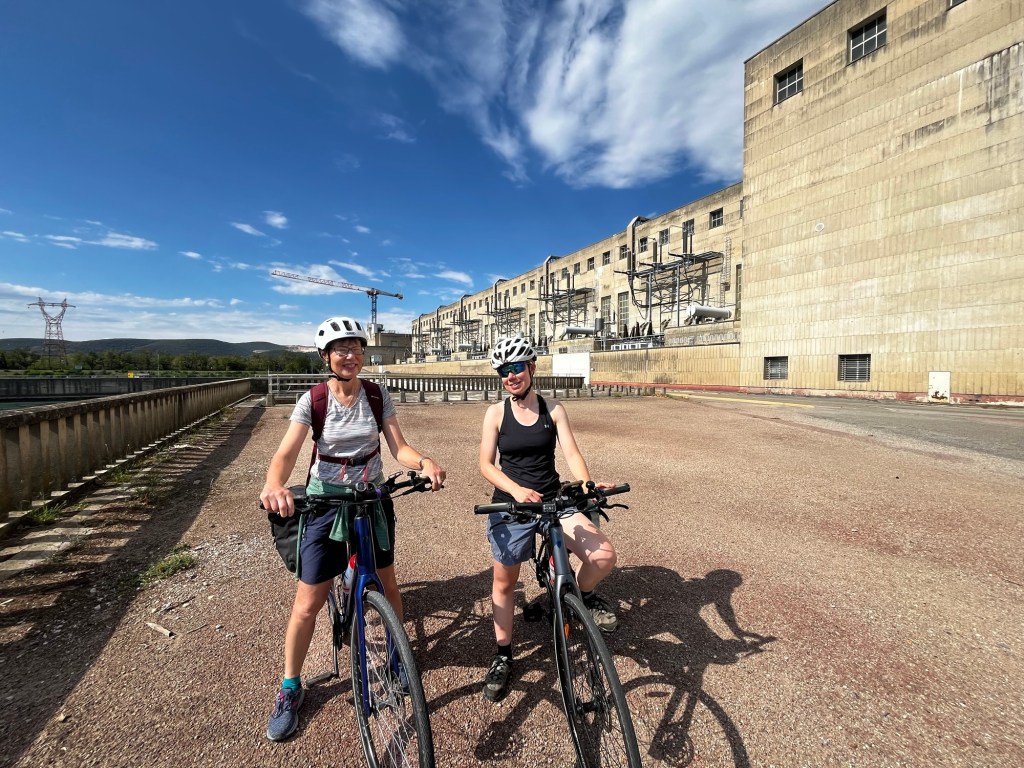
The cycle to our next destination, the historic town of Viviers, was only just over an hour, but we crossed numerous bridges, encountered a huge hydro-electric power plant and seemed to be constantly changing direction.
The wind always seems to get up mid-afternoon in these parts, but with the temperature down a few degrees on recent days and some cloud cover, conditions were great for riding.
Wildlife was back in focus, with a black kite swiftly followed by terrapin and a bever feeding in riverside greenery. This was then overflown by a kingfisher, to cap a satisfying few minutes.
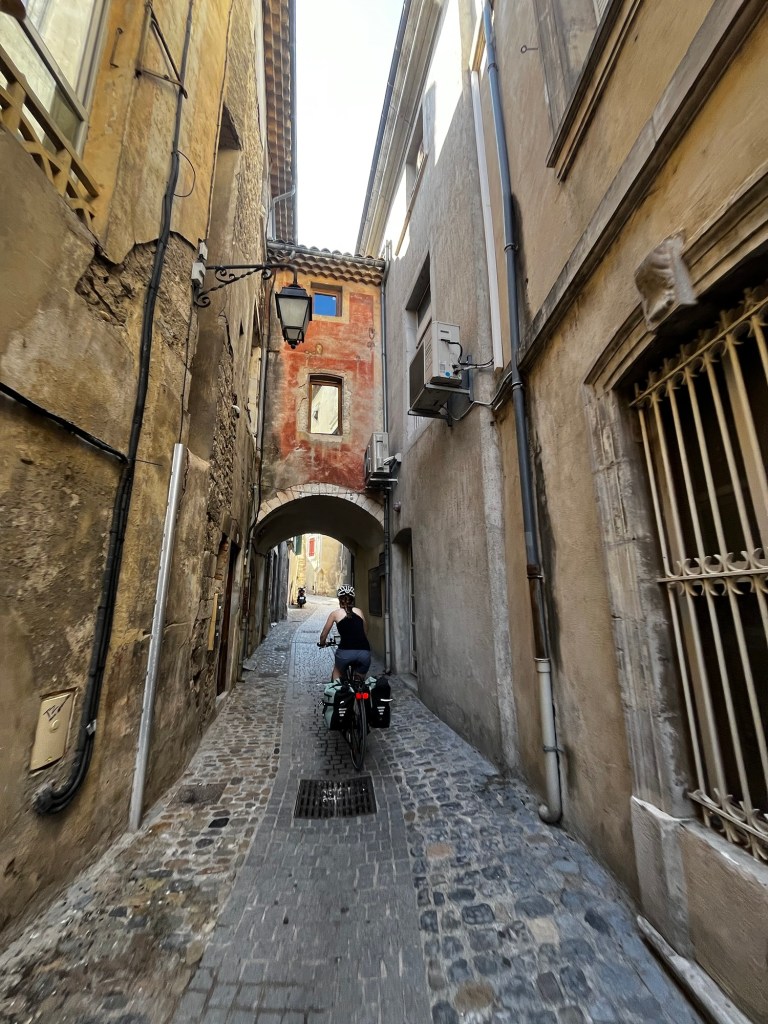
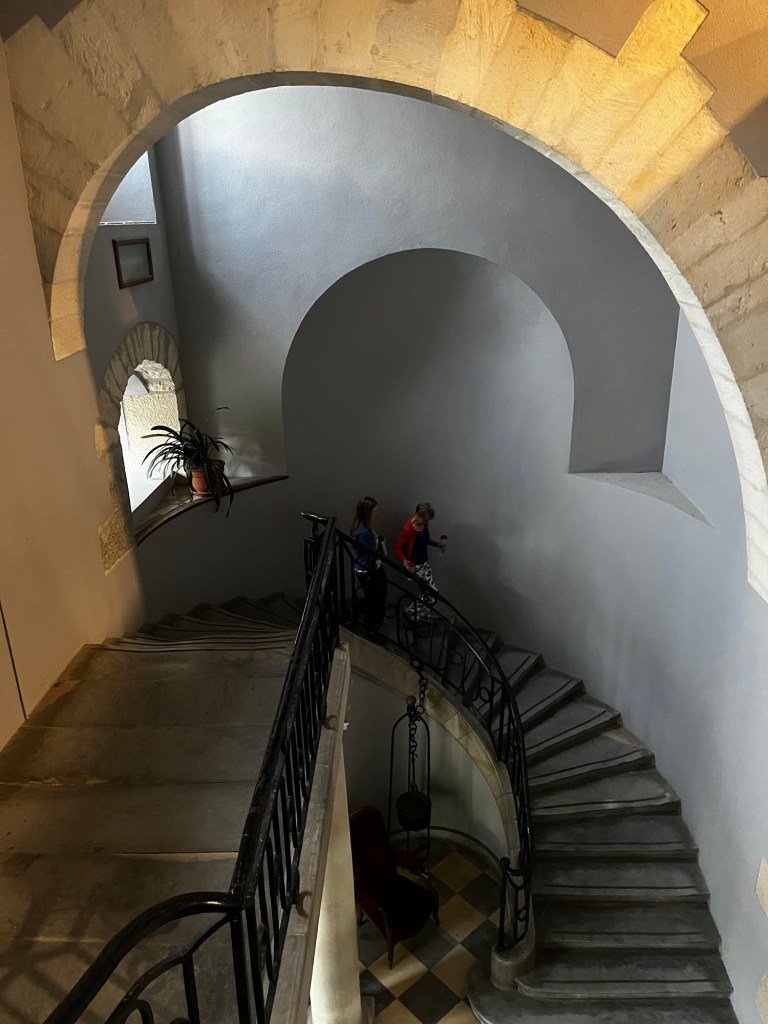
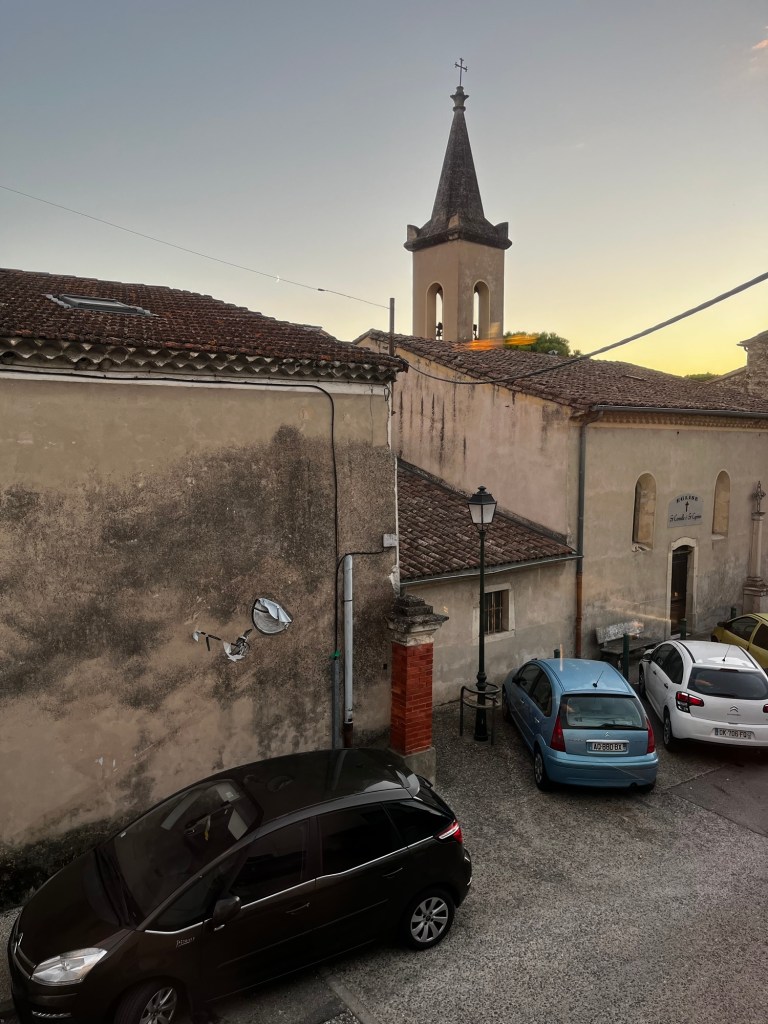
We made our way up narrow, twisty, cobbled streets to our accommodation in Viviers, a hotel in a huge monastery. impressive from the outside, inside it is decorated and furnished like a secondary school.
After waffles in a cafe and a rest we found our evening meal in the only restaurant in town that looked worth visiting and actually proved really good. Les Chevalliers fed us some excellent savoury galettes and some even better ice cream.
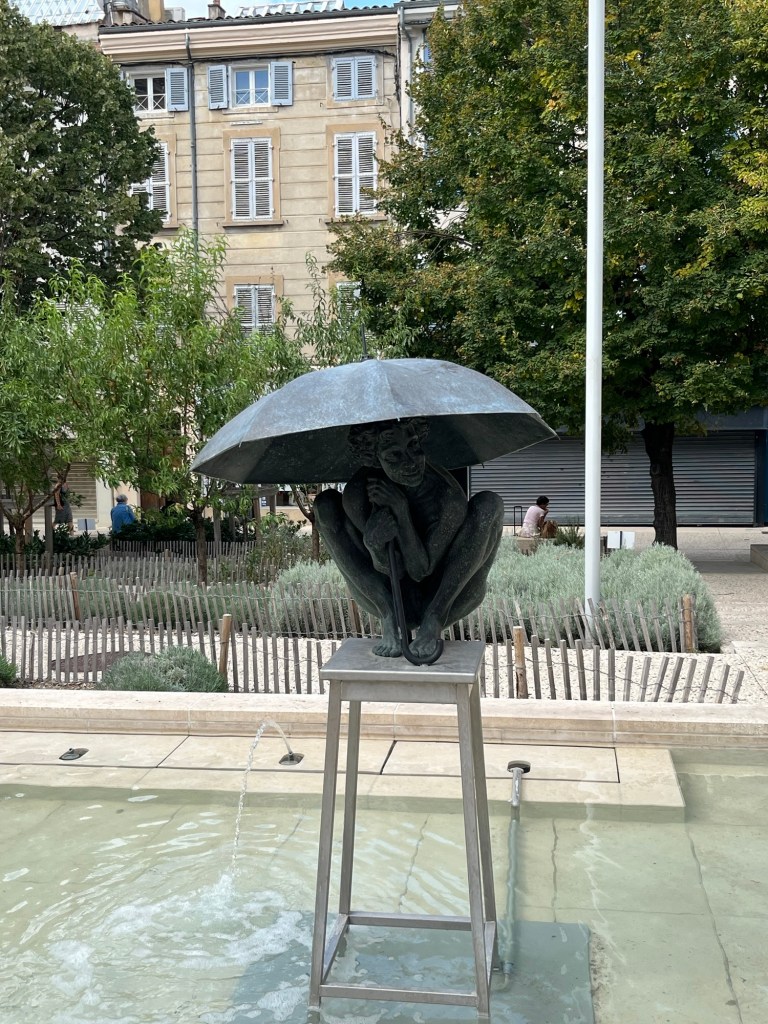
Last night’s lovely AirbnbThe quirky decorMontelimar marketA strange statueA chateau in MontelimarContemporary gallery Power station Via RhoneRiding into ViviersThe hotelStairwayViviers
I’ve not really mentioned the heat, but it’s quite warm in southern France at the moment and for most of today’s ride the thermometer was bouncing around in the low thirties centigrade.
The sky has been cloudless throughout and riding through the middle of the day has sharpened our appreciation of shady spots and tree-lined tracks.
There’s a decent breeze blowing most of the time and today it was in our faces. Which actually cooled us a little, but slowed us as well.
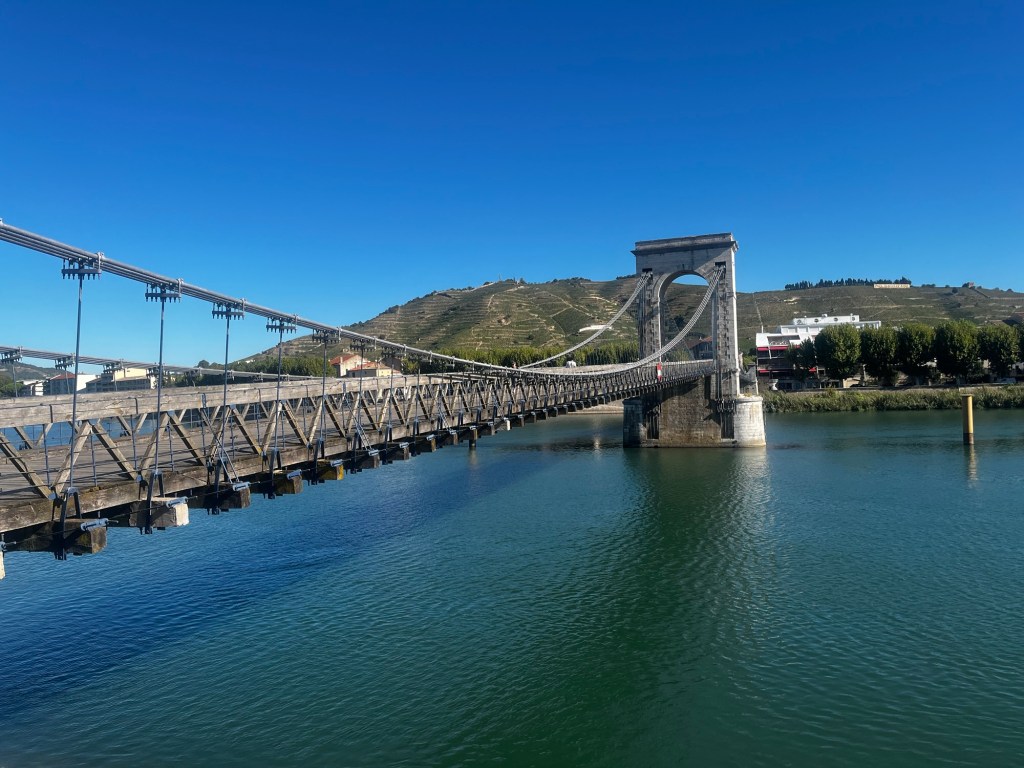
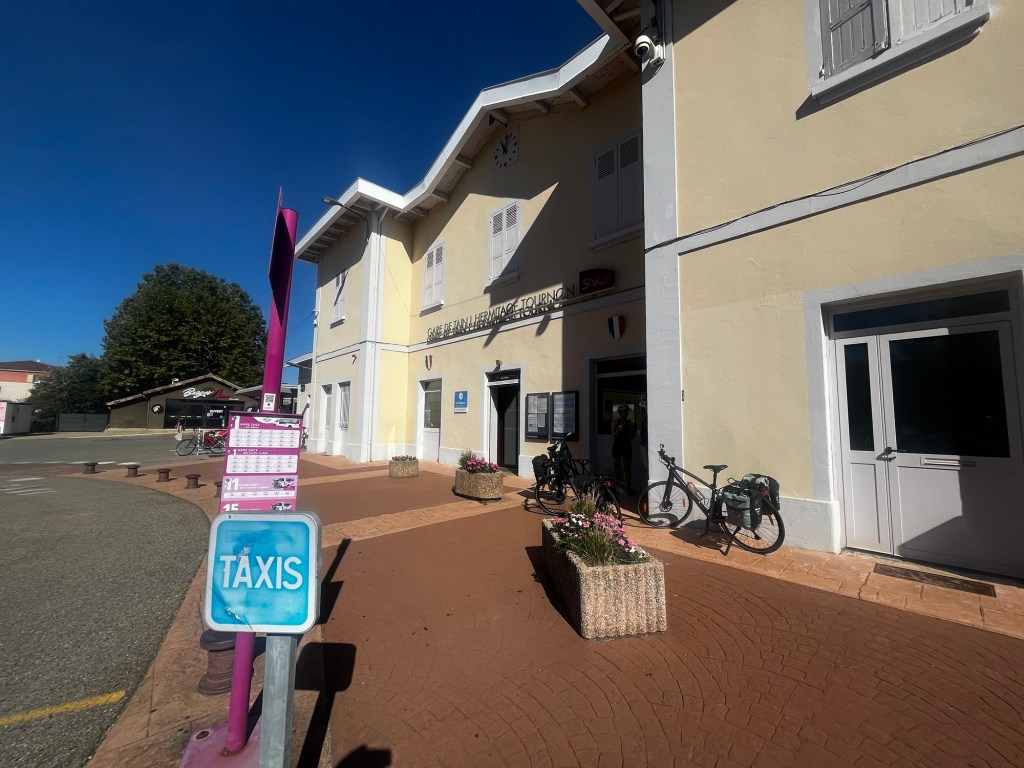
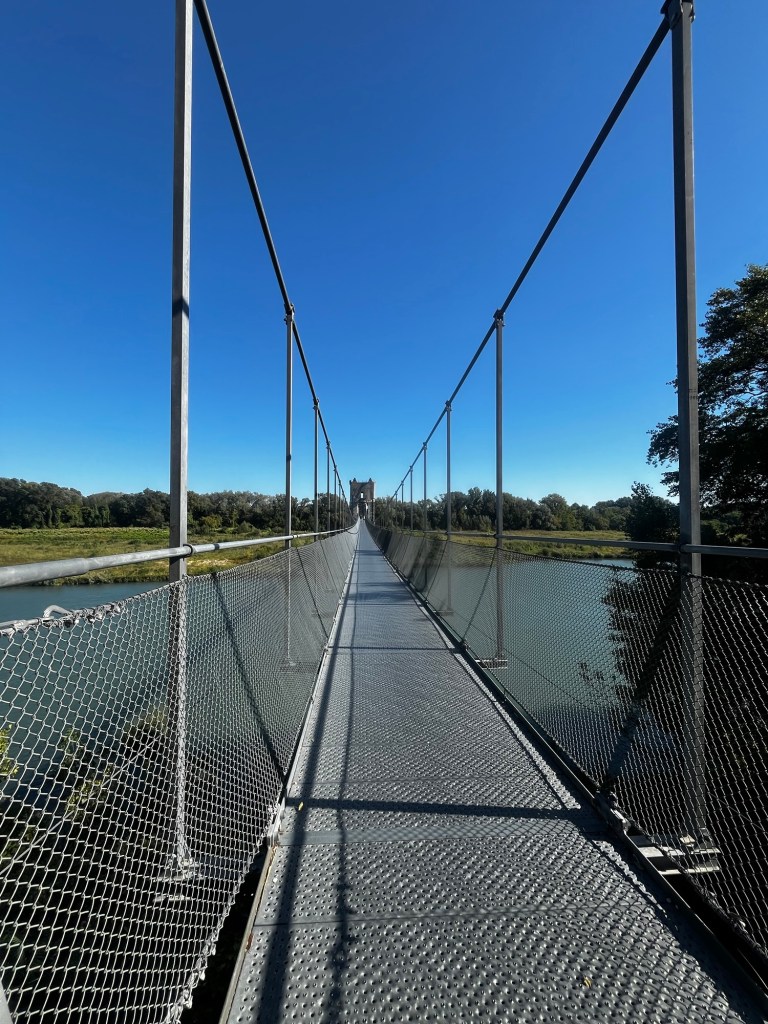
After crossing the footbridge which links Tournon to neighbouring Tain l’Hermitage, famous for its Syrah vineyards perched high on the hillside we once again used the train to bypass a built up area at the start of the ride. The trains are well set up for carrying bikes and mid week you don’t need to pre book a space. But the stations are less cycle friendly, often requiring you to manhandle your machine down into and then up out of an underpass to the opposite platform.
Happily today’s stations had lifts to lighten the load, but they are minute and require you to stand your bike on the back wheel to get it into the lift. No mean feat with a fully laden touring bike.
Riding out of Livron-sur-Rhone, we were soon onto the Via-Rhone cycle way and heading South through a widening valley. Wine production was very obvious on most hillsides, but also limestone quarrying for the cement industry.
It’s a busy landscape, with road, rail and river all carrying a mixture of leisure and industry. The river carries a heavy load of river cruisers, vast barge-like boats with a superstructure like a low-rise hotel and a top deck bristling with passengers enjoying the view, the sun and, probably, an all-inclusive drinks menu.
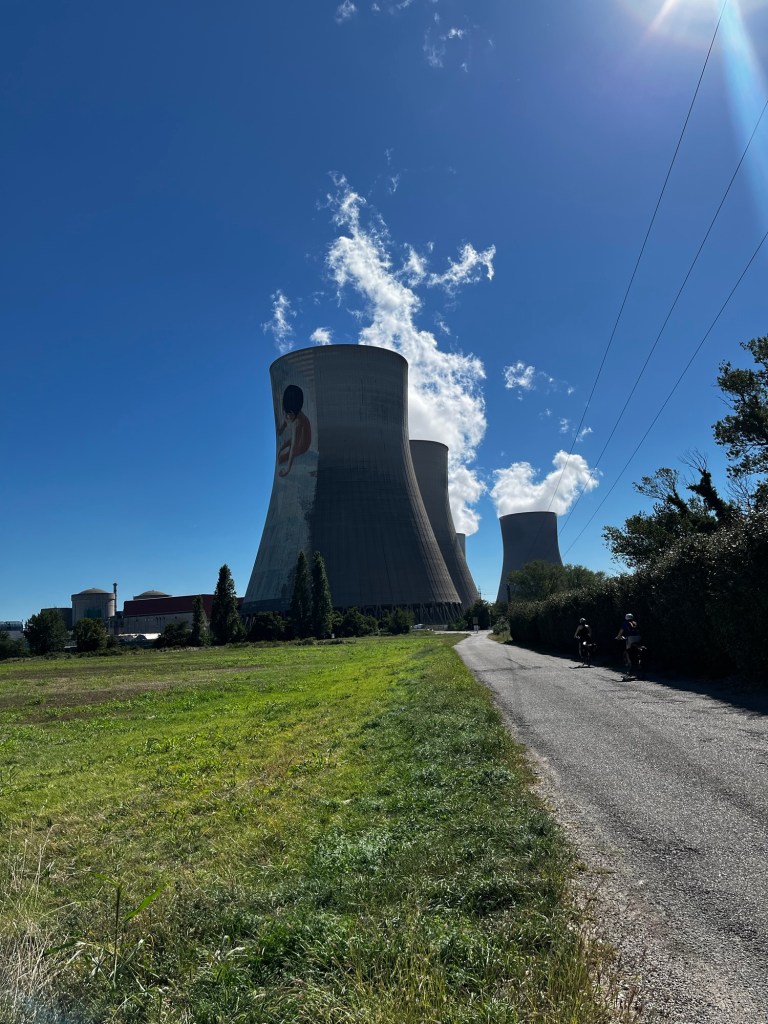
Sights en route today also included a huge nuclear power station, with immense cooling towers, within the foot of which you could clearly see and hear the condensed water cascading down.
We stopped for lunch at an Intermarche in the village of Le Pouzin and feasted on lovely Comté cheese, bread and fruit. The village also boasted a narrow Roman bridge, miraculously intact and still in use.
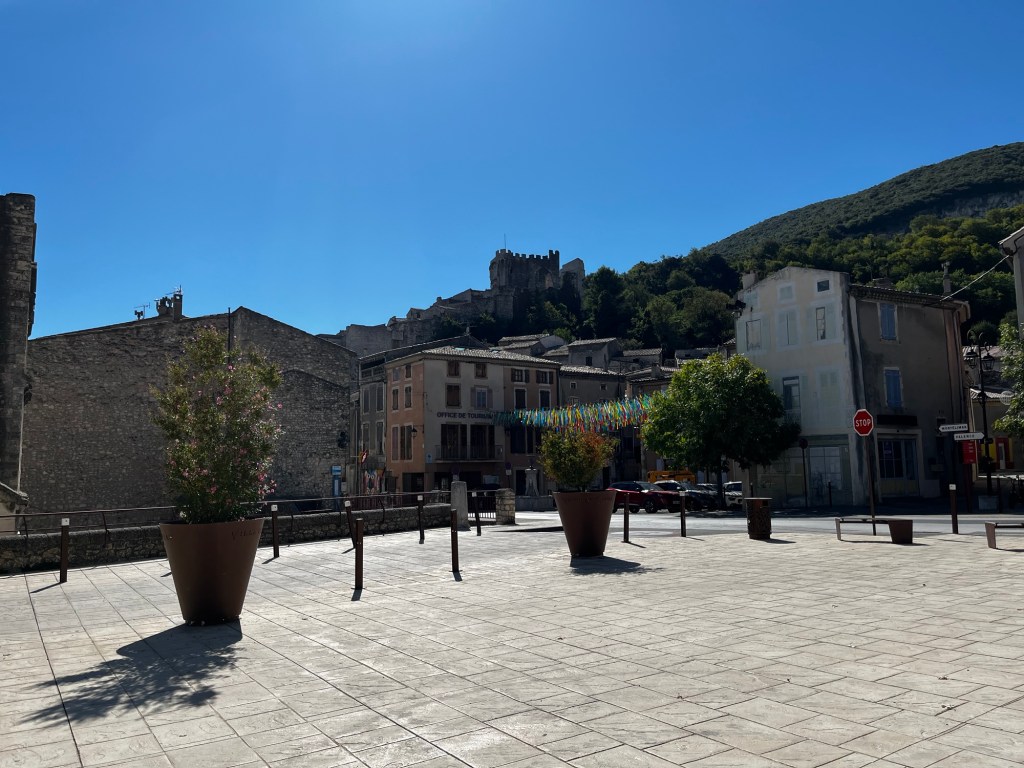
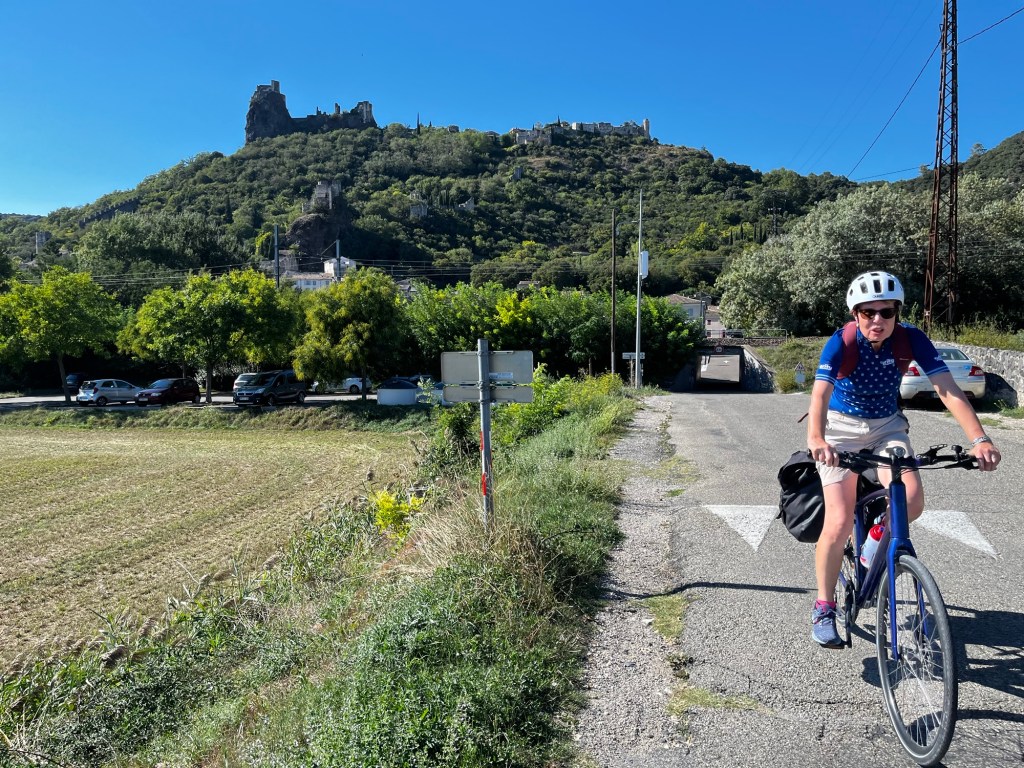
Our second break was in the town of Cruas, where a fortified village hung from the hillside above, as we enjoyed a cold drink in the town square.
The Rhone in this area alternates between a single, wide stream and sections where it splits into a wilder form and a parallel “canal”, with barrages and locks maintaining water depth at levels that can support river traffic, even in drought.
The cycle way generally follows the wilder route of the original river, but occasionally crosses the stream and at times wanders into agricultural land, out of sight of water.
At the end of today’s journey, we moved away from the river to spend the night in the village of Ancone.
Last night’s Airbnb was another crisp modern apartment and the standard of this year’s accommodation has been high and somewhat less expensive than that encountered in the Loire Valley last year.
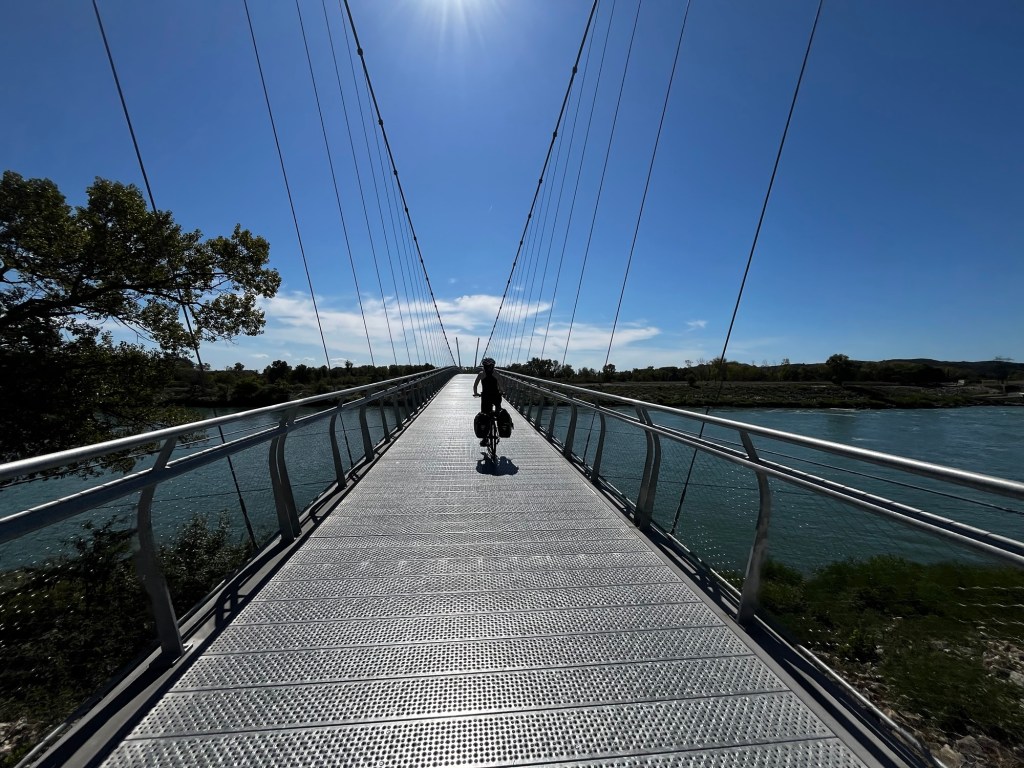
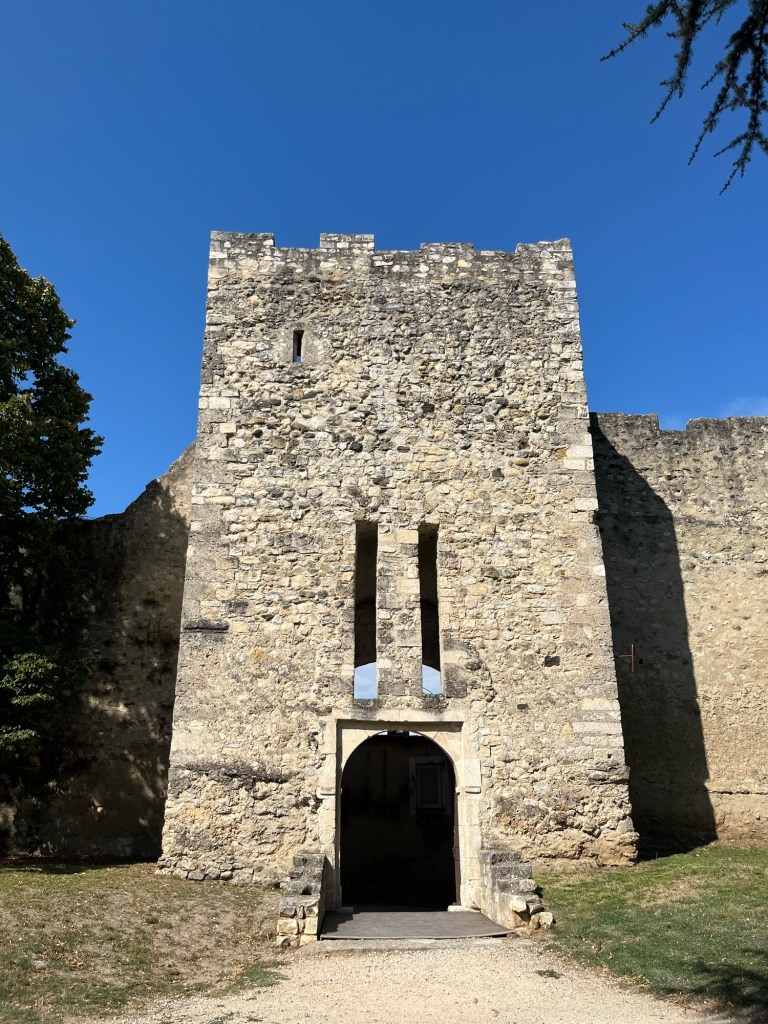
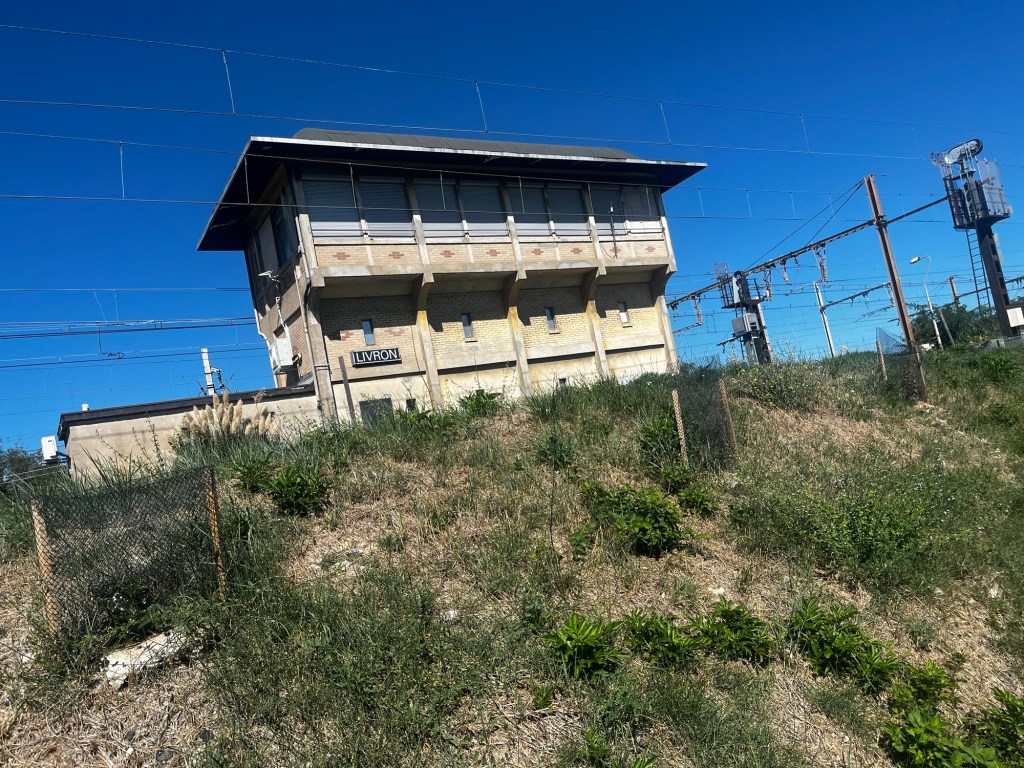
Footway across the Rhone at Tournon-sur-RhoneStation at Tain-d’Hermitage where we caught our train Excellent signal box at LivronA rare bit of gravelSuperb cycle way Crossing to Le PouzinRoman bridge at Le PouzinHot Town square and fortified village in CruasEven power stations are bedecked with art in FranceAnother hilltop fortCycling and walking bridgeThe view from the Airbnb in Ancone
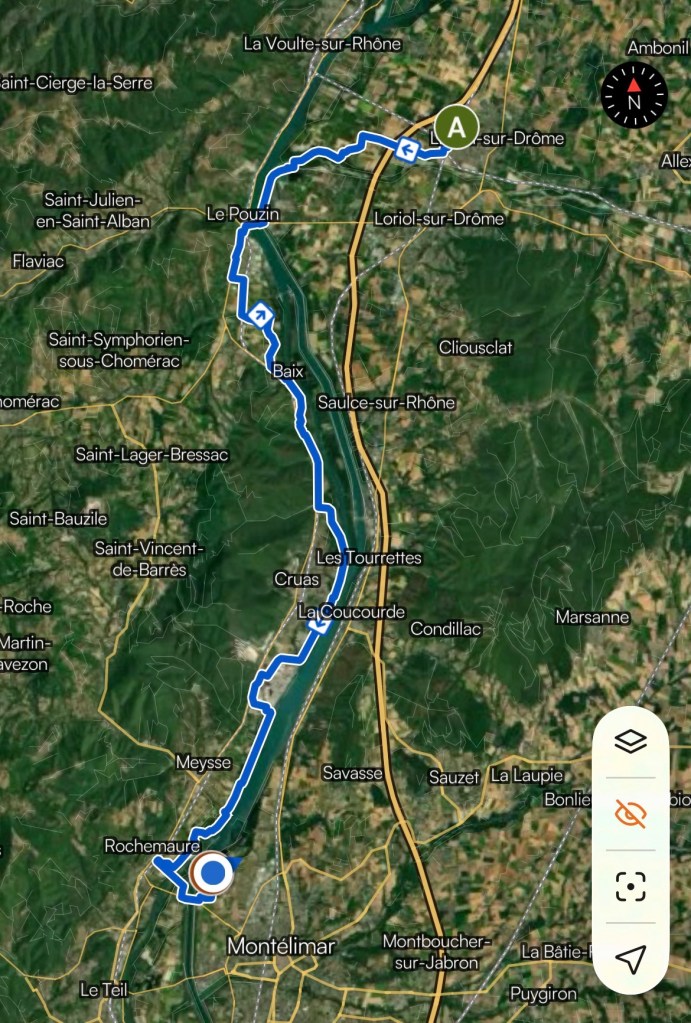
Today’s route
We wrapped up the day with a visit to a local bar cum pizzeria for a beer. As Ancone is very small it was the only option! A very friendly hostess offered us 3 types of beer, a blonde beer, a red beer and a peroni! We tried all 3 then Julie finished with a limoncello. We played skyjo while supping our drinks! a nice finish to the day.